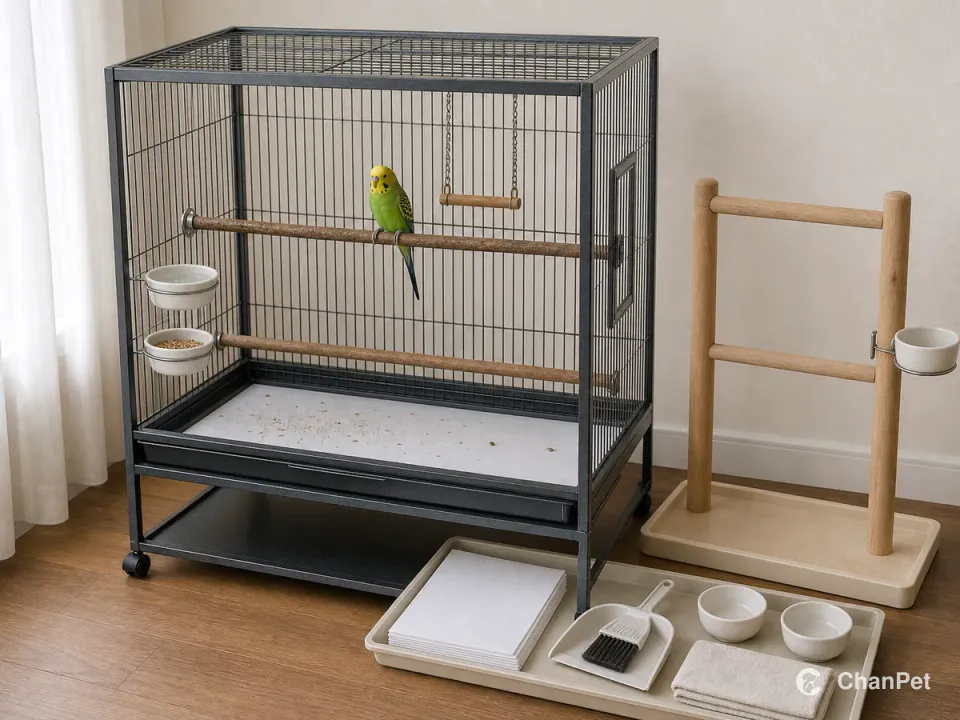
Low-maintenance care · 🦜 Bird

Is a Budgerigar genuinely low-maintenance?

Short answer: Budgerigar is a conditional fit for low-maintenance keeping — 3.5/5. It barely needs grooming, which really helps here. Below, the per-metric score, monthly cost and a checklist help you decide.

Low-maintenance does not mean unattended; it means fewer repeat chores while observation and backup care remain in place. Budgerigar scores 3.5/5.

Low-maintenance score3.5/5Higher means fewer repeat chores
Daily care25–80min/dayObservation still stays
Weekly upkeep51–138min/weekCleaning, supplies or water work
Never outsourceJudgmentAutomation cannot replace checks
Get My Report100% Free • No sign-up
Open full profile
Category🦜 Bird
Lifespan7–15 yrs
Monthly cost$20–$50/month (China reference ¥80–¥200/month)
Care focusEnrichment & cleaning

You want a pet, but you also know you do not have unlimited energy for intense interaction, cleaning and training every day.

Busy weeks, travel, exams or low-energy periods can break care routines; the goal is responsible care that is actually repeatable.

So this page asks which minimum tasks for Budgerigar still have to happen, not whether care can disappear.

For Budgerigar, confirm this before deciding: Small parrots still bring vocal noise, dust and escape risk.

1 · Direct verdict

Is it actually low-maintenance enough?

Verdict: Budgerigar is a conditional fit for low-maintenance needs, but the real question is not abstract ease; it is whether you can handle Cleaning load 4/5, Companionship 3/5, Time need 3/5.

Why it can work

  • Can learn words
  • Colorful
  • Interactive

Where it can fail

  • Loud mornings
  • Feather dander allergy
  • Needs flight time

The decision hinge

If you can sustain this setup: Prepare safe flight/out-of-cage time, perches, foraging toys, air quality and social time, keep reading; if not, pause first.

2 · Minimum setup

Buy what keeps the pet safe before what looks nice

This separates must-haves from later upgrades so budget and attention do not get swallowed by cosmetic purchases.

Must have

  • Stable environment, easy-clean layout, reminder logs and a backup caregiver.
  • Every automatic device needs a manual fallback for power loss, jams or failure.
  • Safe cage, suitable perches, food/water, foraging toys and safe out-of-cage space.
  • Air quality, kitchen fumes, escape control and daily social time.
  • Prepare safe flight/out-of-cage time, perches, foraging toys, air quality and social time.
  • Confirm warning signs, veterinary/rescue access and temporary isolation plans for Budgerigar.

Can wait

  • Cameras, automatic cleaning, smart feeders and premium monitors can wait.
  • Time need is 3/5 and cleaning load is 4/5; split daily, weekly and monthly tasks.
  • Set reminders for feeding, cleaning, weight, water quality or temperature/humidity logs.

3 · Correct order

In week one, aim for stability before closeness

Many failures are not from lack of love; they come from doing things in the wrong order.

  1. 01

    Stabilize first

    Make temperature, water quality, cleaning flow and supply routines stable.

  2. 02

    Bring the pet home

    Do not let Budgerigar arrive before key equipment is ready.

  3. 03

    Calibrate week one

    Track eating, waste, activity, odor and warning signs.

  4. 04

    Set the rhythm

    Put daily checks, weekly cleaning and monthly deep work into reminders.

4 · Common failure points

The outcome usually turns on these underlying factors

These failures are usually not a lack of care; one link in setup, budget, rhythm or judgment was not made stable early enough.

No daily look-over

Owner pattern
Assume running equipment means the pet is fine.
Consequence
No water, food jams, water swings or heat failure can go unnoticed.
Better move
Do a brief daily check of food, water, waste, activity and devices.

Automation has no fallback

Owner pattern
Treat automatic feeding, filtration, heat or cleaning as insurance.
Consequence
Failure concentrates risk instead of removing it.
Better move
Prepare a manual routine, outage plan and backup caregiver.

Cleaning keeps slipping

Owner pattern
Wait until the habitat smells, looks dirty or turns cloudy.
Consequence
Health, air quality and household acceptance all drop.
Better move
Use a weekly cleaning slot before the system is overloaded.

Species-specific needs get ignored

Owner pattern
Small parrots still bring vocal noise, dust and escape risk.
Consequence
The problem often grows during the first week or first maintenance cycle.
Better move
Prepare safe flight/out-of-cage time, perches, foraging toys, air quality and social time.

More options for the same scenario

How Budgerigar compares with nearby options

Budgerigar stands out because it barely needs grooming; the trade-off is that it means regular cleanup. These are the most useful next comparisons, not random links.

Cost and time visuals

Cost and time: reduce chores, not responsibility

Low-maintenance does not mean unattended; it means fewer repeat chores while observation and backup care remain in place. Budgerigar scores 3.5/5.

Key takeaway$20–$50/month (China reference ¥80–¥200/month)

Automation reduces repeat chores; it cannot replace observation, judgment or emergency response.

Cost split

Manual low-cost path
$30
Automation upfront
$80
Human backup
$15

Rhythm or risk

Daily25–80 min/day

Refresh food/water, clean tray, interact and allow safe out-time.

Weekly51–138 min/week

Clean the main setup, refill supplies and review odor, water or bedding.

Monthlyone review

Check budget, equipment wear, body condition and emergency plan.

Next: if the monthly cost, daily time and highest risk are acceptable, move to the checklist.

Pre-arrival checklist

Check first, then decide

The first three are hard requirements. Do not start with “I’ll fix it later.”

Check items to get a live next-step suggestion.

Authority summary

Bird authority summary

For Budgerigar, this means environment, hygiene, veterinary access and legal boundaries come before looks, price or interaction.

  • RSPCA emphasizes that birds need spaces where they can safely express natural behaviors such as flying, climbing, perching, hiding, feeding and roosting.
  • Bird care should treat vocal noise, dust, air quality, kitchen fumes, escape risk and long-term social contact as core variables.
  • Apartment or student fit is not just cage size; neighbor noise, daily interaction and holiday care must be planned.

Safety boundaries

Accept the boundary before the preference

Birds and waterfowl require planning for vocal noise, dust, air quality, escape and long-term care.

Educational pre-adoption screening only; not a substitute for veterinary, trainer, medical or local legal advice. Consult a professional for allergies, immunocompromise or child-safety risks.

FAQ

Questions readers search for

Is Budgerigar easy to keep for beginners?

Most common pet parrot. Can be trained to talk. For this page, the verdict is “Conditional fit” (3.5/5), not a blanket recommendation; the main trade-off is Loud mornings.

Is Budgerigar too noisy for an apartment?

Evaluate the loudest time of day, not the quietest video. Check neighbors, roommates and sleep schedules before adoption; training and environment can reduce some noise but not erase the species or breed tendency In rentals or apartments, include complaint risk and sleep disruption in the decision.

How long does Budgerigar live?

Typical lifespan is about 7-15 years. Plan budget, travel care, moves and senior care across the full life, not just the purchase stage.

How much does Budgerigar cost per month?

Site reference: $20–$50/month (China reference ¥80–¥200/month). Real cost changes with location, food, supplies, equipment replacement, boarding and emergency reserve, so purchase price is not enough.

What does Budgerigar eat, and how should I feed it?

Budgerigar should not be planned around seed alone. Use a species-appropriate staple diet, safe fresh foods and clean water while avoiding kitchen fumes and unsafe human foods.

How much space and setup does Budgerigar need?

Prepare safe flight/out-of-cage time, perches, foraging toys, air quality and social time. Start with: Safe cage, suitable perches, food/water, foraging toys and safe out-of-cage space; Air quality, kitchen fumes, escape control and daily social time.

Does Budgerigar smell, make noise, shed or create mess?

Budgerigar has noise 4/5 and cleaning load 4/5. Expect droppings, food hulls, feathers or dust, and plan air quality plus daily cage-area cleanup.

Is Budgerigar affectionate or handleable?

Most common pet parrot. Can be trained to talk. Social contact and training can matter, but forcing step-up, chasing or sudden grabbing increases bite and escape risk.

Can Budgerigar live with others, kids, cats or dogs?

Pairing or same-cage housing needs quarantine, gradual introduction and a backup cage. Species, body size, sex maturity and temperament can all change the result.

What health problems or warning signs matter for Budgerigar?

Budgerigar's main watch items are: Loud mornings, Feather dander allergy, Needs flight time and Small parrots still bring vocal noise, dust and escape risk. Changes in droppings, breathing, appetite, posture or vocalization can become urgent quickly.

What should I do in the first week with Budgerigar?

In week one, stabilize cage position, sleep, food/water, droppings, breathing and feather condition. Out-of-cage time comes after escape and air-safety checks.