Make hay and water one habit
Good hay should always be available. RSPCA also recommends checking the water bottle daily for leaks or blockages, then replacing the water regularly. Linking those two checks makes them easy to remember.[1]
Use pellets and leafy greens as planned parts of the diet, then leave sweet treats out of the routine. A simple, stable menu suits degus far better than using food to fill every spare moment.[1]
Make group resources fair
Companions need access to the same important things. RSPCA recommends enough resources for all degus in a group, including places to rest together and hides where each can shelter separately.[2]
While adding hay, take a moment to see whether one degu is always displaced or hiding. That brief observation tells you more about a group than a full cage clean once in a while.[2]
Refresh enrichment in small ways
University of Montana includes hay, wooden chewing items, tubes and hides in ordinary degu care. They do not need a brand-new toy every day, but they do need safe things to chew, enter and explore.[3]
Remove wet bedding and stale food, then replace useful items as needed. Keeping the environment usable is much easier than turning an empty cage into a big weekend project.[3][2]
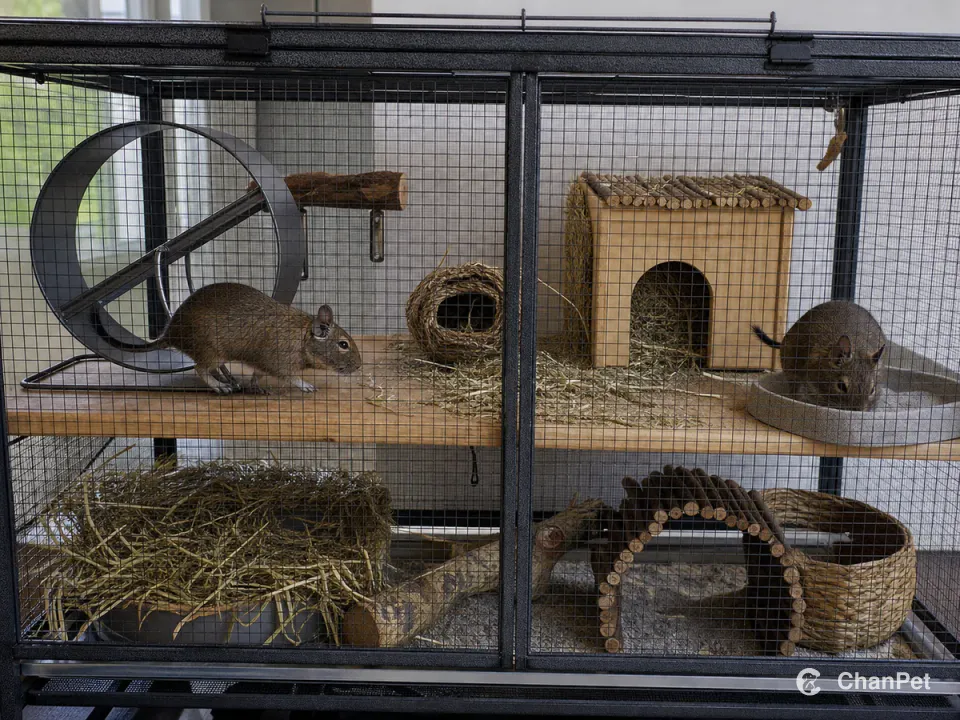
When the wheel, sand bath, hide, and chew items have fixed places, a quick daily check shows what needs attention.[2][3]
A fit for someone who likes small routines
Keep the simple tasks happening
Hay, water, group access and a usable environment all come from repeated small actions. Low maintenance here means steady and light, not unattended.[1][3]
Common questions
Sources
Sources used in this article
- [1]What To Feed a Pet DeguRSPCA
- [2]Keeping Degus TogetherRSPCA
- [3]Degu Husbandry and CareUniversity of Montana Laboratory Animal Resources