Daytime noise is part of degu life
Degus are diurnal and communicate with calls. Smithsonian records alarm calls within their social groups, alongside the ordinary sound of moving, wheels, hay and cage-mate activity.[1]
Put the cage away from a desk or nap space if daytime quiet matters deeply. The sounds are usually small, yet they come often enough to deserve a deliberate location.[1]
Hay makes a little mess because it matters
Hay is the main part of the degu diet, so a few pieces around the cage are ordinary. Use a sensible hay holder or feeding spot, then sweep dropped pieces instead of making the hay hard to reach.[2]
Check food, water and bedding each day, then handle damp areas. University of Montana includes hay replenishment, health observation and spot cleaning in routine degu care.[3]
Clean for dryness and easy access
Remove visibly wet bedding and stale food, then refresh hay, water and safe chewing materials. This keeps the habitat usable while preserving the familiar parts of a degu group's home.[3][2]
If odour becomes obvious, check damp bedding, water equipment and leftover food first. A fragrance only hides the signal; these practical checks solve the pieces that need attention.[3]
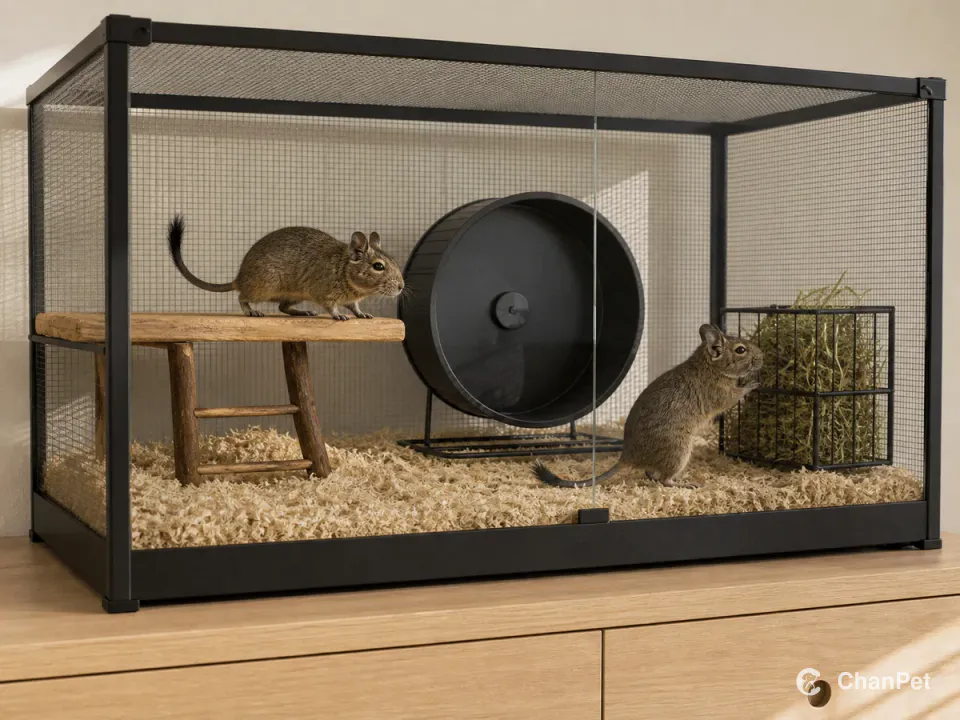
Daytime activity, a little hay, and dry bedding are ordinary life; ventilation and a few minutes of tidying keep the cage fresh.[1][3][2]
A fit for someone who accepts gentle daytime life
Keep the hay in the cage and the tidy-up in the day
Degus need constant hay, and that brings some sound and debris. Choose the cage location well and handle damp bedding early, and the home stays comfortable.[2][3]
Common questions
Sources
Sources used in this article
- [1]DeguSmithsonian's National Zoo and Conservation Biology Institute
- [3]Degu Husbandry and CareUniversity of Montana Laboratory Animal Resources
- [2]What To Feed a Pet DeguRSPCA