Make a five-minute round part of the day
Before work or after breakfast, refresh water, serve the planned food, scoop the litter box and take a quick look at the cat. The point is not to inspect a pet like a machine. It is to notice the ordinary baseline so a change in appetite, toileting or energy stands out.[1][2]
CDC recommends cleaning litter daily and washing hands after handling the box, waste, food bowls or cat items. Keeping the scoop, bags and cleaner together makes this a small task rather than a job that waits until the room already smells unpleasant.[3]
Treat litter changes as information
When a cat begins avoiding the box, start with the practical questions. Is it clean? Is the location quiet? Has the litter, box type or household routine changed? Cornell explains that medical and environmental factors can both affect house-soiling behavior.[2]
Straining, frequent small trips, obvious discomfort or a marked change in litter habits call for prompt veterinary advice. The easy routine helps here because you can say what changed and when. That is far more useful than trying to reconstruct several hectic days from memory.[2][1]
Plan the jobs that do not announce themselves
A cat may look self-contained while it quietly needs a nail check, a brush, fresh bedding, a washed bowl or a new play session. Put those recurring tasks in the same calendar that holds your own appointments. It is easier to keep care light when it has a place in the week.[1]
Travel also needs a real person, not a full bowl left out before the door closes. A carer should know the food, litter routine, hiding places and veterinary contact. A domestic shorthair is easier to care for when the person stepping in can recognize the cat's normal day.[1][3]
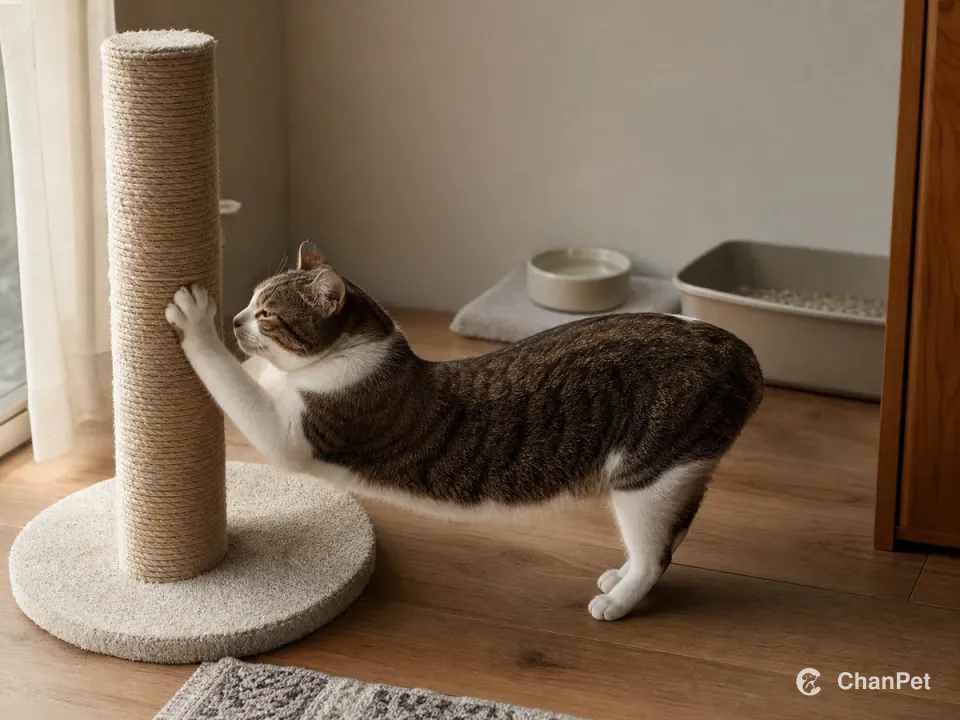
Cats do not need walks; litter, water, and a place to scratch still need daily attention.[1][2]
Low maintenance works best as a steady habit
Small jobs keep the care light
Set a short daily routine, write down any real change, and put the weekly care tasks where you will see them. That is the version of cat care that stays manageable over time.[1][2]
Common questions
Can an automatic litter box replace daily checking?
Sources
Sources used in this article
- [1]Feline Life Stages: Veterinary Checkups at All AgesFeline Veterinary Medical Association
- [2]Feline Behavior Problems: House SoilingCornell University College of Veterinary Medicine, Cornell Feline Health Center
- [3]CatsCenters for Disease Control and Prevention