Use your hardest week as the test
Write down an exam week as it really looks: early class, late study session, laundry, food shopping, travel and sleep. Then add feeding, fresh water, litter care, play and a few calm minutes with the cat. The plan is believable when those ordinary care jobs still have a place on the crowded version of your calendar.[1][2]
A cat does better with useful choices in the room: food and water, a litter area, a hiding place, a resting spot and something to scratch. A student schedule may change without warning. Those familiar resources give the cat a steadier day while you work through a long assignment or an unfamiliar shift.[1]
Tell housemates the real routine
Before the cat arrives, agree on which room stays calm, where the litter box goes, who closes the front door, and which food belongs to the cat. Housemates do not need to become cat experts. They do need enough shared rules to avoid a missing bowl, an open window or a litter box moved during cleaning.[1]
Give one named person a short care sheet and a key if they will cover a day. Include the food routine, litter setup, usual hiding places, medication if any, and veterinary contact. CDC recommends washing hands after litter and cat-care tasks, so make that part of the handover rather than an afterthought.[3][2]
Make breaks and moves specific
A break creates a real care choice: the cat stays with a familiar carer, travels with you, or moves temporarily into another room. Decide which one fits before the tickets are booked. The better option is the one that preserves a calm setup and gives the carer enough information to notice a change.[1][2]
Students may move at the end of a lease with very little spare time. Pack the carrier, food, litter, bowls and a familiar bed together, then set up one quiet room first at the new place. Keep health records easy to find so you can continue routine veterinary care after the move.[2][1]
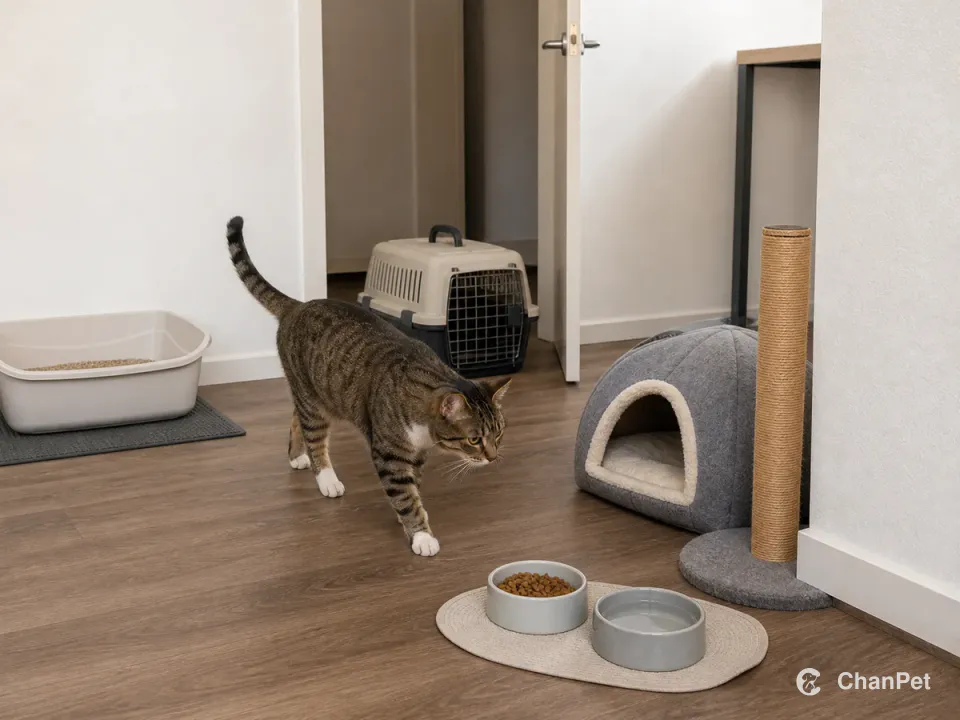
Keeping litter, food, rest, and travel arrangements in one steady routine makes an exam week or move easier to hand over.[1][2]
A student cat plan needs one reliable fallback
Plan around the week that gets messy
Put the cat's routine into your busiest calendar, share it with one reliable person, and decide what happens during breaks and moves. That preparation lets a domestic shorthair become part of student life without turning every deadline into a care emergency.[1][2]
Common questions
Can roommates take turns caring for a cat?
Sources
Sources used in this article
- [1]Your Cat's Environmental Needs: Practical Tips for Cat CaregiversFeline Veterinary Medical Association and International Cat Care
- [2]Feline Life Stages: Veterinary Checkups at All AgesFeline Veterinary Medical Association
- [3]CatsCenters for Disease Control and Prevention