The daily look prevents surprises
Take a minute before feeding to look at the whole aquarium. Is the filter running? Is the water behaving as usual? Does each goldfish swim and respond in its familiar way? This tiny habit catches a lot more than staring at one pretty fish after dinner.[1][2]
Feed an amount the fish can finish, then remove what remains. Uneaten food and fish waste affect water quality, so feeding is part of maintenance. Put the food container beside the test kit rather than treating them as separate chores.[3][2]
Give water work a weekly place
Aquarium water changes, filter care, and testing happen as a system. RSPCA guidance explains that waste products need managing through good filtration and regular water care. A fixed weekly window protects this work from slipping into an endless tomorrow list.[3][2]
Keep the water-change equipment beside the tank. A bucket, siphon, towels, conditioner, and test kit form a small toolkit. Once everything has a place, the job feels more like changing sheets than undertaking a major aquarium project.[3][2]
Filters age and routines adjust
Listen to the filter and look at its flow as part of the weekly check. A change in sound or output deserves attention before it becomes an emergency. Follow the manufacturer and aquarium-care guidance for cleaning and replacing parts without disrupting the tank's biological balance.[3][2]
Keep a small supply list for items that wear out. Test reagents, filter components, and water conditioner are easier to replace before the last one is gone. The aquarium runs more calmly when its ordinary supplies are already in the cabinet.[3][2]
Know when observation becomes a call for help
Poor appetite, unusual swimming, new marks, swelling, or fins held differently deserve a closer look. RSPCA fish health guidance advises prompt attention to changes. Water results and a brief video can make a conversation with a fish veterinarian far more useful.[1][2]
Time away still needs a real person. Ask a carer to check the fish, water, and equipment rather than only dropping food in the tank. Show them the normal filter sound and leave the water-test and veterinary contact information where they can find it.[1][2]
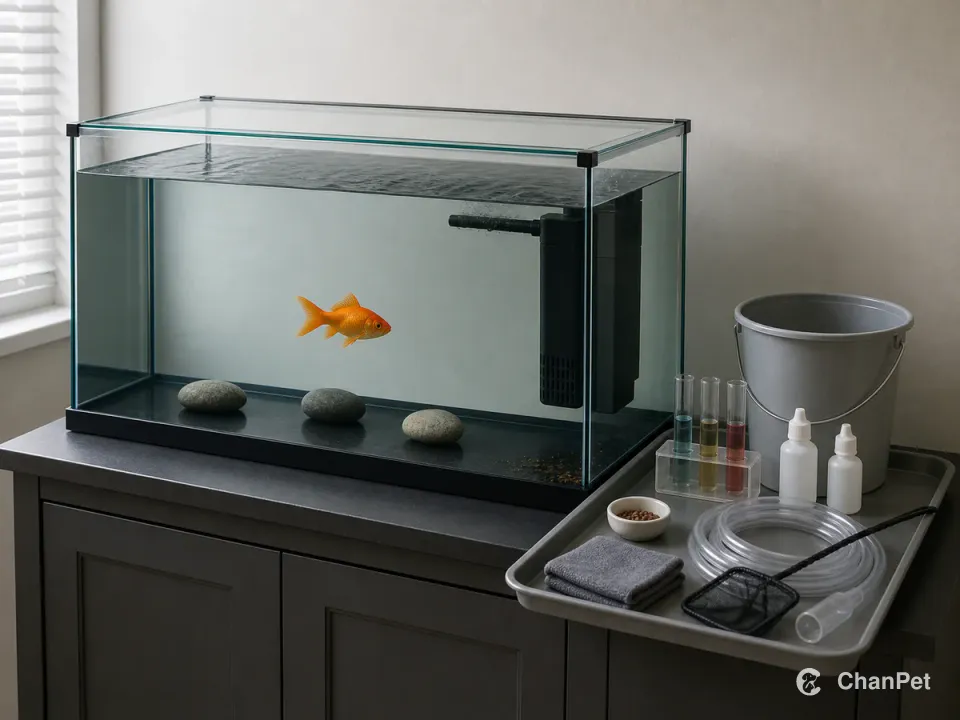
The filter runs continuously, while water testing, portion control, waste removal, partial water changes, and equipment checks stay on the weekly schedule.[3][1][2]
A calm pet for someone who likes a regular system
Put water work beside the chores you already keep
If your week has a dependable slot for testing, water changes, and a calm aquarium look, goldfish care can settle into it. Smart Match can help compare that rhythm with other pets.[3][2]
Common questions
Can a filter make goldfish care automatic?
Sources
Sources used in this article
- [3]Choosing an Aquarium for Pet FishRSPCA
- [1]Pet Fish HealthRSPCA
- [2]Goldfish CareRoyal Veterinary College