Use the messiest week as the test
The useful week is the one with late labs, a deadline, and a room full of laundry. Where does the water test happen? When does the partial change happen? Write those jobs beside classes, shifts, and study time instead of assuming a free hour will appear.[1][2]
Goldfish can live for many years and grow much larger than their first home suggests. A student plan needs to look past the current term. The aquarium still needs care when a lease changes, a trip comes up, or your schedule becomes messy.[2][1]
Leave a real guide for the break carer
Choose one person for holidays, illness, and the days a journey runs late. Show them the normal filter flow, feeding amount, water-test kit, and aquarium supplies while you are still there. A photo of the usual setup helps more than a vague message sent from the airport.[1][2]
Keep the care guide short. Include the water routine, a list of supplies, a contact for fish veterinary advice, and what unusual swimming or appetite looks like. The carer should know that fish need a look at the tank, not only a pinch of food.[1][3]
Draw a line around aquarium tools
Shared student kitchens are busy places. CDC advises keeping aquarium water, gravel, and equipment away from food-preparation areas and washing hands after aquarium tasks. Use dedicated tank tools and store them in one container.[3]
Tell roommates what the aquarium needs before a party or a moving day. A stable power connection, clear access for water changes, and a no-touch rule for equipment keep the tank from becoming a shared-house afterthought.[1][3]
Move the system deliberately
Moving an aquarium takes more planning than moving a desk lamp. Gather the carrier, water containers, filter media, towels, and setup instructions before you pack the rest of the room. RVC goldfish care makes clear that water quality and filtration remain central to the fish's welfare.[1][2]
At the new address, make the aquarium setup one of the first jobs. Keep a written note with the tank's ordinary routine and the supplies it uses. That gives you a practical anchor on a day when everything else is changing.[1][3]
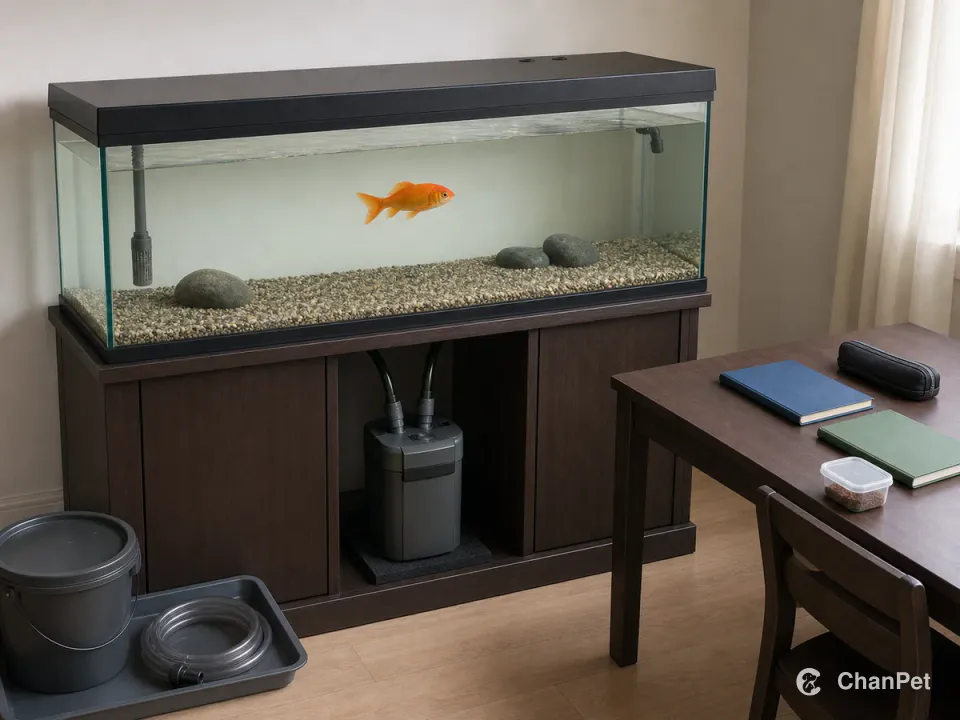
The fixed tank and filter keep running as the semester changes, while the water-change kit and measured food container make weekly care and holiday handoff concrete.[2][3][1]
A student pet when the tank has a steady home and a real helper
Put the holiday and move-out day in the same plan
A stable aquarium needs more than a good first week. Smart Match can help you compare your future housing, trips, and care time with pets that fit student life.[2][1]
Common questions
Can a student leave goldfish alone for a break?
Sources
Sources used in this article
- [2]Keeping Fish as PetsRSPCA
- [3]FishCenters for Disease Control and Prevention
- [1]Goldfish CareRoyal Veterinary College