The hay rack starts the day
Before coffee, look at the hay. Guinea pigs need a constant supply, and the amount a pair has worked through tells you something about their night. Refresh the water, remove tired vegetables, and offer the usual guinea-pig food while you are there.[1][2]
This is also where a small pet asks for consistency. Food changes belong to a gradual plan, not a last-minute switch because one bag ran out. Keep a spare of the established staple so busy days do not force an abrupt change.[1][3]
Spot-clean while you look
Lift out wet bedding and obvious droppings as part of the daily visit. The task takes only a few minutes when it stays small. It also puts your eyes on the animals, their food, their water, and the places where they rest.[2][3]
Pay attention when one guinea pig hangs back from hay, moves differently, breathes oddly, or leaves a markedly different amount of droppings. These details are more useful when you know the pair's usual habits. Call a veterinarian promptly for a concerning change.[2][3]
Set aside a real window for the full clean
A full enclosure clean needs more than a free five minutes. Prepare a secure temporary place, fresh bedding, washed bowls, and enough time for the floor and corners to dry. Keeping supplies together makes the job calmer for you and the guinea pigs.[2][3]
Use the clean as a reset for your own notes. Check the food container, water bottle or bowl, nail condition, and the places where bedding becomes damp first. A repeated wet corner tells you where the everyday setup needs adjustment.[2][1]
Travel still needs a person
An automatic water bottle or a large pile of hay can support care for a short time. A person still needs to see the guinea pigs, refresh supplies, clean wet areas, and notice a change in appetite or behavior. Choose that person before booking a trip.[1][2]
Leave the sitter a short guide in your own words: where the hay is, which vegetables the pair knows, how to clean the water point, and which veterinary practice to call. Invite the sitter over once before you travel, so the routine feels familiar on both sides.[2][3]
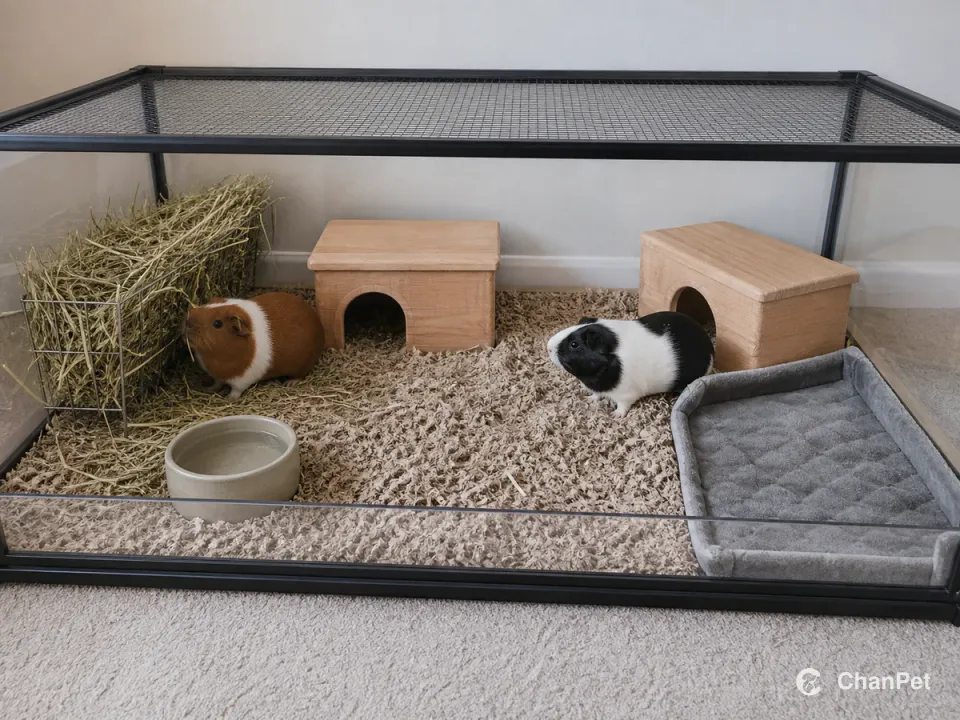
Hay, water, hides and a replaceable absorbent liner are set in clear zones, giving two guinea pigs a stable daily routine to observe.[1][2][3]
Small pets still need a daily caretaker
Put the ordinary jobs on a real week
Look at the mornings, the busiest evenings, and the dates you travel. Smart Match can help you compare that routine with pets whose care fits the time you can reliably give.[1][2]
Common questions
Can automatic gear replace daily guinea pig care?
Sources
Sources used in this article
- [1]What To Feed a Guinea PigRSPCA
- [2]Guinea Pig Health & Welfare TipsRSPCA
- [3]Common Health Problems of Guinea PigsMerck Veterinary Manual