Test the plan on the busiest week
A free Sunday tells you very little about a semester. Use the Tuesday with an early class, a late lab, a group project, and a shift on the same calendar. Where does the hay refill go? Who checks the water and bedding when you get home tired? Put those small tasks in real gaps, not imagined ones.[1][2]
The pair does not need a big entertainment session each night. They do need the familiar rhythm of food, clean water, dry bedding, and a quiet room. A short, dependable visit usually helps more than a burst of attention squeezed into a stressful evening.[1][2]
Make roommates part of the plan
Talk through the enclosure before move-in. Agree who can open it, which room stays calm, where hay and bedding are stored, and how visitors will meet the guinea pigs. Those decisions keep a social pair from becoming a surprise for everyone else in the house.[1][2]
Put care supplies away from food preparation, and wash hands after handling the animals, bedding, dishes, or enclosure. A roommate does not have to become a co-owner to understand that boundary. Clear roles make shared housing much easier.[3]
Name the break carer before the break
Choose one person for holidays, illness, and last-minute travel. Give them a key, a short routine, a list of supplies, and time with the pair while you are still around. A named person with a real visit behind them is a plan; a group chat is only hope.[2][3]
Keep the guinea pigs together during a care handoff. Their companion and familiar routine matter when your own schedule changes. Leave simple notes about their sounds, food, and favorite resting spots, so the carer can spot something that feels off.[2][1]
Treat move-out as a care day
Pack a travel carrier, hay, water, familiar bedding, and cleaning supplies before you touch the rest of the room. Move the pair together, then set up their familiar space at the new address before unpacking clothes and books. That order keeps their day more recognizable.[2][1]
A semester can end faster than expected. Keep the next address, the break carer, and the transport plan in one note you can find quickly. The pair benefits when a housing change feels prepared rather than improvised.[2][3]
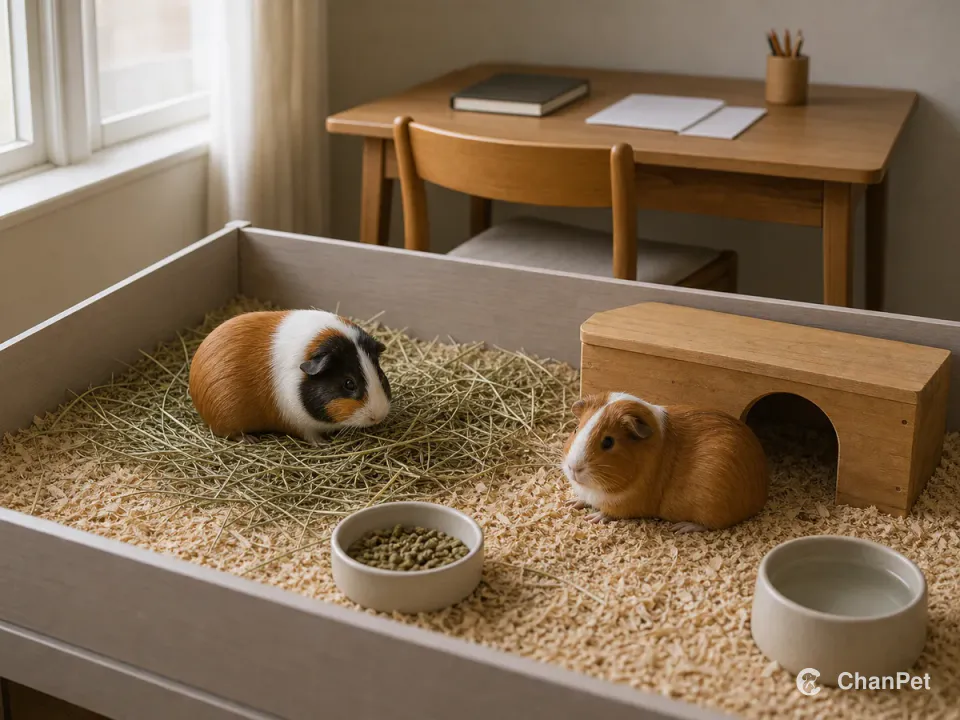
A fixed moment for hay, water, and bedding checks gives a pair steady care during a busy term.[1][2]
A student pet when the address and the backup are steady
Put the late class and the holiday on the same calendar
A pair's care carries on through deadlines and breaks. Use Smart Match to compare your housing, time away, and daily schedule with pets that suit the life you have now.[2][3]
Common questions
Can guinea pigs live in shared student housing?
Sources
Sources used in this article
- [1]Know Your Guinea Pig Is HappyRSPCA
- [2]Keeping Guinea Pigs TogetherRSPCA
- [3]Small MammalsCenters for Disease Control and Prevention