A short check keeps small problems small
Low maintenance begins with a very short routine: look at the damp area, food remains, lid and cover. Isopods dry out easily, so waiting for a major clean before you notice a dry habitat can leave you behind the problem.[1][2]
The check does not mean digging through all the substrate. A transparent side and one settled viewing corner are enough for most days. Low maintenance means turning care into a small habit that you can actually keep.[2][1]
Feed lightly and read the result
Isopods use leaf litter and organic material, so extra food works best as a small addition. Feeding research shows that intake changes with environment and condition. A large pile makes it harder to tell what the colony used and harder to keep the enclosure clean.[1][3]
Treat feeding as a chance to observe. Notice what disappears and what remains, then adjust the next portion. Remove food that is clearly spoiling instead of calling every leftover part of a natural ecosystem.[3][2]
Clean without resetting the whole home
Routine care means removing spoiled food and obvious waste while checking cover and moisture. Emptying every leaf and all substrate on a fixed schedule takes away the colony's settled shelter and erases the changes you are trying to understand.[2][1]
Plan a fuller tidy when colony numbers grow, substrate structure changes or the enclosure develops a clear smell. Small routine work prevents an exhausting reset later.[3][2]
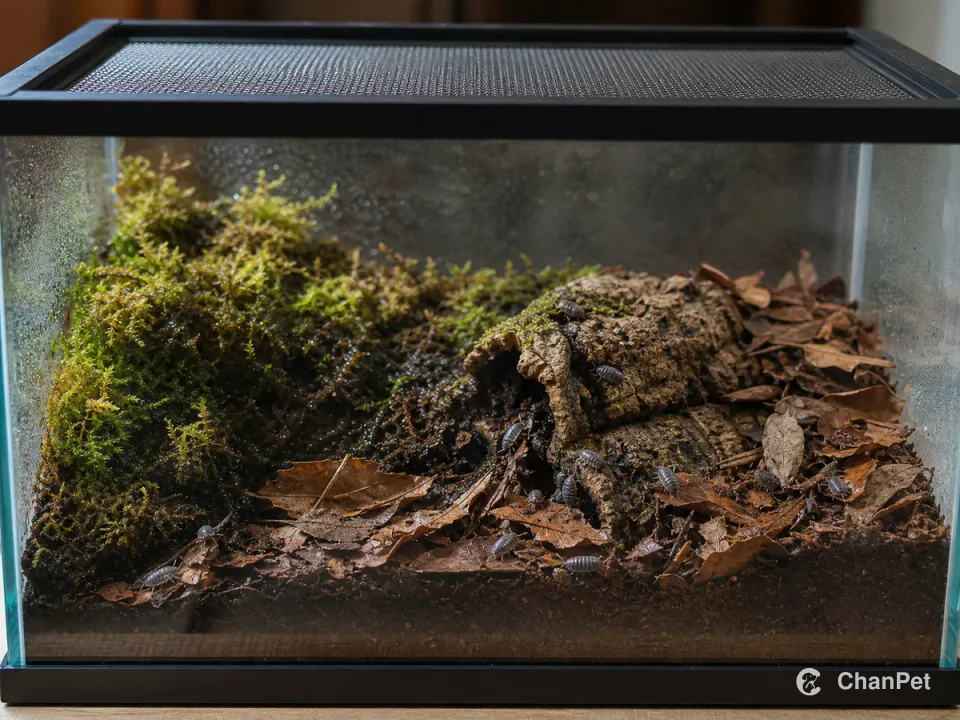
The moist corner, leaf layer, and hides all benefit from a quick regular check; small changes are the daily work of a small enclosure.[2][1]
A good fit for someone who keeps small habits
The easiest care happens before anything goes wrong
Moisture, food and cleaning are simple tasks. Leaving them until a crisis makes them much harder. Keep a small routine and isopods offer calm, low-pressure companionship.[1][3]
Common questions
Sources
Sources used in this article
- [1]Management Considerations for Millipedes and Isopods: Do Insecticides Work?Iowa State University Extension and Outreach
- [3]Reference values for feeding parameters of isopods (Porcellio scaber)Frontiers in Zoology
- [2]A practical guide for the husbandry of cave and surface invertebratesCommunications Biology