Buy function before the finished look
A limited budget can vanish into a photogenic display. Isopods instead rely on a moist, sheltered microhabitat with organic material. Extension and research sources place leaf litter, soil, cover and moisture at the centre of their activity.[1][2]
Start with a secure container you can observe, then build a damp refuge and leaf-litter layer. Decorative bark, backgrounds and lighting can wait. A plain enclosure with the right basics gives the colony a better life than an impressive enclosure missing them.[1][2]
Choose a colony you can understand
Unusual colours can tempt anyone, but a tight budget needs predictability. A common species with well-documented habits makes it easier to choose substrate, food and conditions. Get one colony stable before you decide whether to expand the hobby.[1][2]
Food does not need to pile up either. Isopods use leaf litter and organic material, while extra feeding should follow what the colony actually consumes. Feeding behaviour changes with conditions, so stocking more supplies than you can use does not improve care.[2][3]
The cheapest route is avoiding repeated resets
Moving the colony, replacing substrate and changing food every time you worry can mean buying the same things twice. Pick a sensible location, observe for a while and make one small change when evidence points to a problem.[1][3]
Leave some money for ongoing basics. Leaf litter, substrate top-ups and occasional container maintenance serve the colony more than a one-off decoration splurge. A stable small habitat has more value than a flashy short-lived display.[2][3]
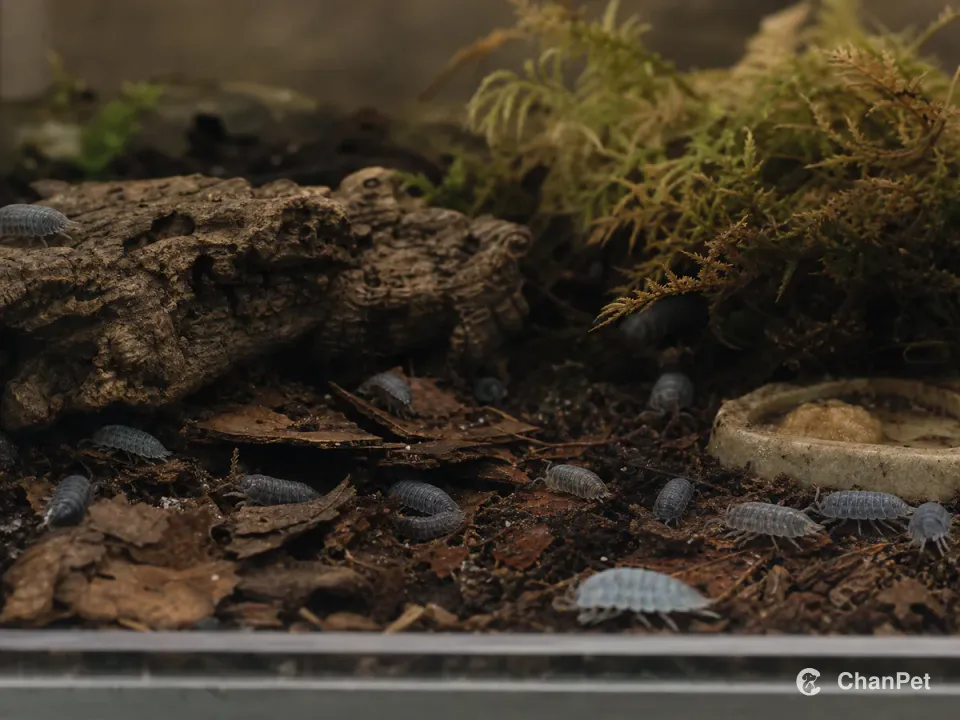
Leaf litter, bark, and a moist area can make a simple habitat with cover; stability matters more than decoration.[1][3]
When the habitat basics work, the budget works
Make each purchase part of the colony's comfort
A modest, steady isopod enclosure beats expensive decor that does not suit the species. Meet the microhabitat first, then upgrade slowly if you still want to.[1][3]
Common questions
Sources
Sources used in this article
- [1]Introduction to Invasive Terrestrial IsopodsPenn State Extension
- [2]Terrestrial isopods in urban environments: an overviewZooKeys
- [3]Reference values for feeding parameters of isopods (Porcellio scaber)Frontiers in Zoology