Make a brief daily look useful
Start with the enclosure. Check that the closure is secure, water is clean, the heat and hiding areas look usual, and there is no fresh waste waiting for cleanup. These small checks take little time when the habitat is set up for easy access.[1][2]
Then notice the snake without asking it to perform. A milk snake may spend much of its time under cover. Look for familiar use of hides, clean body surface, and an ordinary response to the environment instead of lifting it out for every check.[2][1]
Keep the weekly record short
Once a week, look back at the feeding date, water changes, waste, shed, and equipment notes. A short record helps you see what belongs to a routine and what is truly new. It also keeps a missed job from disappearing into a busy week.[1][2]
Feeding deserves its own line in the record. Note what was offered and how the snake responded, then record any remaining food or later change in behavior. You build a useful history without turning care into a complicated report.[2][1]
Finish each task with clean hands
Reptiles and their habitat can carry germs even when the snake looks healthy. Wash hands with soap and running water after contact with the enclosure, snake, food, water, or tools. Make this the last step of every small care task.[3]
Keep the supplies ready so the routine stays easy to follow. A dedicated cleaning cloth, food tool, and handwashing plan make weekly maintenance much less likely to spill into the kitchen or get delayed until later.[3][1]
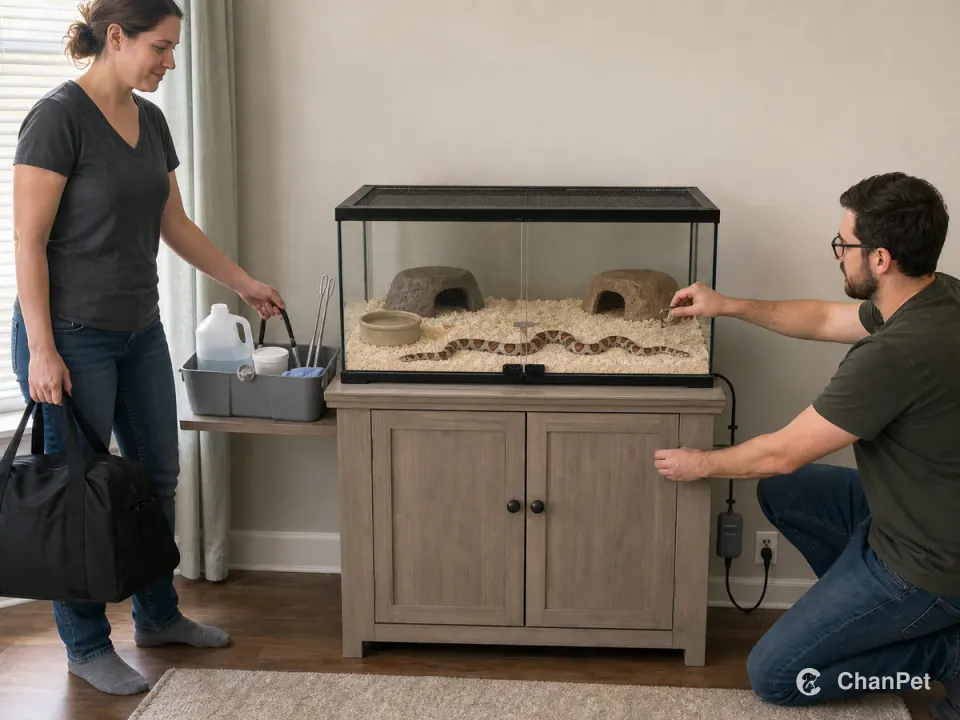
A clear handoff keeps water, temperature, waste cleanup, and feeding hygiene on schedule while the keeper is away.[2][1][3]
Milk snake care is manageable when the small jobs stay small
Use Smart Match to compare space, time, budget, and long-term care support before choosing.
Want to see whether the routine fits your day?
Smart Match lets you compare milk snake care with your time, cleaning habits, and comfort with a regular record before you commit.
Common questions
What should I check every day for a milk snake?
Sources
Sources used in this article
- [2]Milk snake — Lampropeltis triangulumKansas State University Behavioral Ecology Research Group
- [1]Identification and Husbandry of Commonly Kept SnakesAssociation of Reptile and Amphibian Veterinarians
- [3]Reptiles and AmphibiansCenters for Disease Control and Prevention