The daily task is observation
A ranchu does not need a walk, and that changes the shape of the commitment. The task happens in front of the aquarium. CDC recommends observing fish and their environment every day. Feed the ranchu, look at its movement, and check whether the water and equipment look as they did yesterday.[1]
That pause is where a low-maintenance routine earns its value. You are likely to spot uneaten food, a stopped filter or an unusual change before it becomes a larger mess. The best routine is brief enough to survive a rushed morning and regular enough to mean something.[1][2]
The weekly work is water care
The aquarium does not stay stable by itself. Goldfish are a poor fit for bowls and very small tanks because water chemistry is difficult to manage in a tiny volume. A tank and filter give you a workable system, then you still need to keep its equipment clean and functioning.[2]
Put water changes and filter care on the same calendar as groceries or laundry. Keep the supplies together, so the job starts without a search through closets. A regular, simple routine is easier to live with than a large rescue clean after several missed weeks.[1][2]
An absence still needs a real person
An aquarium is easier to leave than a dog, but it still needs a person who knows what to look for. Before a trip, show the backup carer the food, the equipment and the normal appearance of the tank. A vague request to check on the fish leaves too much to guesswork.[1]
Oregon Sea Grant notes that goldfish can live more than ten years in a well-maintained aquarium. That long view changes the meaning of low maintenance. The care may be compact, yet it stays on the calendar through vacations, new jobs and changes of home.[3]
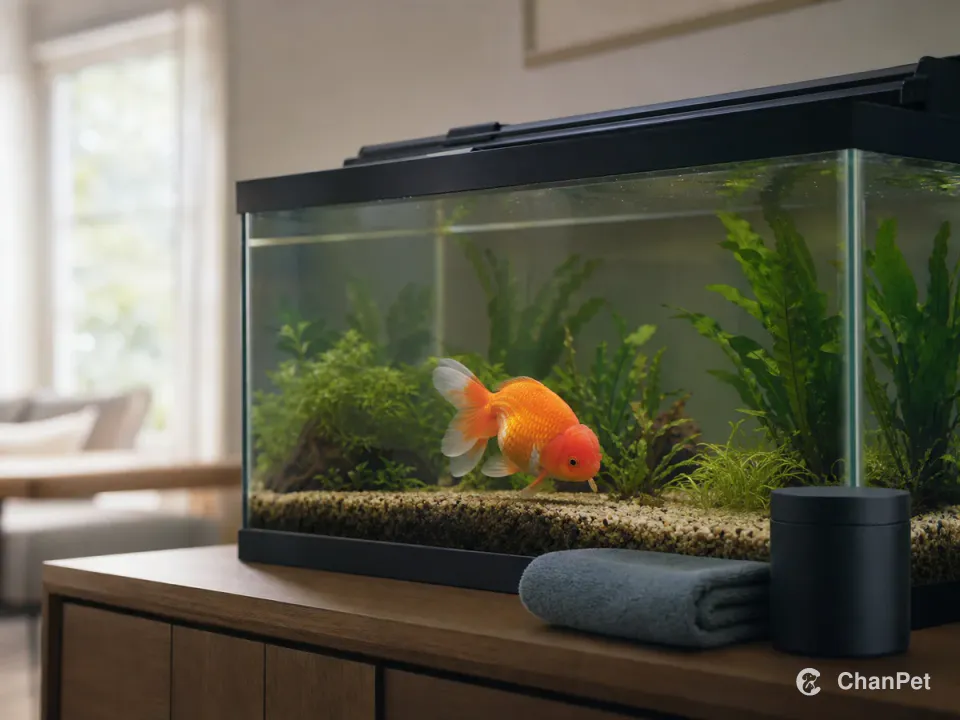
Equipment can make routine care lighter, but the fish and water still need your attention.[2][3]
Choose a small routine you can repeat
Quiet care still has a rhythm
The ranchu can fit a calm home because the work is focused and predictable. Keep the daily look, the weekly water work and the travel backup in place, and the aquarium stays much easier to enjoy.[1][3]
Common questions
Can an automatic feeder replace a person during a trip?
An automatic feeder may dispense food, but it cannot observe the fish or notice an equipment problem. Arrange a person who can check the ranchu and the aquarium during an absence.[1]
Sources