Start with the sound, not the cage size
Cockatiels are social birds, and a call is part of how they stay in touch. BirdLife Australia records a clear flight call and describes the species as gregarious throughout the year. A pet bird may whistle, chirp or call from another room when it hears people moving.[1]
AAV describes cockatiels as relatively quiet companion birds. That can be a good fit for people who want bird sounds rather than constant volume. It does not promise a library-quiet home. Listen to your own need for silence at work, sleep and calls before deciding.[2][1]
Contain the everyday mess where it starts
A cockatiel's cage is the center of its food, water, perches and dropped material. AAV calls for housing that is clean and easy to manage. Keep the cage away from food preparation and allow enough space around it to sweep and change the liner without moving furniture.[2][3]
Use a mat or easy-to-clean floor surface around the cage, and keep a hand vacuum or brush nearby if that suits your home. The aim is a short routine after food and activity, rather than waiting for feathers and husks to spread through the room.[2]
Clean with a clear hygiene boundary
CDC says to wash hands after handling a bird, its dishes, toys or cage supplies. Keep the soap easy to reach and make hand washing the last step of every feeding and cleanup session. This is simple, but it matters when the care task happens several times a day.[3]
Do not wash bird bowls, cage parts or cleaning tools in the kitchen sink. CDC explains that germs can cross-contaminate food-preparation areas. Choose a separate cleaning spot and store bird-only tools together, so the boundary stays clear for every person in the home.[3]
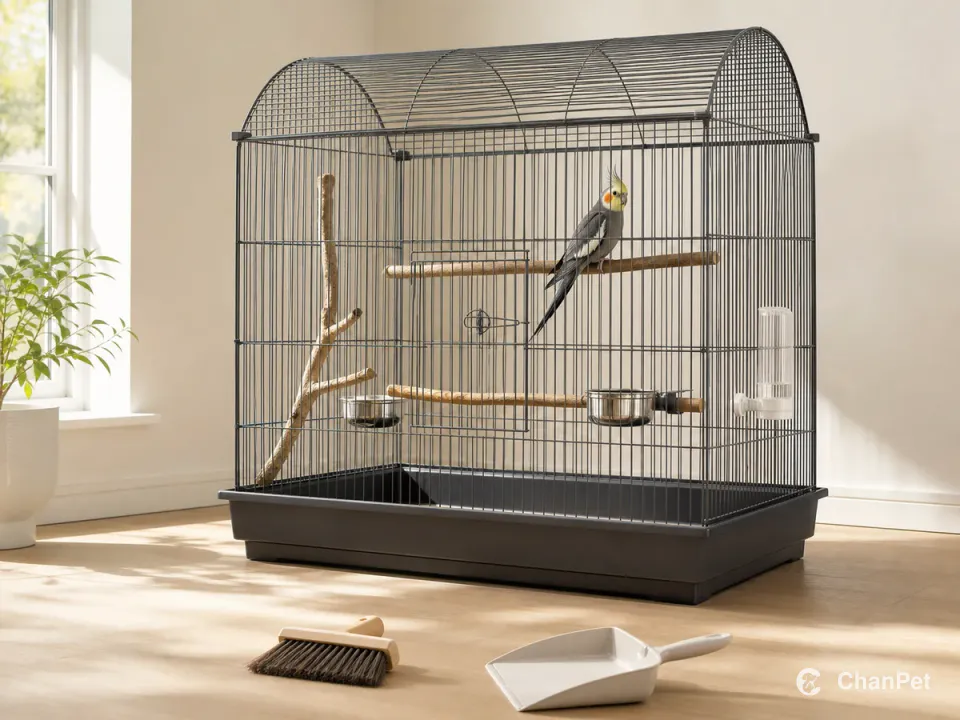
A closed cage and tools kept outside it make a quick clean-up less disruptive for the bird.[2][3]
Choose the bird when the routine suits your definition of tidy
Clean little and often, then enjoy the bird
A short sweep, fresh liner and washed hands keep the cage area under control. Those small habits leave more room to enjoy a cockatiel's voice and character instead of fighting its normal mess.[2][3]
Common questions
Will one cockatiel be quiet enough for remote work?
Where should I clean the bird's dishes and cage tools?
Use a cleaning space away from the kitchen sink and food-preparation areas. Wash hands right after handling the bird or its supplies.[3]
Sources
Sources used in this article
- [2]CockatielsAssociation of Avian Veterinarians
- [1]CockatielBirdLife Australia
- [3]BirdsCenters for Disease Control and Prevention