Let adults own the routine from day one
A cockatiel may become part of the family's daily conversation, but it needs one adult to own the care plan. That person keeps food and water supplies ready, arranges safe activity, watches for changes and knows who to call for veterinary help. A child's enthusiasm can be a lovely part of the relationship. It cannot carry the practical responsibility.[1][2]
Cockatiels are social birds. BirdLife Australia describes them as gregarious and communal roosters in the wild. Family life can offer regular company, provided the bird also has a reliable cage base and chances to step away from noise when it chooses.[3][1]
Teach calm contact instead of brave handling
A child can help by sitting quietly nearby, offering a prepared treat with adult guidance or helping notice when water needs changing. Adults should decide when the bird has had enough. Do not pass the cockatiel around, chase it from a perch or insist that it step up for a visitor.[1][2]
CDC advises close supervision when children interact with pet birds. A bird's beak and talons can injure a child, and a bite or scratch needs prompt cleaning. Teach children to pause, call an adult and give the bird room when it moves away or looks unsettled.[2]
Make hygiene a visible family habit
Keep soap and towels ready near the care area. CDC says to wash hands after touching a bird, its dishes, toys or cage supplies, and adults should supervise young children. A simple before-and-after routine makes the rule easy to remember.[2]
Give cage cleaning to an adult and keep equipment out of the kitchen sink. CDC warns that bird supplies can spread germs into food-preparation areas. UF also recommends a cage tray and replaceable liner, which makes cleaning less dramatic and easier to keep up with.[2][1]
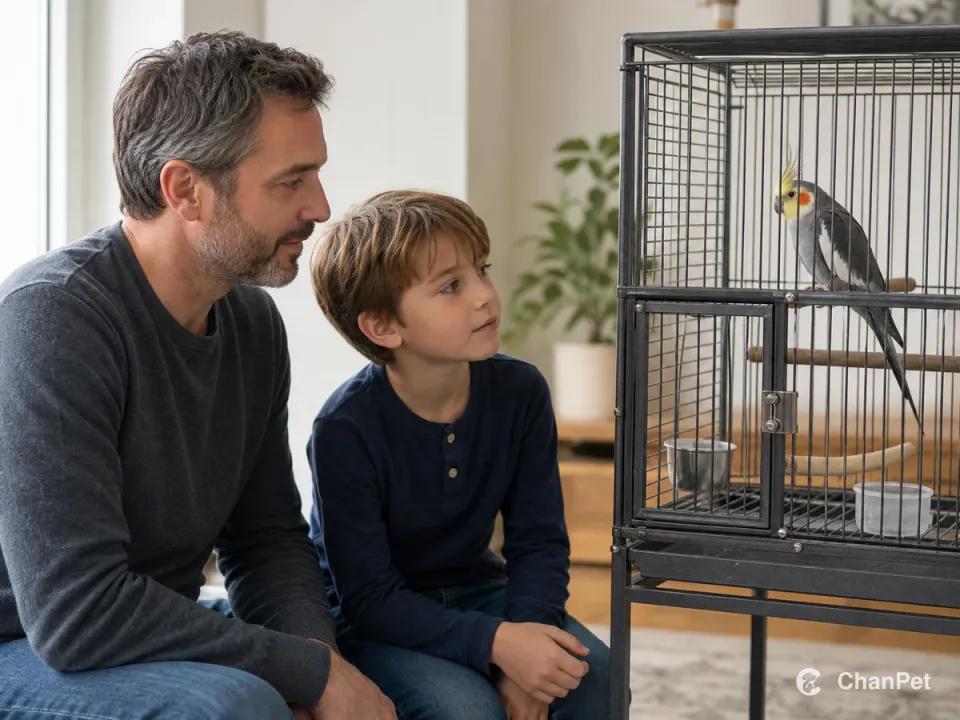
Learning to read the bird before moving closer is a family habit worth building.[3][1]
The bird belongs to the family, and the duty belongs to adults
Give children a real role that is safe to keep
Let children notice, speak softly and help with a simple routine. Let adults handle the parts that protect the bird's health and safety. That division gives the cockatiel a calmer home.[1][2]
Common questions
Can children clean the cockatiel cage?
An adult should manage cage cleaning and disposal. Children can help with a safe, supervised task, then wash hands thoroughly after contact with the bird or its supplies.[2]
What should we do if the cockatiel bites or scratches someone?
Wash the area with soap and water right away. CDC advises medical attention for a serious wound, a wound that looks infected or a bite or scratch from a bird that appears sick.[2]
Sources
Sources used in this article
- [3]CockatielBirdLife Australia
- [1]How to care for your pet birdUniversity of Florida College of Veterinary Medicine
- [2]BirdsCenters for Disease Control and Prevention