Its night has a voice
Fennecs make whimpers, barks, shrieks, growls, howls and chatters. They are communicating, not performing an occasional party trick. A household that needs quiet bedrooms and thin walls to stay calm will struggle with that timing.[1]
Wild nocturnal animals can lose rest and choice when people insist on watching or interacting at the wrong time. Quiet should not be created by turning down an animal's natural expression.[2]
Territory remains after cleaning
Fennecs mark territory with urine and feces. It is part of how the species communicates. Treating every mark as a house-training failure sets the person and the fox against a normal behaviour.[1]
Research on environment and repetitive behaviour makes the wider point: a clean-looking space is not automatically a suitable one. Cleaning matters, yet it cannot provide escape routes, digging or environmental choice.[3]
Sand is part of the life
A fennec digs and searches for food in sand. Sand, food fragments and evidence of activity are not random mess. They come from behaviours the animal needs to perform. A dust-free display-box look is the wrong goal.[1]
If quiet and tidy are the first things you need from a pet, keep looking among species suited to indoor life. A fennec belongs in education and conservation interest, not in a home that needs it to become silent and spotless.[3][2]
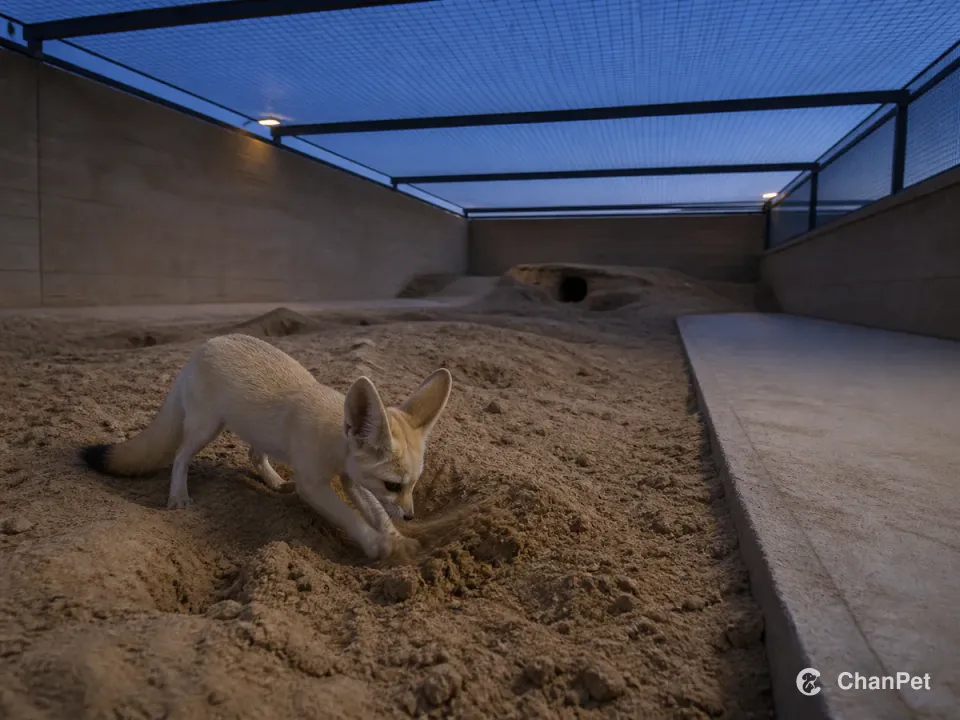
Deep sand, a sheltered den and a separate service strip give a fennec room for night digging within a clear managed boundary.[1][3][2]
Do not let neatness outrank the animal's life
Quiet and clean are lifestyle choices
Common questions
Sources
Sources used in this article
- [1]Fennec foxSmithsonian's National Zoo and Conservation Biology Institute
- [3]Husbandry of the Fennec fox: environmental conditions influencing stereotypic behaviourInternational Zoo Yearbook / Smithsonian Institution Research Online
- [2]Unveiling welfare concerns in Japanese exotic animal cafesFrontiers in Veterinary Science