Night sounds meet the wall
Fennecs communicate with whimpers, barks, shrieks, squeaks, growls, howls and chatters. Those sounds are part of fox communication, not an occasional nuisance. In a flat, they arrive on the other side of a wall at the hours when people expect quiet.[1]
A managed nocturnal animal needs activity and rest at the right times. Forcing the night to look like a quiet human evening does not solve the conflict. It simply leaves everyone on the wrong schedule.[2]
A den is more than a pet bed
Wild fennecs dig networks of tunnels with several entrances and exits. They use them to avoid daytime heat and threats. A cushion in a corner cannot offer the same digging, retreat and movement choices.[1]
Fennec husbandry research has examined environmental conditions alongside repetitive behaviour. That is a useful warning for small homes: space is not just a square-footage question. It shapes whether an animal can avoid, explore and settle.[3]
Cleaning cannot erase territory
A fennec marks territory with urine and feces. That is species communication, not a single mistake waiting for better house training. Wiping a surface keeps it clean; it does not remove the reason for marking.[1]
If apartment life is what you have, choose an animal that can genuinely live indoors with your sleep, ventilation and cleaning routine. Keep fennecs in the world of learning and wildlife appreciation.[3][2]
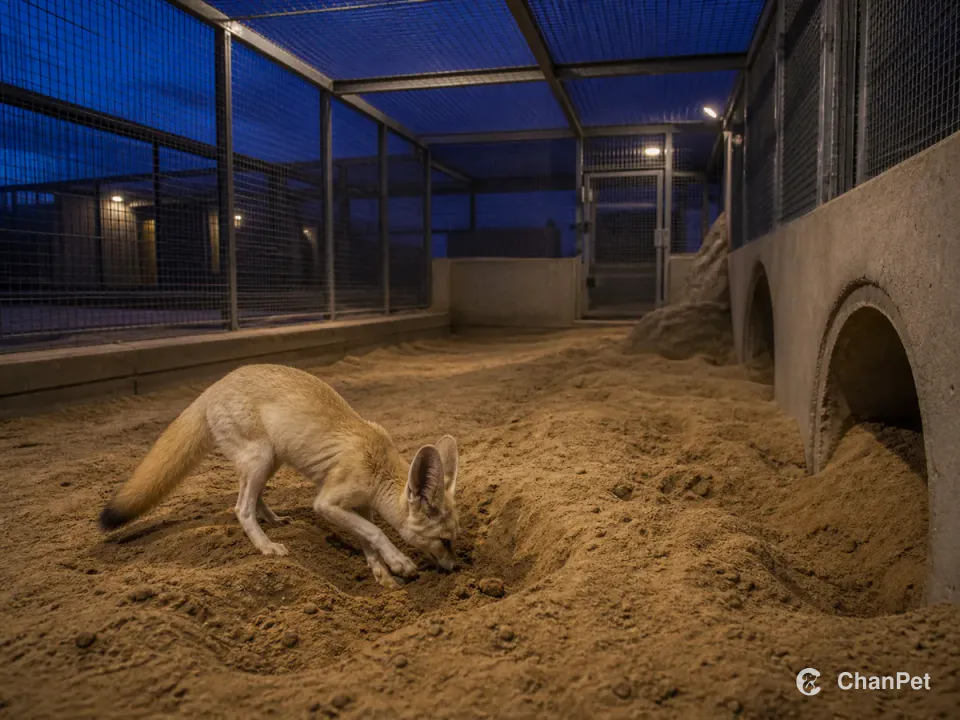
Deep sand, routes to retreats and complete containment work together for a fennec fox's night digging and hiding.[1][3]
Choose for what the apartment can hold
Room is also about what a room allows
Common questions
Sources
Sources used in this article
- [1]Fennec foxSmithsonian's National Zoo and Conservation Biology Institute
- [3]Husbandry of the Fennec fox: environmental conditions influencing stereotypic behaviourInternational Zoo Yearbook / Smithsonian Institution Research Online
- [2]Welfare and Enrichment of Managed Nocturnal Species, Supported by TechnologyAnimals