They are quiet, not sterile
Isopods do not call and they do not shed fur. They spend much of their time under substrate and leaf litter, which makes them a gentle fit for noise-sensitive homes. The visual trade-off is a small patch of nature: dark soil, bark, leaves and occasional condensation on the lid.[1][2]
A habitat made dry, bare and white may look neat at first. It also takes away the moisture and shelter isopods use. The better answer is a contained natural corner, not a colony forced to live in a sterile box.[2][1]
Cleaning is small and regular
A tidy enclosure comes from small jobs: remove food that has stayed too long, wipe the outside of the container and deal with a clearly troubled patch of substrate. That protects your table without overturning the colony's shelter every week.[3][2]
Leaf litter and organic material stay in the enclosure because terrestrial isopods are decomposers and use those materials. Cleaning aims for a healthy habitat, not an empty glass box that merely looks clean to people.[3][1]
Keep the small world inside the enclosure
The lid, container edge and your movements while feeding or tidying decide whether small animals and leaf litter stay where they belong. A quick check each time keeps the task simple.[3][1]
Move slowly when you transfer substrate or move house. Terrestrial isopods can travel with plants, soil, compost and waste. Thinking through the container and its contents together is kinder to your home and the environment around it.[3]
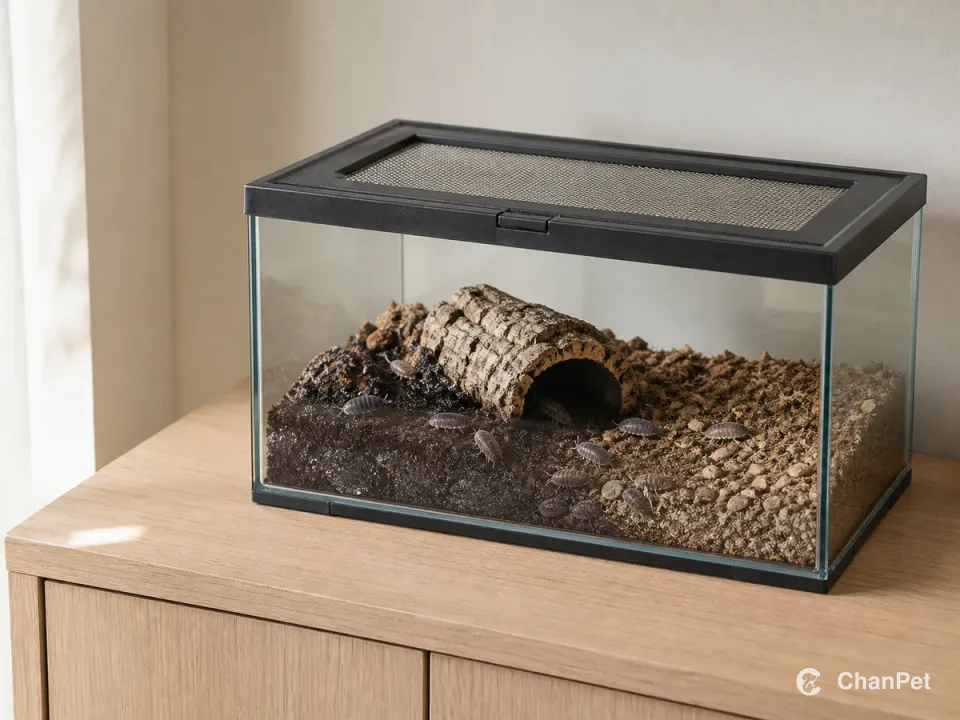
A ventilated lid and clear moisture zones keep the earthy habitat inside the glass while the surrounding room stays quiet and tidy.[1][2][3]
Give nature a boundary and it can fit a quiet home
Clean does not have to mean lifeless
Isopods suit a quiet home when you accept a container with soil, leaves and one damp corner. Small routine care keeps the room tidy and gives the colony a proper little world.[3][1]
Common questions
Sources
Sources used in this article
- [1]Management Considerations for Millipedes and Isopods: Do Insecticides Work?Iowa State University Extension and Outreach
- [2]Interspecific variation in responses to microclimate by terrestrial isopodsZooKeys
- [3]Terrestrial isopods in urban environments: an overviewZooKeys