Plan the hard week, not the easy one
Put early classes, late labs, work shifts, group projects, and deadlines on one calendar. Then add the morning equipment check, food, and cleanup. It quickly shows who handles the dragon when you cannot get back on time.[1][2]
Bearded dragons are active during the day. Basking, feeding, and their daytime environment all need attention while your timetable is running. Someone needs to check the lights, heat, and food even when campus runs late.[2][1]
Make the morning routine boring
Set out greens, tongs, supplements, and paper towels the night before. In the morning, you can spend your attention on the temperature reading and the dragon rather than hunting for supplies.[1][2]
Keep a short checklist beside the enclosure as well as on your phone. Lights, greens, feeder insects, supplements, and droppings can each have one line. A housemate can follow it without guessing your system.[1][2]
Name the person who covers breaks
Before you leave for a holiday, show one person the working enclosure. They should know where the gauges are, where food is stored, and when to call you or a reptile veterinarian. A long message sent from the airport cannot replace that handover.[1][2]
Your backup carer also needs the hygiene routine. Wash hands with soap and running water after touching the dragon, enclosure, food, or supplies. Keep the care area separate from food preparation.[3]
Treat housing changes as setup days
A new dorm room or rental needs space for the adult enclosure, power, ventilation, and cleaning. Treat the habitat as one of the first things to place, rather than the last box to unpack.[1][2]
Keep spare paper towels, common supplies, and fresh batteries for gauges on hand. A small backup kit saves time when an exam week and an equipment problem arrive together.[1][2]
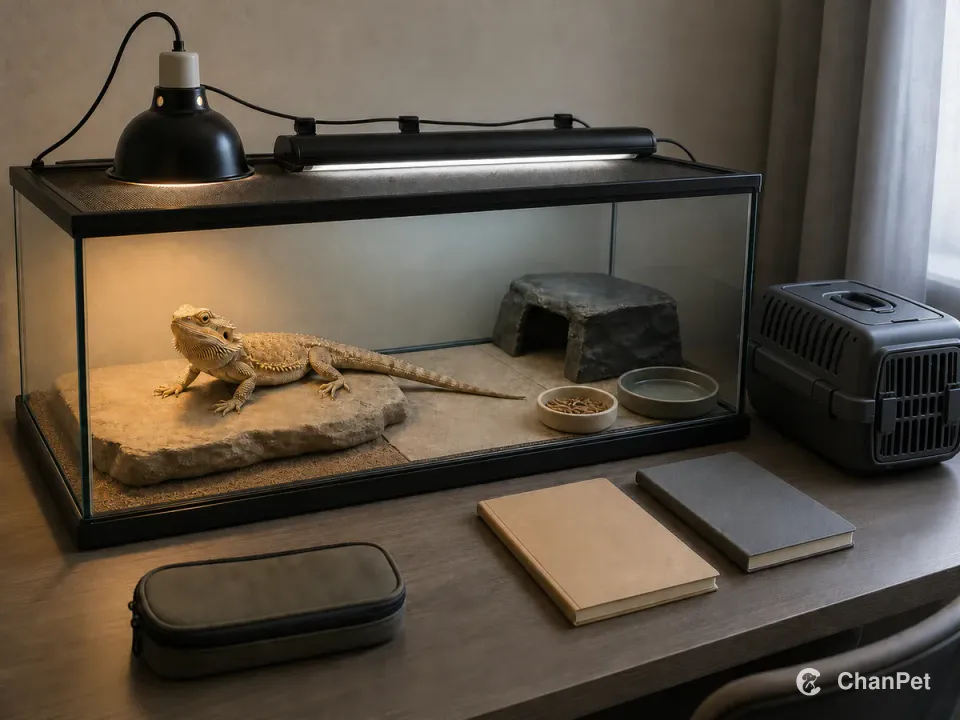
Lights, basking heat, food, water, and cleaning continue through busy weeks, while the latched carrier makes the handoff plan visible before a break or move.[1][2][3]
A student plan works when someone is named for every gap
Put your next hard week on paper and see what fits
Want to compare your timetable, breaks, and housing with other pets? Start a smart match around the life you actually have.[1][2]
Common questions
Can I just leave water and lights for exam week?
Sources
Sources used in this article
- [1]Bearded Dragon CareUC Davis School of Veterinary Medicine
- [2]Bearded dragonWorld Wildlife Fund
- [3]Reptiles and AmphibiansCenters for Disease Control and Prevention