Measure for the grown dragon
Treat the adult enclosure like a piece of furniture. A grown bearded dragon needs a large, ventilated habitat with room for a basking zone, a cooler zone, and hides. Measure that footprint before you fall for a small juvenile.[1][2]
Leave standing room in front of the doors and access above the enclosure. Feeding, spot cleaning, and checking lamps become annoying when you need to drag furniture out of the way each time.[1][2]
Give heat and light a steady home
A bearded dragon moves between its basking area and a cooler area during the day. The lamps, UVB, and gauges work as one system, so choose a room spot where the enclosure is easy to monitor and less likely to be bumped.[1][2]
Plan the outlet and cable route before the enclosure is in place. When you move, get the new equipment running first. A travel carrier helps with transport, while the finished enclosure provides the long-term environment.[1][2]
Give the small supplies one home
The enclosure is only part of the apartment footprint. Greens, feeder insects, supplements, tongs, paper towels, and cleaning supplies need a nearby drawer or bin. That makes a quick morning feed feel like one task instead of five.[1][2]
Wash your hands with soap and running water after touching the dragon, enclosure, food, or supplies. Keep reptile care away from food-preparation areas. That line matters even more when one room serves several purposes.[3]
Make moving part of the care plan
Before signing a new lease, picture the enclosure in its new room. It needs space, ventilation, power, and access for cleaning. Set up and test that location before the dragon arrives there.[1][2]
Keep the lamp model, thermometer locations, and common supplies in a short note on your phone. It gives you a simple checklist when an apartment move creates too many small decisions at once.[2][3]
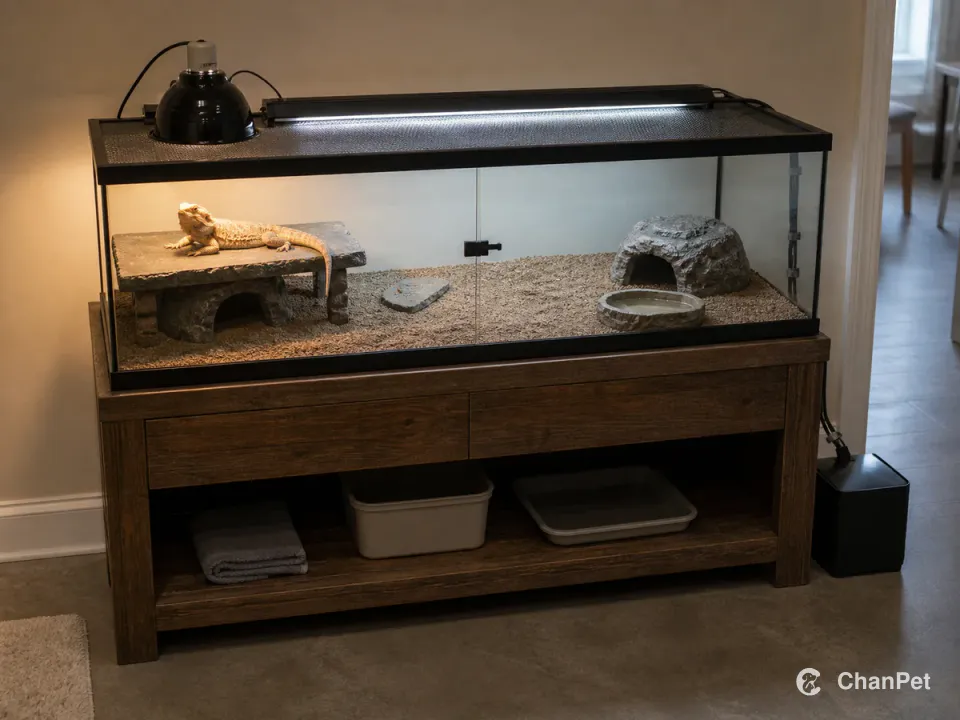
A permanent corner must fit the adult enclosure, basking heat, UVB, cool end and cleaning supplies. Stable furniture and secure cable routing keep the whole system in place.[1][2][3]
A stable corner makes apartment life much easier
See whether your room has a corner that can stay put
Use the smart match to compare your room, housemates, move plans, and cleaning habits with the care a bearded dragon needs.[1][2]
Common questions
Can I keep a bearded dragon enclosure in my bedroom?
Can I place the enclosure beside the kitchen?
A separate care area is a better fit. Keep reptile equipment away from food preparation and wash hands after handling the dragon or its supplies.[3]
Sources
Sources used in this article
- [1]Bearded Dragon CareUC Davis School of Veterinary Medicine
- [2]Bearded dragon husbandryWashington State University College of Veterinary Medicine
- [3]Reptiles and AmphibiansCenters for Disease Control and Prevention