Start with the week you dread
Use the week with early classes, an evening deadline, a group project, and laundry to test the plan. Put the morning walk, meals, toilet breaks, grooming, and evening wind-down beside the real timetable. The gaps are easier to see on paper than when you are already late.[1][2]
A small dog can travel easily, yet its routine still needs a home base. Decide who handles the dog if you have a late lab, a night shift, or a day when you are sick in bed.[1][2]
Build alone-time skills in a peaceful week
RSPCA advises building time alone gradually and watching how the dog responds. Start when your calendar has space to observe. A camera or a quiet note from a roommate can show whether the Bichon settles, paces, or keeps calling after you leave.[2]
When the dog struggles, shorten the separation and return to a level it can handle. Treat the behavior as useful information. A punishment after you come home adds stress and does not show the dog what to do next time.[2][3]
Use the moments already in your day
You can practice a polite pause before opening the door, a short settle while coffee brews, or a check-in before crossing a street. Reward-based training works well in these small pieces because the dog gets clear feedback right where life happens.[3]
Keep one small brush near your desk or sofa. A calm five-minute session after a study block makes coat care easier to sustain than hoping for an empty Saturday.[1]
The student backup plan needs a name
- One person who has met the dog and knows the usual routine.
- A written note with meals, walk timing, grooming tools, and veterinarian contact.
- A clean, fixed place for leash gear and coat-care supplies.
- A slow alone-time plan started before exam week.
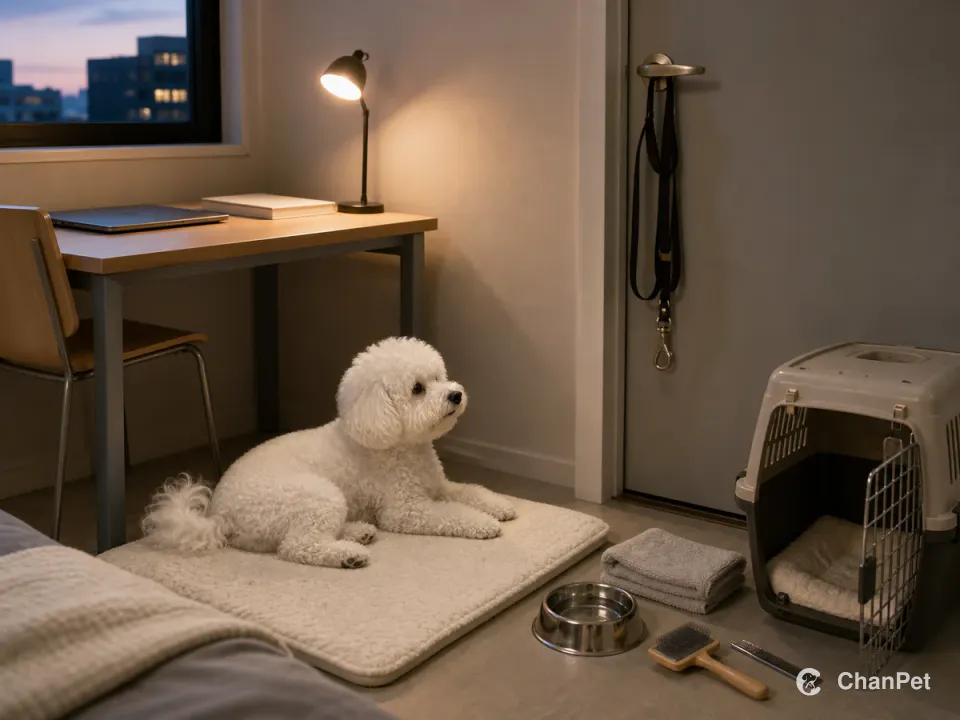
A fixed rest mat, leash, coat-care tools, and ready carrier keep the daily routine and backup handover clear during exam week.[1][2][3]
A student fit when support exists before the calendar gets crowded
A timetable becomes a care plan when the dog is on it
The most useful test is your busiest week. Give the Bichon a dependable walk, a calm place to wait, a little coat care, and a person who can step in. Then student life can feel fair to both of you.[1][2]
Common questions
Can I start alone-time training during exams?
Begin before that period. Gradual practice takes attention, and you need time to observe how the dog responds before extending the separation.[2]
How can I fit training into a busy day?
Use daily moments that already happen, such as a pause at the door or a calm settle before a walk. Reward the choice you want the dog to repeat.[3]
Sources
Sources used in this article
- [1]FCI Standard No. 215: Bichon FriseFédération Cynologique Internationale
- [2]How to Train Your Dog to Stay Home AloneRSPCA
- [3]Position Statement on Humane Dog TrainingAmerican Veterinary Society of Animal Behavior