Your evening is its start
Student pressure often lands at night: assignments, revision, shared bathrooms and the next morning's class. A fennec is beginning its food-searching, digging and active time right then.[1]
Nocturnal welfare depends on stable light, rest and activity patterns. Asking a fennec to be quiet in the day, then less active at night during exams does not create a workable routine.[2]
A school break is another disruption
Student housing can change between terms, placements and graduation. Boxes, new housemates, short lets and trips home keep resetting the space. A fennec needs a continuous environment for digging, retreat and night activity, not a series of fresh starts.[1][2]
Research on exotic-animal interaction settings shows that animal rest and choice can disappear inside human schedules. Student life is allowed to change quickly. It simply is not the place to ask a wild animal for that same flexibility.[3]
Keep the interest through learning
Fennecs are a great reason to learn about deserts, night behaviour and animal care. Follow conservation education, watch keepers explain habitat design or support wildlife work instead of turning curiosity into ownership.[1]
If you want a companion during study, put exams, breaks, moves and one named backup carer on the same page. Then choose a domestic animal that can live well through those real interruptions.[2][3]
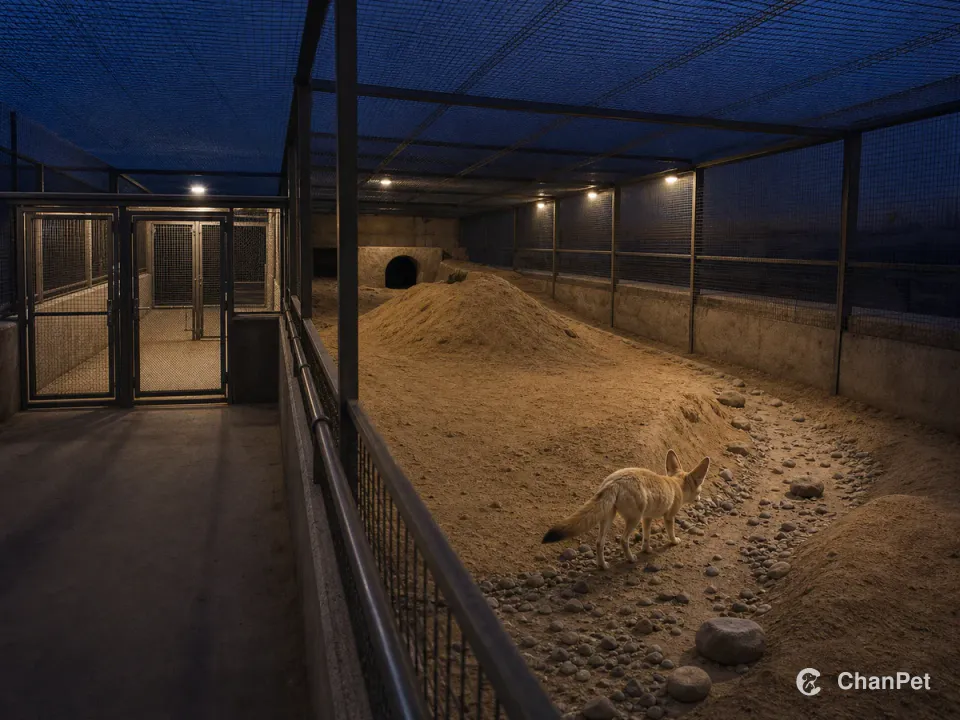
A night route needs linked retreats, digging space and secure management boundaries, all maintained by a stable professional setting.[1][2]
Leave space for study and reliable care
The hardest week tells the truth
Common questions
Sources
Sources used in this article
- [1]Fennec foxSmithsonian's National Zoo and Conservation Biology Institute
- [3]Unveiling welfare concerns in Japanese exotic animal cafesFrontiers in Veterinary Science
- [2]Welfare and Enrichment of Managed Nocturnal Species, Supported by TechnologyAnimals