Use your hardest week as the test
A blank timetable can make student life look wonderfully flexible. Then a lab runs late, a group project takes the evening, and a trip home appears with two days' notice. Goldens are active sporting dogs that benefit from regular exercise and company, so their care needs a place in the day before the calendar gets crowded.[1]
Write down one genuinely difficult week. Include the early class, work shift, laundry, travel time and the night before a deadline. Who does the morning walk? When does the dog get a slower sniff and a chance to settle? Those answers are much more useful than a promise that you will find time later.[1][2]
Teach alone time when life is calm
Exam week is a poor time to discover how a young Golden feels about being alone. The RSPCA advises building time apart in small steps and watching how the dog responds. Practice while you can return, make a note and try again with a calmer plan.[2]
A camera can show pacing, barking or an inability to settle. Use what you see to shorten the next absence or add support, rather than treating a chewed cushion as a personal insult. Goldens often enjoy company, and a student schedule needs to make that need workable.[2][1]
Choose a backup person before the dog arrives
A backup caregiver should be a real person with a key, a phone number and a working knowledge of the routine. Let them handle a normal walk before you rely on them during a fever, a family emergency or a last-minute train home. A Golden's size and enthusiasm make that rehearsal worth doing.[1][2]
Puppies also need thoughtful outings during their early development. AVSAB recommends safe, positive experiences with people, places and environments. A student who moves frequently needs to make those introductions gentle and repeatable, instead of saving social exposure for one chaotic welcome week.[3]
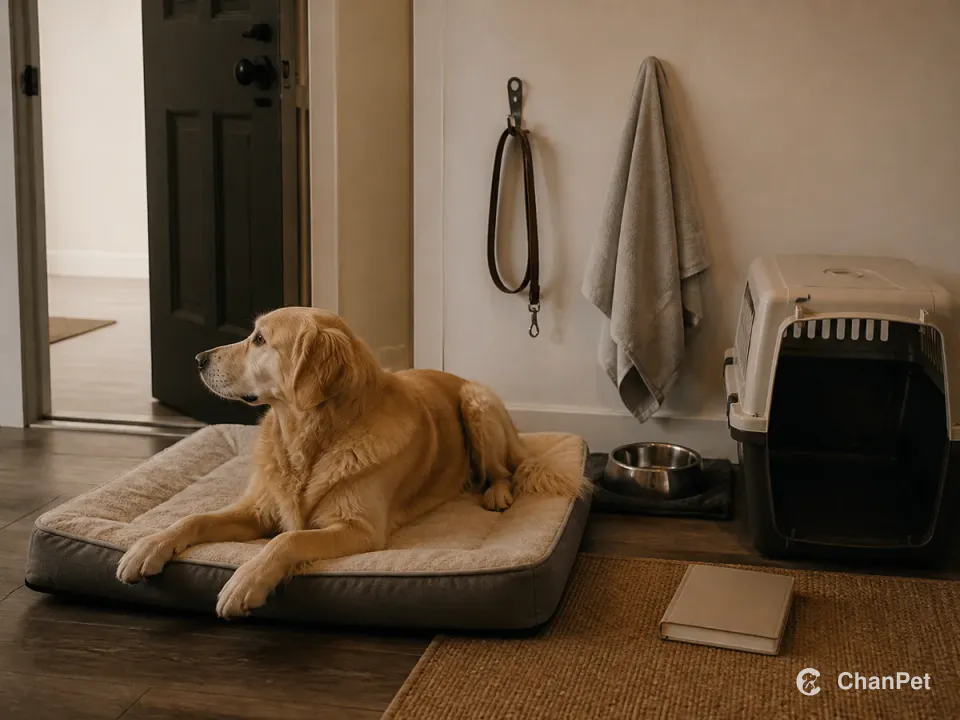
A calm post-walk rest spot, fixed walking gear and a ready carrier give a busy week or break handover a clear starting point.[1][2][3]
A named backup changes the whole plan
Check the term you actually have
Want to see whether a Golden Retriever fits your student routine? Put your home, travel and time away into a smart match before a crowded semester makes the decision for you.
Common questions
Can a student leave a Golden Retriever alone during classes?
Build time alone gradually and pay attention to the dog's response. A class schedule works better when the dog has already practiced calm, manageable absences.[2]
Sources
Sources used in this article
- [1]Is a Golden Retriever Right For You?Golden Retriever Club of America
- [2]How to Train Your Dog to Stay Home AloneRSPCA