Plan the break before you bring the colony home
A busy exam week is manageable; a long break is the real interruption. Before leaving, aim for a settled enclosure: the same location, a checked damp refuge and no pile of extra food. Last-minute full substrate changes or heavy spraying make conditions harder to predict.[1][2]
For a longer absence, ask one person to follow a short checklist. They do not need to excavate the colony. They only need to look at the damp area, lid and clearly spoiling food. Three specific tasks work far better than asking someone to 'keep an eye on it'.[2][1]
Keep the hygiene boundary clear beside your books
Public-health guidance says to wash hands after touching animals, food, habitats or waste. With an isopod enclosure, that habit can stay simple: tend the substrate or food, wash your hands, then get back to coursework or a snack.[3]
Keep feeding dishes, tongs and substrate supplies together rather than mixing them with mugs or kitchen gear. It makes the routine clear to housemates and cuts down on rushed mistakes.[3][2]
Tiny rituals survive a busy week
You do not need a long block of time to keep an isopod colony. Check the damp area and food when you refill a bottle or pack your bag every few days. Isopods are vulnerable to drying, so steady attention matters more than a burst of enthusiasm.[1][2]
When you move rooms, give the enclosure a protected place before you organise everything else. A secure lid, steady substrate and undisturbed cover keep the trip manageable. Do not bury it under boxes and remember it at the end of the day.[2][1]
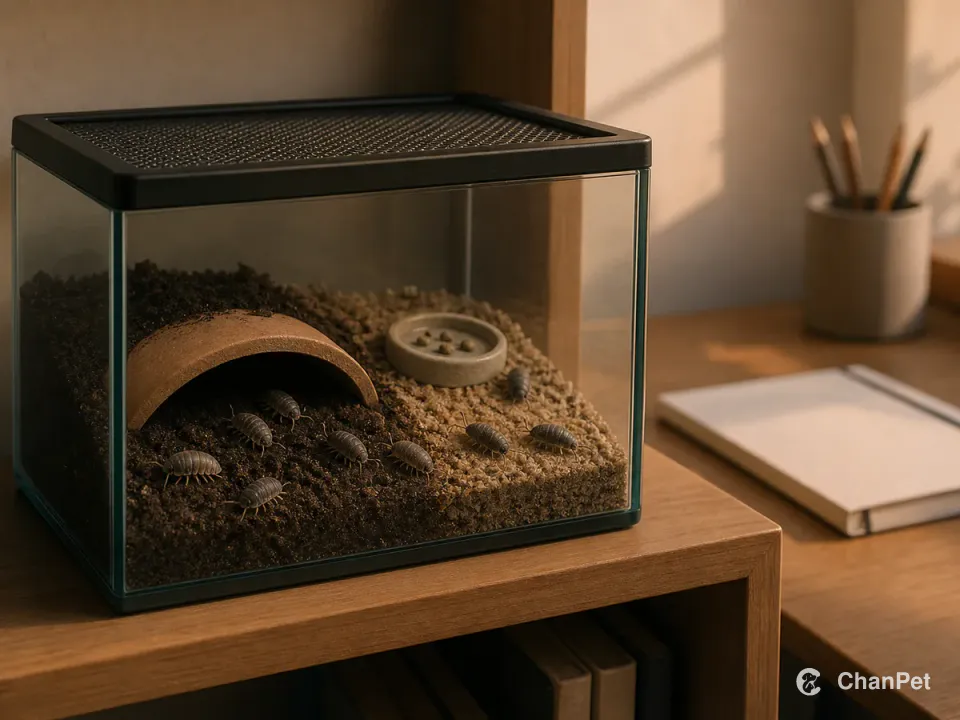
A stable shelf, a gentle moisture gradient, and a modest feed keep an isopod colony steady through a busy week.[1][2]
A good student pet for a stable little corner
Do not build the care plan on the night before a break
Set the enclosure location, absence plan and handwashing routine ahead of time. With those pieces in place, isopods fit a packed student schedule without asking for much of your study time.[3][1]
Common questions
Sources
Sources used in this article
- [1]Management Considerations for Millipedes and Isopods: Do Insecticides Work?Iowa State University Extension and Outreach
- [3]Hygiene Practices Around AnimalsCenters for Disease Control and Prevention
- [2]A practical guide for the husbandry of cave and surface invertebratesCommunications Biology