Put the busy week on paper
Open the calendar for the week you dread most. Add the early class, lab, shift, library evening, deadline, and travel day. Then place the dog's first outdoor break, meals, walk, and last toilet trip into the same boxes. Empty optimism disappears quickly on a page.[1]
The backup person needs a name, a key, and the dog's normal routine before an emergency happens. “Someone from the house” leaves too much to chance. Talk through the walk route, food, medication, and what to do if the dog suddenly acts differently.[1][2]
Make training live in the gaps you already have
Training does not have to wait for a free Saturday. Ask for a brief wait while you put on shoes. Reward a check-in at the end of the walk. Practice settling on a mat while pasta cooks. Tiny repetitions keep the rules familiar when assignments start to pile up.[3]
Housemates need the same few cues and the same reward plan. One person inviting a jump while another punishes it makes a shared home confusing. AVSAB's reward-based approach gives everyone a calmer common language.[3]
Use the records to keep the dog visible
A term can move fast enough that a small health change gets lost in the noise. Keep vaccination, prior-care, and veterinary notes in one shared place. The Dog Aging Project's owner-reported health work is a useful reminder that lifetime health stories are built from observations kept over time.[2]
Before a move or holiday, rehearse the handoff. Let the backup carer take a walk with the dog while you are still nearby. A real rehearsal exposes missing food, a collar that fits badly, or a cue only you understand.[1][3]
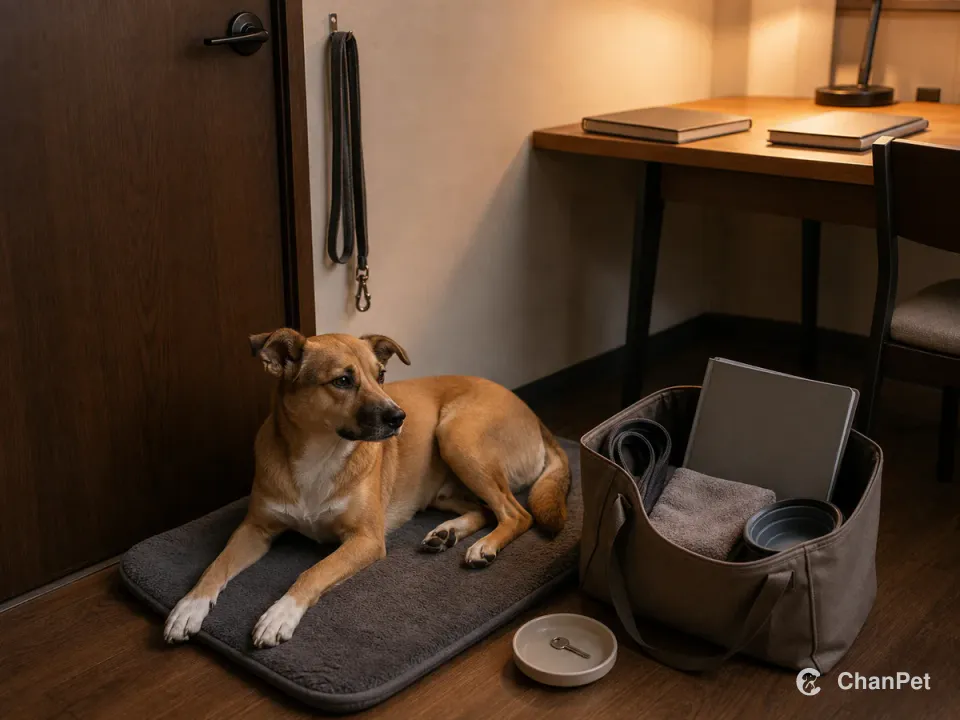
When class or an exam runs late, a named backup carer can take over with familiar supplies. The leash, water, towel, records, and spare key already have a fixed place.[1][3][2]
Student life works when the plan survives the awkward days
Plan for exam week before you plan for the cute parts
Write the hard week, choose the backup person, and practice the handoff. That is how a student plan becomes dependable for a mixed-breed dog.[1][3]
Common questions
Who should be the backup carer for a student dog owner?
How can training fit around classes?
Build a few reward-based skills into routines you already have, such as waiting at the door, checking in on a walk, and settling while you cook. Repeated short moments are easier to keep than a plan saved for a free day.[3]
Sources
Sources used in this article
- [2]Lifetime prevalence of owner-reported medical conditions in the 25 most common dog breeds in the Dog Aging Project packGeroScience
- [1]Selecting a DogAmerican Veterinary Medical Association
- [3]Position Statement on Humane Dog TrainingAmerican Veterinary Society of Animal Behavior