A study schedule is not a feeder plan
A mantis will not distract you during a late library session. That is its appeal. Its food routine still exists on the days when a lab runs late or a deadline suddenly takes over. Start by looking at your busiest two days, not your most relaxing weekend.[1][2]
Keep the list short enough to use: check the perch, check the lid, add moisture when needed and deal with remaining feeders. Small named actions are easier to fit between classes than a vague promise to care for the enclosure later.[1]
Name the person before the break starts
“My roommate will probably notice” is not a handover. Choose one person who knows where the enclosure sits, how the lid works and what a leftover feeder looks like. Do one practice check together before you leave.[1][2]
If nobody can do that, make the decision before the last night of term. The care is simple for someone who understands it, but it is confusing for a stranger dropped into a live-food and molting routine with no context.[1][2]
Keep a clear boundary around your study desk
Wash your hands after working with the enclosure, feeders or waste, then return to notes or snacks. CDC public-health guidance includes handwashing after contact with animals and their habitats as a basic habit.[3]
Store tongs, a mister and feeder supplies together rather than beside your coffee mug or cooking utensils. That simple boundary also makes the setup easier for a roommate to respect.[3][1]
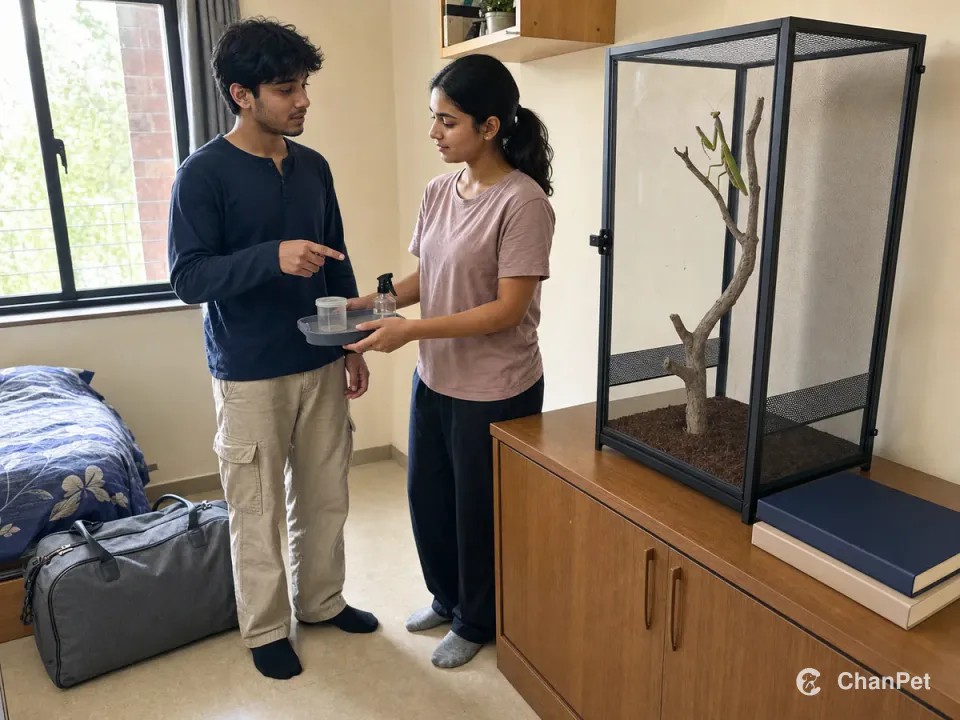
The break plan becomes real when one caregiver receives the feeder and misting routine before the travel bag leaves.[1][2]
A quiet study companion with a real backup plan
Practise the handover while you are still nearby
Write down the enclosure location and the few things that need checking, then let the backup person try it. That removes a lot of worry from exam week and travel day.[1][3]
Common questions
Sources
Sources used in this article
- [1]Kentucky Bugs: Care and FeedingUniversity of Kentucky Entomology
- [3]Hygiene Practices Around AnimalsCenters for Disease Control and Prevention
- [2]Manual of praying mantis morphology, nomenclature, and practicesZooKeys