Plan the awkward weeks first
Start with exam week, a family visit and the gap between leases. Write down who can enter the room, check the enclosure and feed the spider. A named person with the routine is more useful than a vague promise from a roommate.[1]
A tarantula may stay with you for years. San Diego Zoo reports that females can live for more than two decades in managed care. Think past this semester before you commit to an animal that can outlast several moves.[2]
Teach one backup keeper the whole routine
Show the backup keeper the exact enclosure closure, water dish, feeder routine and species name. Kentucky Entomology recommends escape-proof housing and says tarantulas are best observed inside their containers.[1]
A backup keeper does not need to make the spider social. Their job is to preserve the enclosure routine while you are away. That boundary lowers the chance of a frightened person opening the lid for a closer look.[1][3]
Make safety ordinary, not dramatic
Tarantulas are usually shy, yet a stressed animal may throw urticating hairs. UConn Poison Control describes irritation of the eyes, nose and throat after exposure. Handle enclosure tasks calmly and wash hands afterwards.[3]
If your housing changes often, protect the animal from repeated improvised moves. Keep its enclosure routine stable while you arrange a responsible handover or a settled new space. The species' need for secure housing does not pause for finals.[1][2]
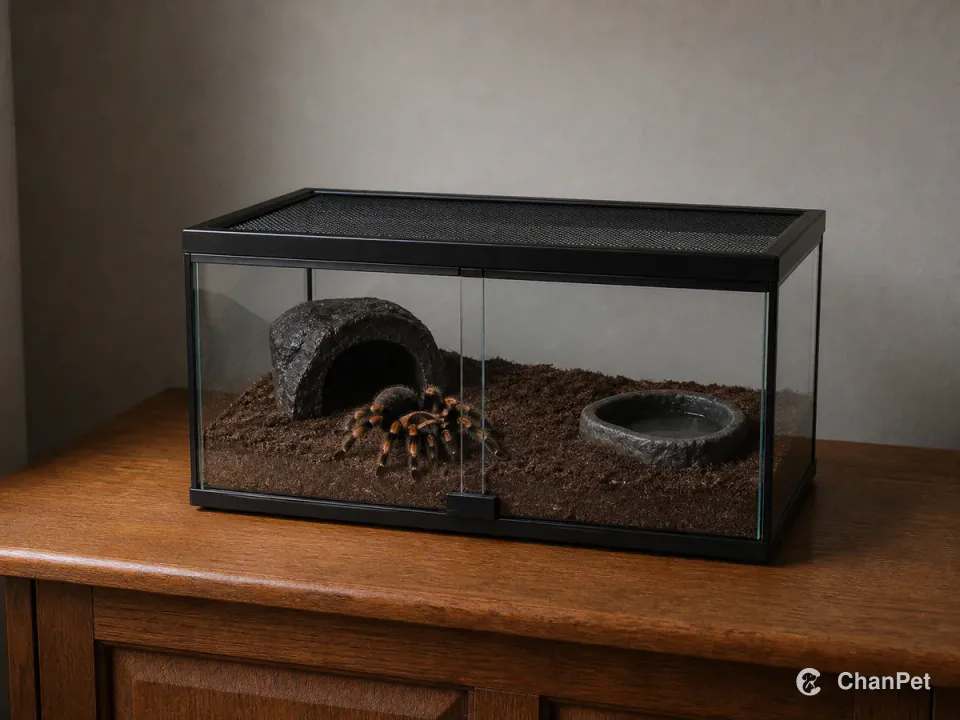
A closed terrarium on its own stable cabinet keeps the tarantula separate from people and gives a backup keeper one safe place to observe.[1][2]
A backup plan makes student care realistic
The quiet pet still needs a steady home
A tarantula may suit the study rhythm because it does not demand walks or social time. Good student care still comes from one stable enclosure and one person who knows what happens when you cannot be there.[1][2]
Common questions
Sources
Sources used in this article
- [1]Exotic Bugs: Care and FeedingUniversity of Kentucky Department of Entomology
- [2]TarantulaSan Diego Zoo Wildlife Alliance
- [3]About SpidersConnecticut Poison Control Center, University of Connecticut Health