Plan for their daytime sounds
Degus are diurnal. They eat, move, call and interact while the household is awake, and Smithsonian notes that they use alarm calls within the group. Their cage needs a home beyond the edge of a quiet work desk.[1]
Choose a spot with fresh air and fewer passing feet, while still keeping the group easy to observe. A low-traffic location reduces the chances that people and degus keep startling each other.[2][1]
Make a compact environment complete
Wheels, tubes, hides and safe chewing materials take up room because they have a job to do. Iowa State includes them in degu care to support movement, burrowing and chewing.[2]
Small-mammal welfare research connects housing, companionship and enrichment. In an apartment, focus on purposeful routes and choices rather than filling the cage with objects that leave no usable path.[3]
Keep their home away from chasing and fright
Degus are prey animals. A hand swooping from above or another pet staring at the cage can make a small home feel unsafe, so choose a location that gives the group distance from that pressure.[1][2]
Provide enough hides and separate resting options for the group. Space is also about letting each animal step out of view when it needs to, not only about the size of the cage.[3][2]
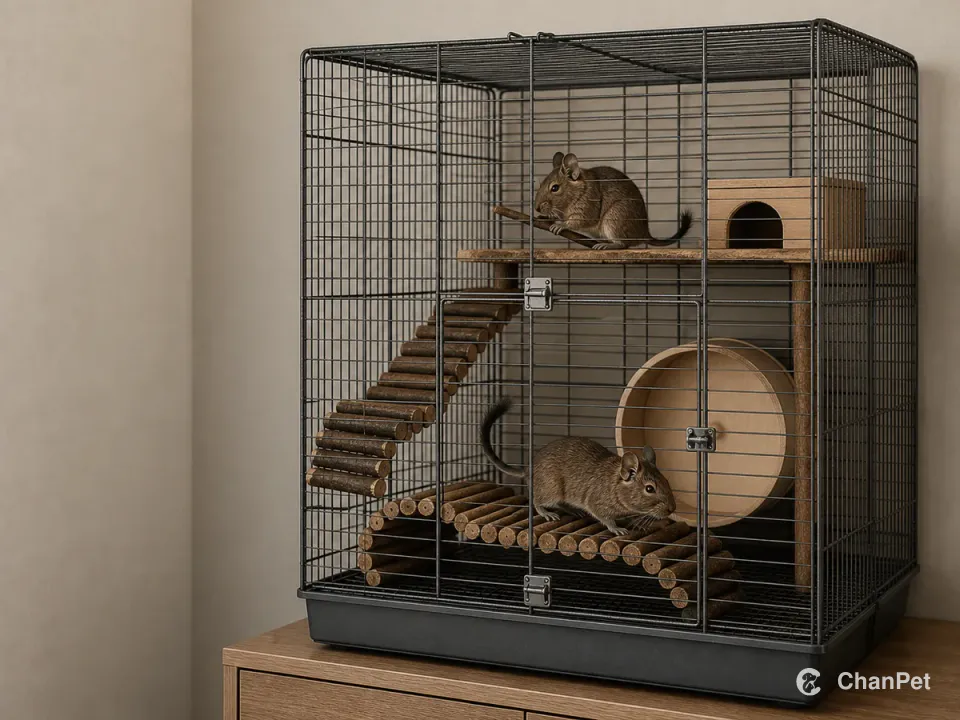
Two degus use a full vertical route in a calm interior corner, leaving room for daytime chewing, movement and companionship.[1][2]
A fit for an apartment that accepts daytime life
Do not shrink their day down to their body size
Daytime activity, companions and chewing need a place in the apartment plan. Set up the cage and enrichment well, and a smaller home can still feel spacious to degus.[1][2]
Common questions
Sources
Sources used in this article
- [1]DeguSmithsonian's National Zoo and Conservation Biology Institute
- [2]Caring for your DeguIowa State University Lloyd Veterinary Medical Center
- [3]What Are the Most Prevalent Welfare Issues for Pet Small Mammals?Animals