Look for daytime space in the schedule
Degus are active in the day. A fixed short slot before class, at lunch or in the early evening can cover hay, a group check and calm interaction. Late night should not carry the whole care routine.[1]
Use the busiest week as your test. On early-class days, long labs, work shifts and exam deadlines, who refreshes hay, checks the water bottle and sees that the cage stays secure?[1][2]
Hand over the full group, not one favourite animal
Degus live in groups. RSPCA asks carers to provide enough resources for every member. A holiday carer needs to know the group size, where hay and water are kept, and what should prompt a call.[2]
Write the daily basics in short sentences: refresh hay, check water, secure doors and remove wet bedding. The person helping does not need to make every decision; they need a reliable way to cover the essentials.[2]
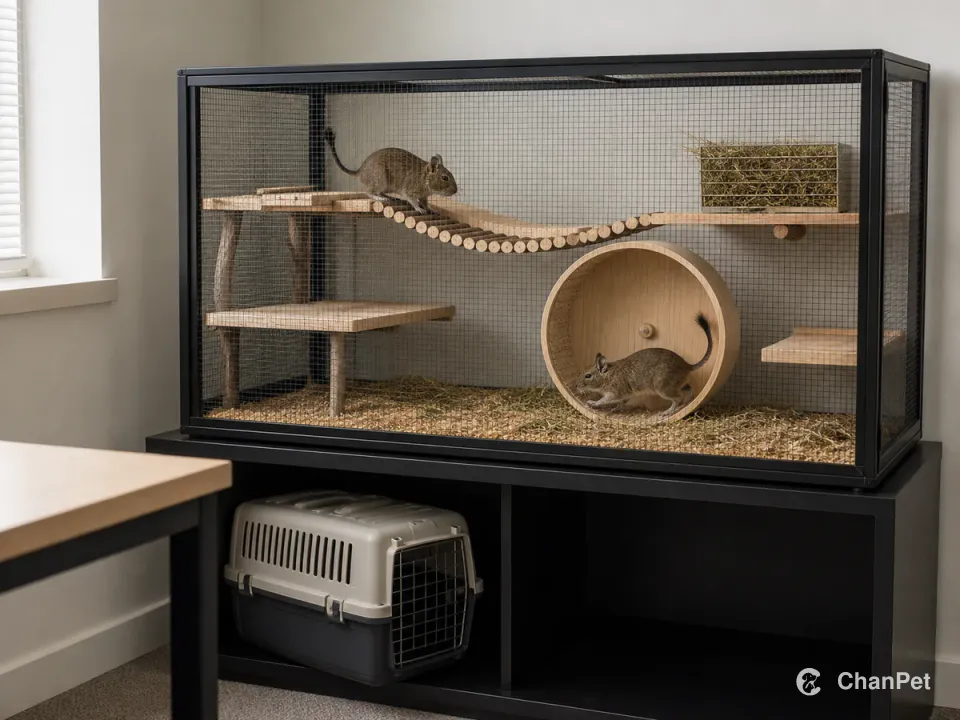
Daytime group activity, a settled cage, and a prepared handover help care continue through classes and breaks.[1][2]
A fit for a student with daytime and holiday cover
Plan the day and the break before the adoption
A degu group needs a stable cage, hay and someone to care when you are gone. Class schedules can change; their basic routine needs a handoff.[2][3]
Common questions
I have free time mostly at night. Can I still keep degus?
Degus are active in daytime hours. Look for a reliable daytime window for hay, observation and interaction before deciding whether your schedule fits them.[1]
Sources
Sources used in this article
- [1]DeguSmithsonian's National Zoo and Conservation Biology Institute
- [2]Keeping Degus TogetherRSPCA
- [3]Stay healthy around small petsCenters for Disease Control and Prevention