Place the cage where care is easy to do
A good apartment cage spot has fresh air, a stable surface and enough room for you to change water and clean small areas. Keep it away from cooking fumes and strong drafts, then make it part of the route you walk every day.[1]
A cage hidden behind furniture often becomes a cage you notice only when it smells. Place it where food, water, bedding and the animals themselves are easy to see at a glance.[1][2]
Use a small, safe play area instead of the whole room
Rats can squeeze through gaps and chew unexpected things. Before free-roam time, secure wires, block inaccessible spaces and put away objects you want to keep intact. Then add boxes, paper and tunnels they can safely investigate.[1][2]
Studies of companion rats point out that housing, group composition and human interaction are all part of their social experience. A familiar daily play area gives that interaction a predictable shape.[3]
Clean the small areas before they take over the room
RSPCA advises replacing dirty bedding and wiping down the cage with an animal-safe cleaner. Deal with damp corners and leftover food as you see them, and the whole job stays much easier.[2]
Keep a little of the familiar nest material and layout when you clean. The group uses its environment as well as its companions to feel at home, so a calm reset makes more sense than turning the cage empty every time.[3][2]
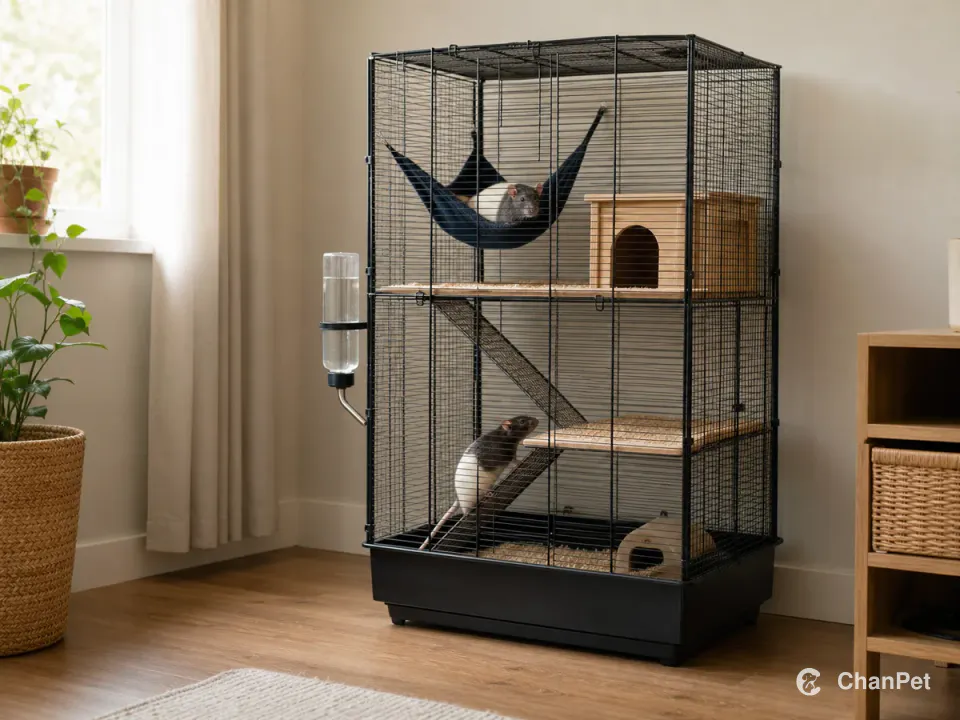
A tall cage uses vertical space, while its position still needs airflow, cleaning access, and a safe daily play route.[1][2]
A fit for an apartment with a clear daily route
Connect the cage, play area and cleaning supplies
Choose the cage location, set up the safe exploration zone and handle small messes as part of the day. That sequence lets fancy rats fit an apartment without filling every corner.[1][2]
Common questions
Sources
Sources used in this article
- [1]Providing a Home for a RatMerck Veterinary Manual
- [2]How to look after ratsRSPCA