Expect ordinary rat sounds
Rats can run, chew, move paper and visit the water bottle after dark. A person who sleeps lightly may notice those sounds more than someone who spends the day beside the cage.[1][2]
Put the cage on a stable surface and secure bottles, hammocks and loose components. Reducing the unnecessary clatter is more realistic than expecting an active group to stay silent.[1]
Clean damp areas before the room smells
RSPCA recommends replacing dirty bedding and wiping the cage with an animal-safe cleaner. Deal with wet corners and leftover food as they appear, then wash your hands before returning to the rest of the day.[2][3]
Merck recommends a cage that is ventilated and easy to clean, and warns that wood can absorb urine. Cage materials and a reliable care rhythm shape odour far more than scented products do.[1]
Separate cage noise from a breathing change
A bottle, chewing or bedding can make ordinary sounds. If one rat keeps making an unusual breathing sound and also seems less active or less interested in food, treat it as more than background noise.[4]
A lasting sound change deserves veterinary judgment. Note when it happens and what else changes, then contact a small-mammal veterinarian promptly.[4][1]
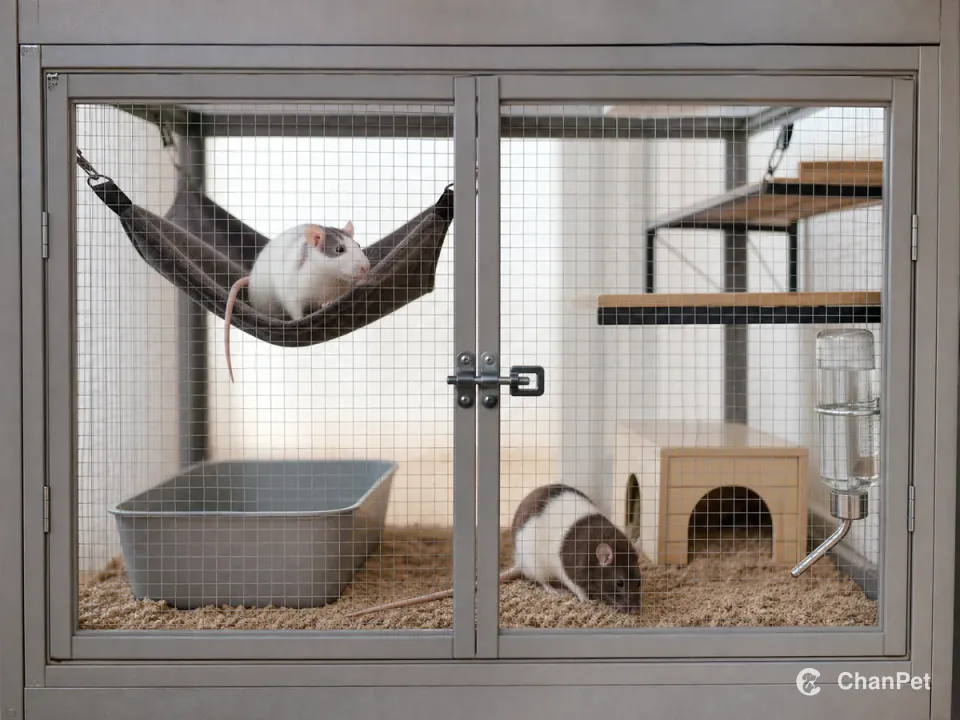
From outside the closed front doors, each part of a rat routine has a place: hammock, paper bedding, water and litter tray.[1][2]
A fit for someone who accepts gentle household sounds
Clean before odour, listen before worry
Rustling and chewing belong to rat life. Address wet bedding quickly, keep air moving and pay attention to a lasting breathing change. The cage can stay comfortable without becoming a constant project.[2][4]
Common questions
Sources
Sources used in this article
- [1]Providing a Home for a RatMerck Veterinary Manual
- [2]How to look after ratsRSPCA
- [3]Stay healthy around small petsCenters for Disease Control and Prevention
- [4]Respiratory diseases in ratsJournal of Small Animal Practice