Make room for a stable cage
Dorm furniture and study desks can move often. A rat cage works better when it stays in one ventilated, reachable place with water, food, hides and regular supervised exercise built into the room's routine.[1]
The group needs stability too. RSPCA recommends stable same-sex groups, so moving dorms or staying elsewhere means planning a safe home for the full group, not just one favourite rat.[2]
Name one person for breaks and leave a short guide
Show one carer the water bottle, food, cage latches, damp spots and emergency contact details before you leave. A short note beside the cage gives that person a usable routine instead of a vague favour.[1]
CDC notes that small pets and their cages, bedding and supplies can carry germs even when the animal appears healthy. A carer should wash hands after contact and keep food away from the care area.[3]
Keep exam-week care deliberately ordinary
Busy weeks still need water, secure doors, spot cleaning and a quick look at the group. Put those tasks into a few repeatable minutes, rather than hoping an empty weekend will fix everything later.[1]
Free-roam time can be shorter during a deadline, yet it still needs a safe form. Paper, simple foraging and calm contact give the group something to do when you have less time to spare.[1][2]
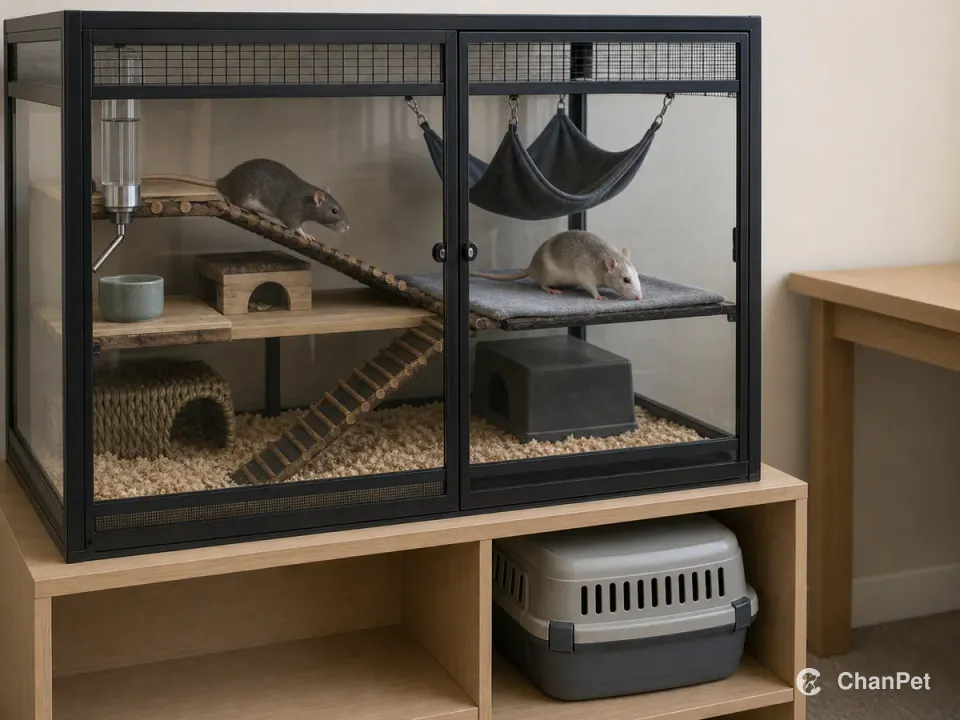
Companions, a settled cage, and a prepared handover make exam weeks and breaks easier to plan for.[1][2]
A fit for a student who plans handovers
Arrange care before you book the trip
Student rat care works when a person, a routine and a cage all stay in place through the busy weeks. Make the handover clear, then travel without leaving the group to chance.[1][3]
Common questions
Sources
Sources used in this article
- [1]Providing a Home for a RatMerck Veterinary Manual
- [2]Housing rats in groupsRSPCA
- [3]Stay healthy around small petsCenters for Disease Control and Prevention