Run the room before you fill the cage
Put a thermometer and humidity monitor at the planned cage height for several days. Check the hottest afternoon as well as evening. A chinchilla needs a dry, ventilated room that stays cool when the rest of the home feels warm.[1][2]
Choose a spot away from direct sun, kitchens, and stuffy corners. Air conditioning helps when it cools the room evenly. A cage beside a strong vent gets an uncomfortable blast instead of a steady climate.[1][2]
Build a route, not a display
A chinchilla uses its enclosure like a small climbing course. Secure shelves, branches, a hide, and safe things to chew give it places to leap, pause, and rest. Each platform needs a steady landing and sensible spacing.[1][2]
Check every fastener with your hands before moving the chinchilla in. Solid footing matters where it lands and rests. Wide mesh and loose panels can turn an ordinary jump into a foot or leg injury.[1][2]
Let the first contacts stay short
Sit near the enclosure and let the chinchilla notice your voice and scent. Keep your hand low and give it time to investigate. A return to the hide is useful information: it is ready for a break.[2][3]
Lift only when you need to, close to the floor, with both hands supporting the body. Chinchillas can frighten easily and may release fur while trying to escape. Calm, brief handling builds a much clearer pattern.[2][3]
Learn its usual evening
The useful check happens when the chinchilla wakes up. Watch it eat hay, drink, move, and choose a shelf or hide. Those few quiet minutes create a picture of normal before you ever need to describe a change to a veterinarian.[3][2]
Poor appetite, much less stool, diarrhea, difficult breathing, weak movement, or unusual stillness calls for veterinary advice. Keep the current food, recent changes, and enclosure details easy to share when you call.[3][2]
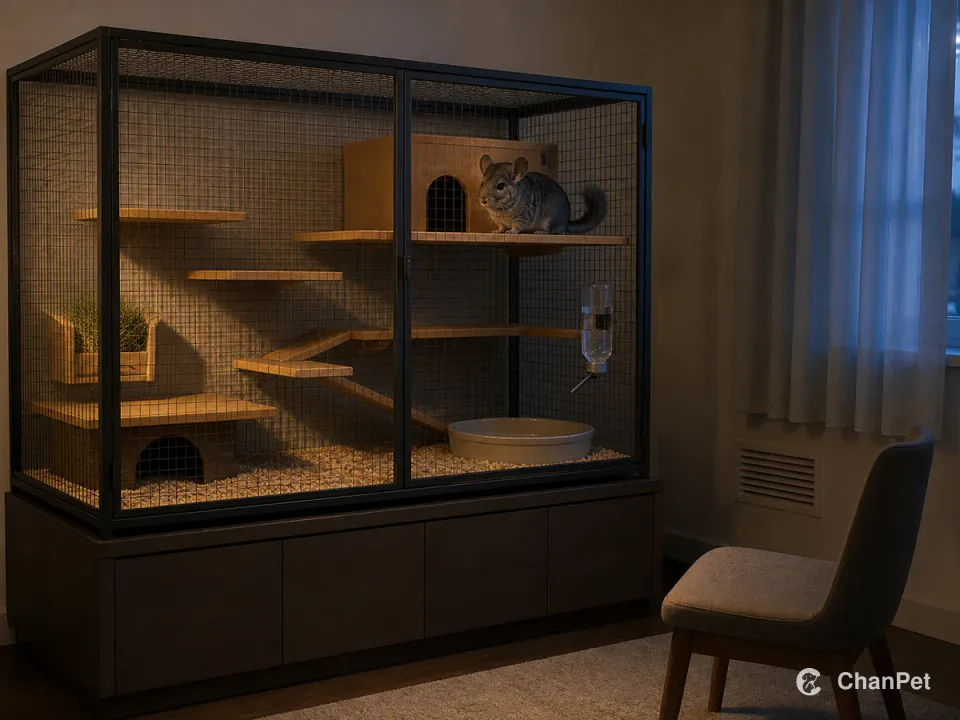
A shaded cool room and a secure climbing route give the first week a calm, observable rhythm.[2][1]
A good first fit for someone who likes preparing before buying
Still choosing a first pet?
Start a smart match with your room, summer temperature, and daily time in mind. It will show which pets fit the life you actually have.[1][2]
Common questions
Should I hold a new chinchilla on the first day?
Sources
Sources used in this article
- [2]How to Care for Your ChinchillaAssociation of Exotic Mammal Veterinarians
- [1]Creating a Good Home For ChinchillasRSPCA
- [3]Chinchilla Health & Welfare TipsRSPCA