Run the enclosure before the gecko arrives
Crested geckos climb through cover after dusk. Give the enclosure a useful route upward, with branches, foliage and places to rest out of sight. Height and cover shape its whole evening, so they belong in the first build rather than the last shopping trip.[1][2]
Put a thermometer and hygrometer where you can read them, then run the enclosure for several days. Texas A&M and Tufts both stress proper reptile husbandry. A practice run lets you find a bad plug, poor airflow or a misting routine that keeps the enclosure wet for too long.[2][3]
Let its nighttime habits set the pace
The interesting part often starts after the room quiets down. Offer food and do your short observation at the time the gecko is naturally awake. You will learn more from its normal climbing, drinking and feeding than from waking it for a daytime visit.[1][2]
Treat your hands as part of care, not the main event. A crested gecko can jump, and stress may lead to tail loss. Let a new animal settle first, handle close to the floor, and end the session while its body remains calm.[1][2]
Pair food with a short daily check
Crested geckos eat fruit-based foods and small invertebrates. Work out a food plan before bringing one home, then use each feeding to check the dish, droppings and the condition of the enclosure. Those small notes are far more useful than trying to remember a vague change weeks later.[2][1]
WWF advises access to a veterinarian who specializes in reptiles. Save that contact and ask what records they want you to keep. That turns an early concern into a clear conversation instead of a frantic web search.[1]
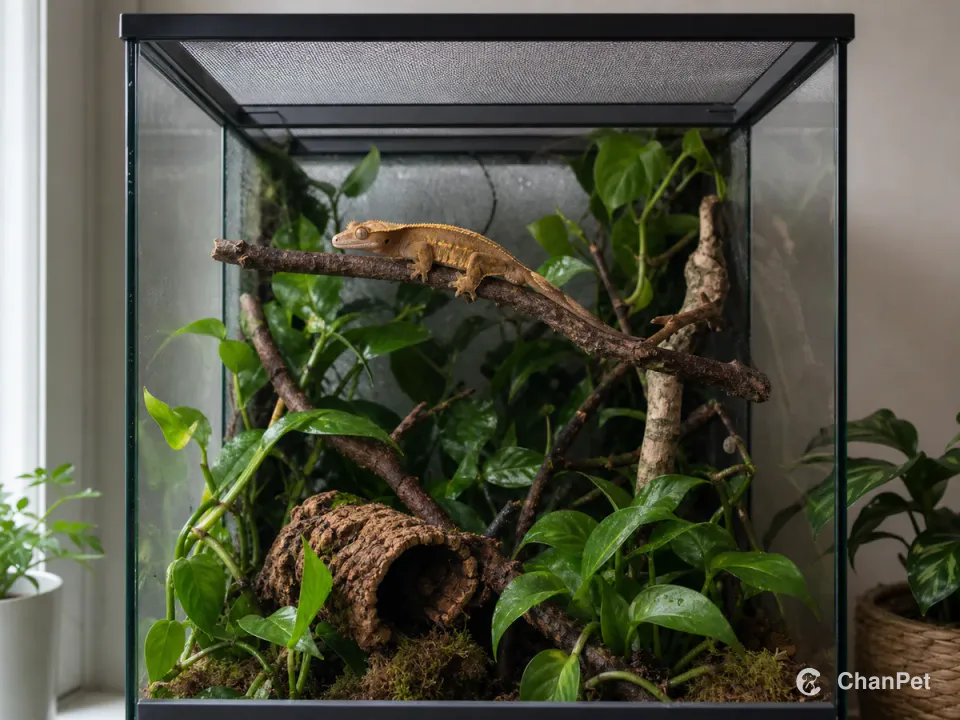
Run the complete tall enclosure first, then give the gecko quiet time to settle.[1][2]
A first reptile can begin with a finished home
Let care come before contact
A ready enclosure gives a new crested gecko room to settle and gives you time to learn its ordinary behavior. The best first weeks look quiet from the outside and steady from inside the habitat.[1][3]
Common questions
Sources
Sources used in this article
- [1]Crested geckoWorld Wildlife Fund
- [2]All About Crested Geckos | Pet TalkTexas A&M College of Veterinary Medicine & Biomedical Sciences
- [3]Reptiles 101: Adopting with CareCummings School of Veterinary Medicine at Tufts University