Make one room work before the bird arrives
Put the cage where the bird can be part of ordinary life, with a wall or corner behind it. University of Florida guidance explains that this can help a pet bird feel protected. Keep the cage out of kitchen traffic, drafts and the path of a door that swings open without warning.[1]
Then choose one room for supervised activity. Close doors and windows, turn off ceiling fans and remove access to hot cookware, fumes, toxic plants and other pets before the bird comes out. AAV lists those hazards because a curious cockatiel will investigate what it can reach.[2]
Let trust set the pace of handling and flight
The first goal is simple: let the cockatiel learn where food, water, rest and people are. Speak softly, change food and water in the same order, and allow the bird to watch you from its cage. AAV advises gentle handling and early, calm exposure to ordinary new situations.[2]
Do not turn the first out-of-cage session into a chase. Give the bird a clear route back to its cage and end while the room is still calm. Research on cockatiel enrichment is a useful reminder that choice and exploration belong in care. Offer a few safe things to investigate, then notice what this bird actually uses.[2][3]
Build the food and health routine early
Find an avian veterinarian before there is an emergency. AAV recommends a relationship with a veterinarian experienced in avian preventive care, medicine and surgery. Put the clinic number where a backup carer can find it too.[2]
Ask what the bird is eating now and change food gradually. UF warns against forcing a bird to eat pellets by withholding familiar food. A gram scale and a simple note about intake make a diet change safer and give the vet useful information if the bird stops eating normally.[1]
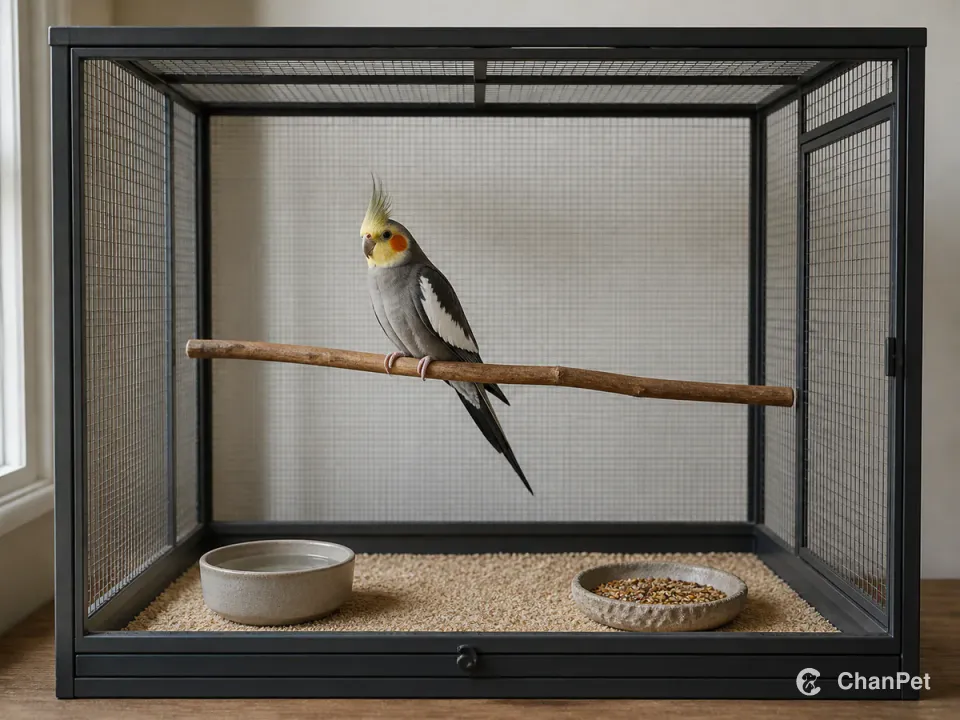
Set up the perches, food and water positions, and room to move before the bird arrives so it has a steady home base to learn.[2][1]
Bring the bird home when the routine has a place
A calm start teaches you more than a quick bond
Set up the room, learn the bird's normal eating and resting pattern, and let trust grow at its own speed. That is how a first-time keeper becomes useful to a cockatiel.[2][3]
Common questions
Should I let a new cockatiel fly around the whole home on day one?
Can I switch a seed-eating cockatiel to pellets in a few days?
Many birds need a slower change. UF recommends watching food intake and body weight during the transition, and warns against trying to make a bird eat pellets by removing familiar food.[1]
Sources
Sources used in this article
- [2]CockatielsAssociation of Avian Veterinarians
- [1]How to care for your pet birdUniversity of Florida College of Veterinary Medicine
- [3]Environmental enrichment on the behavior and welfare of cockatiels (Nymphicus hollandicus)Arquivo Brasileiro de Medicina Veterinária e Zootecnia