Teach children to let the cat set the pace
Ask children to sit down, offer a hand and wait for the cat to choose contact. Use a toy for play instead of fingers. When the cat heads for a bed, perch or another room, let that choice be the end of the interaction.[1]
The study of Persian and Exotic facial conformation describes variation across cats. It does not give a household a shortcut for knowing how one cat feels about noise, visitors or children. Watch the individual cat and give it the option to step away early.[2][1]
Reserve one part of the house for rest
Choose a high perch, covered bed or quiet room that children leave alone. A protected resting place lets the cat leave a busy kitchen or playroom before it feels crowded. The retreat matters most on the noisy days, so make it part of the normal home layout.[1]
Help children notice the small signals that the cat needs distance: walking away, resting with its back turned or settling in a hidden spot. That pause protects the relationship better than telling a child the cat is being difficult.[1]
Keep eye and comfort decisions with adults
Adults should handle routine face checks, grooming, veterinary calls and any health record. The ECVO manual identifies several eye conditions associated with the breed. That information helps an adult recognize the value of a prompt professional opinion when something looks or feels different.[3]
Children can help with a quiet toy session or a supervised brush, yet they should not be asked to diagnose an eye or breathing change. Give them one clear job: tell an adult when the cat seems uncomfortable, then let the adult decide the next step.[3][2]
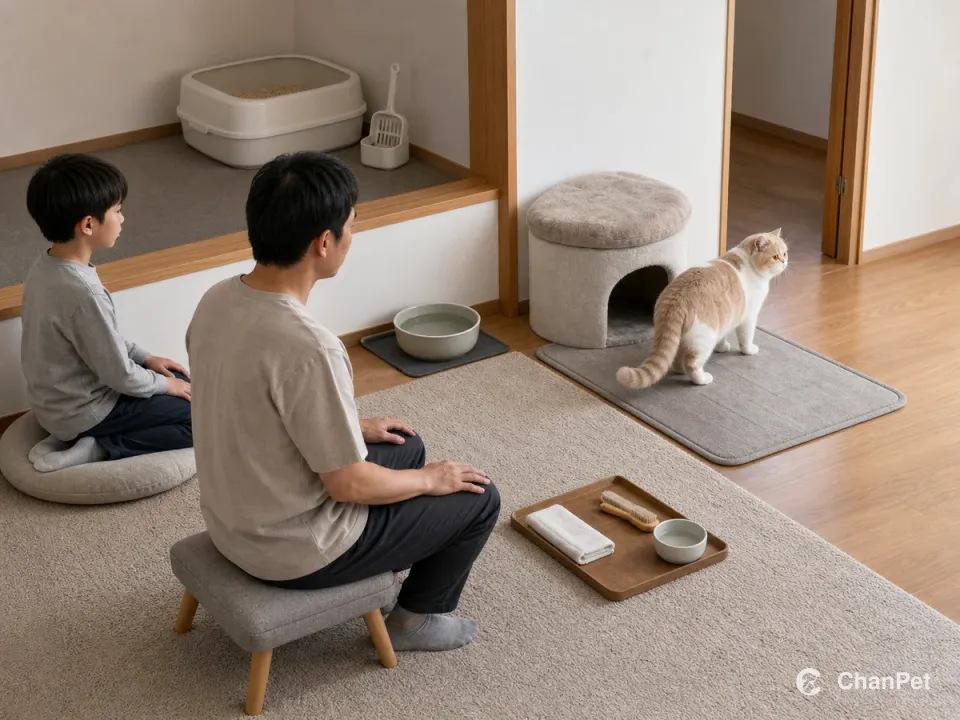
The adult handles care decisions while the child waits at a calm distance and the cat keeps a clear route to its retreat.[2][1][3]
Family life works when adults protect the quiet details
A quiet retreat is a family-care tool
Let the cat leave, let adults handle face and health questions, and give children a simple way to help. Those choices make an Exotic Shorthair much easier to understand in a lively home.[2][1][3]
Common questions
How can children play safely with an Exotic Shorthair?
Have children sit down, use a toy and wait for the cat to approach. Let the cat leave at any time, and keep its quiet resting place out of the game zone.[1]
Sources
Sources used in this article
- [2]Facial conformation characteristics in Persian and Exotic Shorthair catsJournal of Feline Medicine and Surgery Open Reports
- [1]Your Cat's Environmental Needs: Practical Tips for Cat CaregiversFeline Veterinary Medical Association and International Cat Care
- [3]ECVO Manual: Breeds — Exotic ShorthairEuropean College of Veterinary Ophthalmologists