Adults own the routine
Children can fill a water bowl, help choose a toy or fetch the comb. An adult still owns the food, litter, grooming and veterinary decisions. CFA describes Persians as sweet, quiet companions, yet the cat needs the same reliable care on a school night as it does on a quiet Sunday.[1][2]
Make the jobs visible on a simple household list. Who scoops the tray? Where do grooming tools go? Which adult calls the veterinarian? The clearer those answers are, the less likely the Persian's care becomes a problem passed around at the end of a busy day.[2]
Give children a gentle script
Teach children to sit near the cat, offer a hand and wait. Pet the back or shoulder when the Persian comes closer. Do not pull the long coat, follow the cat into a hiding spot or wake it for a cuddle. Respectful contact helps children see that the cat gets a vote too.[1][2]
Set up a high perch, covered bed or quiet room as a no-interruptions zone. Feline environmental guidance calls for places where cats can rest and hide. A family cat needs those choices even more when visitors, games or crying children make the house unpredictable.[2]
Keep hygiene simple and steady
Keep the litter tray and scoop away from the kitchen, and put handwashing into the family routine after handling the cat or its supplies. Cornell's feline health guidance explains that good hygiene lowers the chance of passing infections between people and cats.[3]
Adults should handle litter cleaning for young children. Everyone can learn the same few rules: wash hands, let the cat eat in peace, and keep human food away from cat dishes. Those habits make the home easier to share without turning the pet into a source of worry.[3][2]
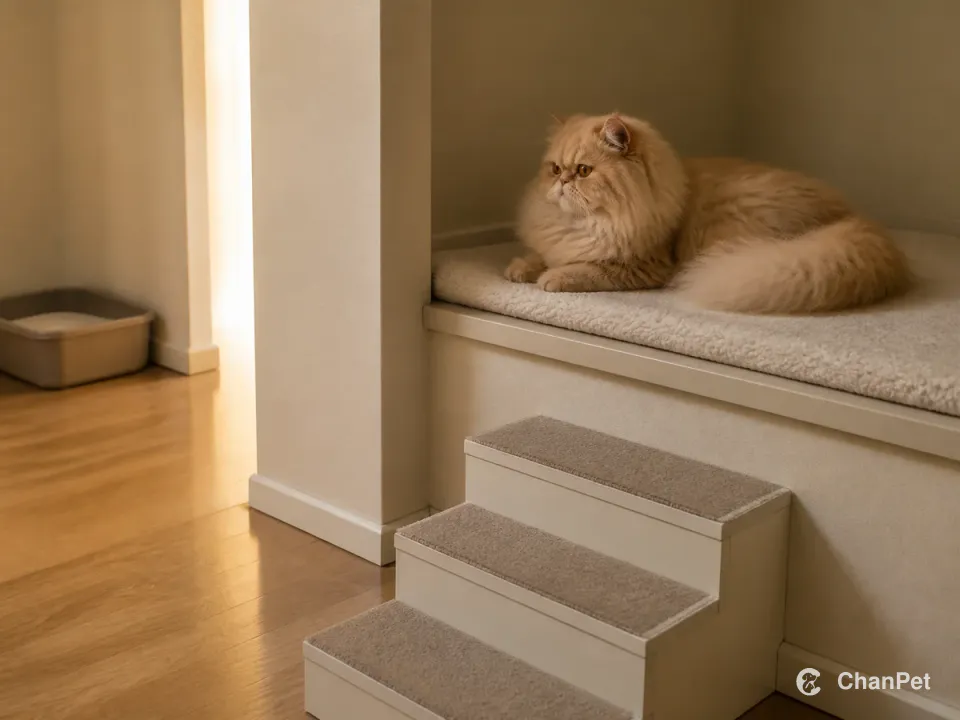
A high quiet zone and step-down route let a Persian leave a busy room on its own. Adults manage litter and daily care.[1][2]
A gentle family companion with clear boundaries
Let the adults test the daily plan
Want to know whether your household has room for a Persian's care routine? Start a smart match and compare your family rhythm before choosing a cat.[1][2]
Common questions
Can children help care for a Persian?
What hygiene rules matter most with a family cat?
Wash hands after handling the cat, its food or litter supplies. Keep litter tools away from food preparation areas, and let adults manage the tray for younger children.[3]
Sources
Sources used in this article
- [1]PersianThe Cat Fanciers' Association
- [3]Zoonotic Disease: What Can I Catch from My Cat?Cornell University College of Veterinary Medicine, Cornell Feline Health Center
- [2]Your Cat's Environmental Needs: Practical Tips for Cat CaregiversFeline Veterinary Medical Association and International Cat Care