Adults lead breathing observation around children
A current Pug needs adults who know the dog's usual breathing and recovery pattern. UFAW links short-faced airway structure with obstruction, so effort, heat sensitivity, weakness, or collapse deserve prompt veterinary attention.[1]
Explain to children that noisy breathing is a cue to pause and call an adult, rather than a joke or a game. Adults can move the dog to a cool, ventilated place with water and rest.[1][2]
Keep family play cool, short, and adult-led
Choose a gentle, low-excitement activity during a cool part of the day, then schedule a quiet recovery period. The adult decides when the game stops, while children can offer a toy or help carry water.[2][1]
Heat and exertion can add to the breathing burden of a Pug already at home. Families can use a calm mat routine after play, which gives the dog an easy path away from the busy room.[1]
Make hygiene part of the family's cool-down routine
After care tasks, build a handwashing stop into the family's return-home routine. CDC guidance includes contact with the dog, food, bowls, gear, and waste among the moments when clean hands matter.[3]
Keep the Pug's water, food, towels, and cleanup supplies in clearly marked places away from family meal preparation. An adult can check the setup while children complete small, age-appropriate tasks.[3][2]
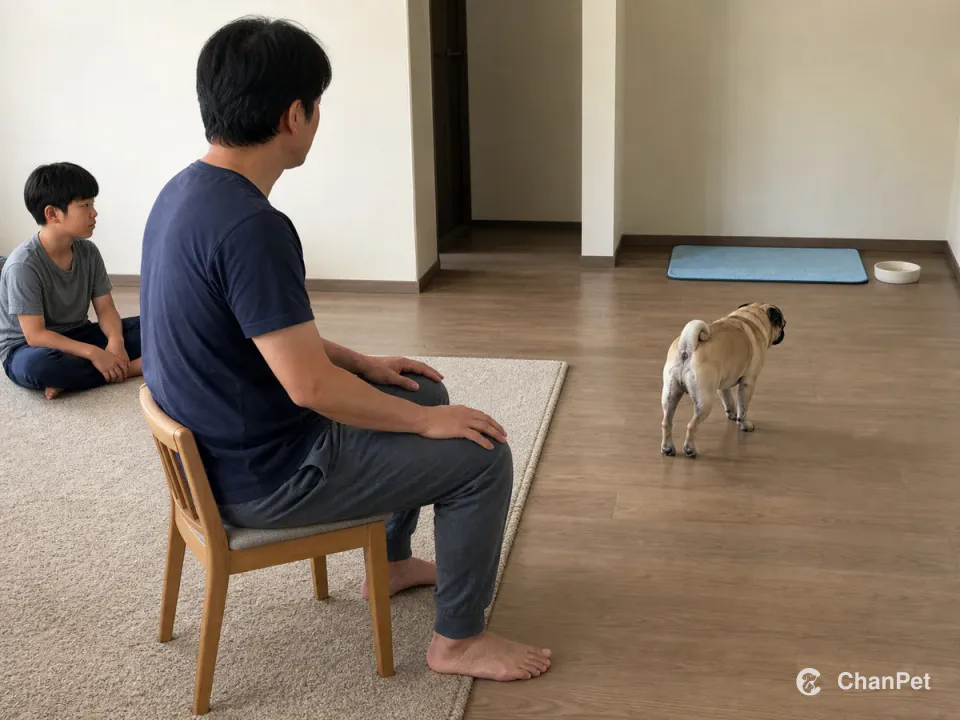
The adult stays close enough to observe recovery, the child remains in the family activity zone, and the Pug keeps an open route to water and cool rest.[1][2]
Care for the Pug in your family and choose a healthier direction for the next dog
Let family rules protect a current Pug's comfort
Common questions
What should children do if a Pug is breathing loudly after play?
Teach children to stop the game and get an adult. The adult can provide a cool, ventilated rest space and seek veterinary guidance for marked effort, weakness, or collapse.[1]
Which family hygiene habits matter after caring for a Pug?
Wash hands after contact with the dog, food, bowls, gear, or waste, and keep dog supplies separate from meal preparation. Adults can make the routine easy for children to follow.[3]
Sources
Sources used in this article
- [2]Pug Dog Breed InformationAmerican Kennel Club
- [1]Pug - Brachycephalic Airway Obstruction SyndromeUniversities Federation for Animal Welfare
- [3]DogsCenters for Disease Control and Prevention