Buy a working home first
Put the carrier, litter tray, scratching surface, food and water dishes, and one sturdy climbing option ahead of matching bowls or themed furniture. Bengals are agile, playful cats. A flimsy tower that wobbles or a cardboard scratcher that falls apart every few days does not save money for long.[1]
You do not need a room full of gadgets on day one. Choose a few safe toys and learn what this cat chases, bats or carries. Add another item only when you know it fills a real gap. That slower approach keeps a small budget focused on things the cat will actually use.[1]
Treat food as a running cost
Food and litter show up again every month, so put them in the plan before you bring the cat home. Cornell advises looking at a cat's age, health, lifestyle and food intake together. A bag's feeding guide is a useful starting point. It is not a promise that one amount will fit the same cat forever.[2]
A Bengal's muscular build can make a single number on the scale misleading. WSAVA's cat body-condition guidance looks at the ribs, waist and abdominal area. Use those observations with your veterinarian when the cat's food, treats or activity changes. It is a better conversation than simply cutting a scoop because the budget feels tight.[3][2]
Want to know what caring for a Bengal may cost in your own area? Use our cost calculator to separate everyday supplies from first-year purchases and a veterinary reserve.[2][1]
Leave room for veterinary care
Keep a health reserve separate from the money for treats and new toys. Routine appointments, an upset stomach or an injury can arrive at a bad time for a household budget. A reserve will not make every bill easy, but it stops a small concern from becoming a choice between care and next month's essentials.[2]
If the basic plan already feels too tight, wait. A Bengal's energy still needs a safe outlet, and the cat's food and health needs do not pause because a month is expensive. A later adoption can be a much better start than a rushed one that makes the essentials feel fragile.[1][2][3]
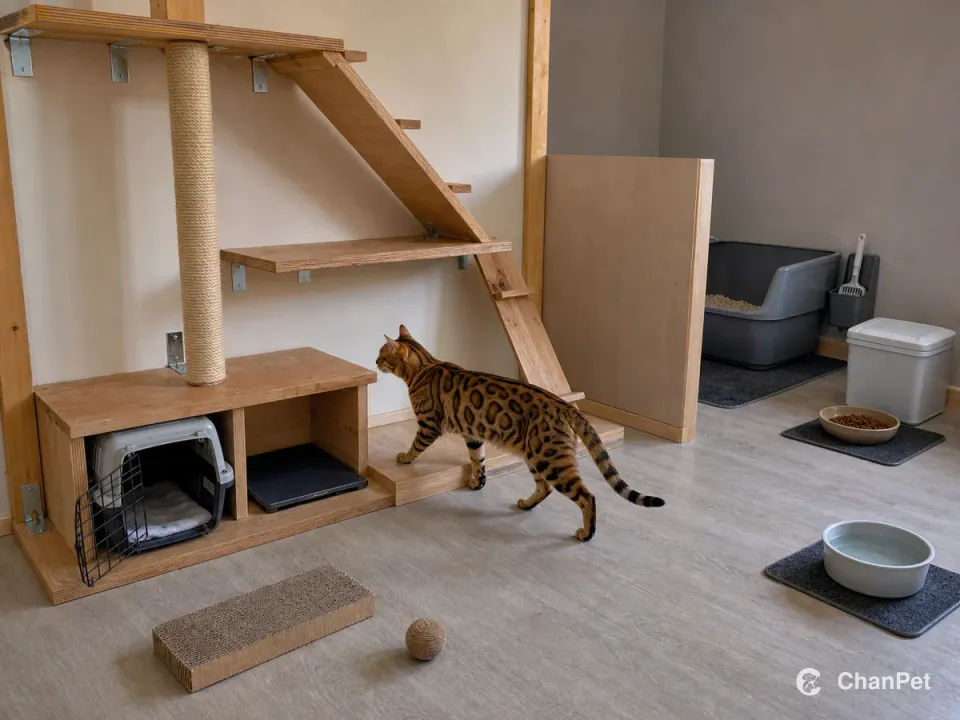
An anchored climbing route, a few durable play pieces, steady food-and-litter stations, and a carrier beside organized health records put everyday care and veterinary readiness ahead of decorative upgrades.[1][2][3]
A tight plan needs a little breathing room
Ask what the ordinary month needs
Wondering what it takes to keep a Bengal well day after day? Estimate the costs first, then use local quotes to refine your plan before you bring a cat home.[2][1]
Common questions
Can I skip a climbing option until I have more money?
Start with one safe, sturdy option rather than a whole set of furniture. Bengals are active and agile, so the first priority is a usable place to climb and scratch, not a decorative setup.[1]
Sources
Sources used in this article
- [1]BengalThe Governing Council of the Cat Fancy
- [2]Feeding Your CatCornell University College of Veterinary Medicine, Cornell Feline Health Center
- [3]Body Condition Score: CatWorld Small Animal Veterinary Association