Fund the food they actually use
Hay is the main part of a degu diet and needs ongoing supply. RSPCA also advises a low-sugar, low-fat diet, which means fruit and sugary treats cannot fill the role of everyday food.[1]
When money is tight, make hay and the basic food reliable before buying a pile of snacks. The simple option serves their high-fibre needs much better than a collection of attractive treats.[1]
Buy a cage that avoids repeat purchases
Iowa State's care guide starts the environment with solid flooring, hides, a wheel, tubes and safe chewing items. Paying for a usable home once is more practical than repeatedly repairing a temporary setup.[2]
Small-mammal welfare research ties unsuitable housing, lack of companionship and lack of enrichment together. A budget should solve those daily conditions before it spends on looks.[3]
Leave space for professional help
Degu diet, teeth and overall condition need ongoing attention. Before bringing them home, find a clinic that sees small exotic mammals and make room in the plan for examination or treatment.[2]
If the basic cage and ongoing food are beyond today's budget, delay the purchase. A finished foundation gives both the budget and the animals a far better start.[1][3]
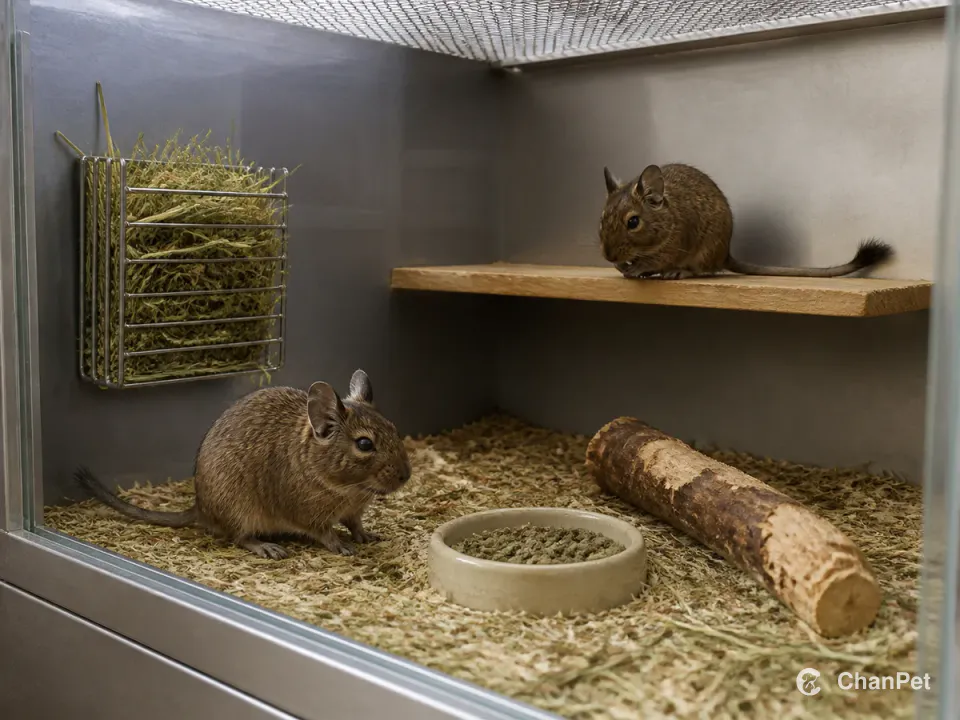
Keep hay, low-sugar food and safe chews reliably supplied first; the rest of the enrichment can grow from there.[1][2]
A fit for a budget that protects the basics
Use the budget for daily stability
Secure food, housing and chewing opportunities first, then choose decorations later. The degu essentials are not always flashy, but they are working every day.[1][3]
Common questions
Can fruit or treats replace some of the hay?
No. Degus need a high-fibre, hay-led and low-sugar diet. Fruit and sweet food do not replace the food they rely on every day.[1]
Sources
Sources used in this article
- [1]What To Feed a Pet DeguRSPCA
- [2]Caring for your DeguIowa State University Lloyd Veterinary Medical Center
- [3]What Are the Most Prevalent Welfare Issues for Pet Small Mammals?Animals