Pay for the home that works
Start with the enclosure, lid, deep bedding, water setup, hides, and basic chew materials. These pieces give the pair a secure place to tunnel, rest, drink, and wear down their teeth. They belong ahead of themed decor and matching accessories.[1][2]
A cheap home becomes expensive when it leaks bedding, has weak fittings, or leaves too little digging room. Choose something you can clean, reach into safely, and keep secure. A plain working setup is a better bargain than a display piece that fights daily care.[1][2]
Put the recurring items on paper
Food, bedding, and safe things to chew come back into the cart long after the arrival photo. Start with a nutritionally complete gerbil food, clean water, and a plan for replacing supplies as they are used. A single bag of food is not the whole cost of feeding a pair.[3][2]
Write a short supply list with the item, pack size, and usual replacement point. That list makes it easy to see what an ordinary month costs in your town. It also stops a sale on a nonessential item from swallowing the money for bedding or food.[3][1]
Wondering what gerbil care could cost in your home? Use our cost calculator to separate the enclosure, recurring supplies, and a care reserve, then refine the range with current local quotes.[1][3][2]
Leave room for help when something changes
Put some money aside after the everyday supplies are covered. A broken water bottle, a replacement lid, or a veterinary concern can arrive during an ordinary week. A small reserve gives you room to act instead of waiting for the next payday.[2][1]
Add bigger wheels, more hides, or new enrichment slowly. Gerbils enjoy variety, but the first goal is a safe, deep, well-stocked home for the pair. Extras work best when they solve a real need you have already seen.[1][2]
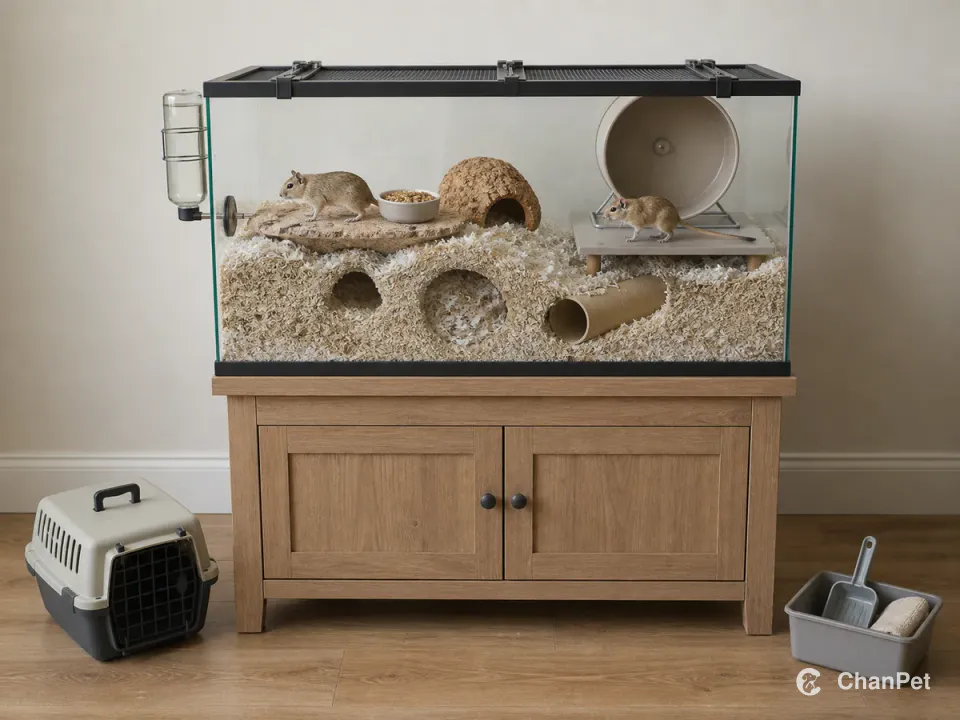
Fund the pair, secure deep-bedding home, food, water, solid wheel and care reserve before decorative upgrades.[1][3][2]
A budget works when the ordinary month works
Price the essentials before the extras
List the home, bedding, food, replacement supplies, and a reserve in one place. That simple exercise shows whether this is the right time to bring a pair home.[1][3]
Common questions
What can wait when I am buying a gerbil setup?
Sources
Sources used in this article
- [1]Creating a Good Home For GerbilsRSPCA
- [3]What To Feed Your GerbilsRSPCA
- [2]Providing a Home for a GerbilMerck Veterinary Manual