The short brush does not end the day
The Corgi's double coat can be brushed quickly, while it sheds through the home on a steady schedule. AKC notes daily shedding and heavier seasonal shedding. A brush by the door and a quick pass over the dog's favorite resting spot prevent the hair from becoming one huge chore later.[1]
The bigger job is giving the dog a day with movement and a little work to do. A walk, a few lead skills and a food puzzle can fit around ordinary life. The point is to give an alert herding dog an outlet before it invents a job around the house.[1]
Time alone needs practice too
An automatic feeder can cover one small part of a day. It cannot teach a Corgi to feel settled when the house is empty. RSPCA advises gradual alone-time training, paying attention to the dog's behavior before you increase the time apart.[2]
When you travel, leave a carer who can see the dog, walk it and notice changes in the routine. Write down the lead, food and cleanup steps. A clear handover keeps the dog from having to guess its way through a sudden change of people.[2][1]
Food needs a regular look
Corgis often work happily for a treat, which makes training rewarding and the food plan easy to blur. AKC advises watching calorie intake and weight. Put rewards into the day's total, especially when you are using food to teach several skills at once.[1]
WSAVA nutrition guidance brings diet history, body condition and muscle condition together. Keep brief notes on meals, treats and activity, then use routine veterinary visits to review the ribs, waist and abdomen. That gives you a more useful picture than one scale reading.[3]
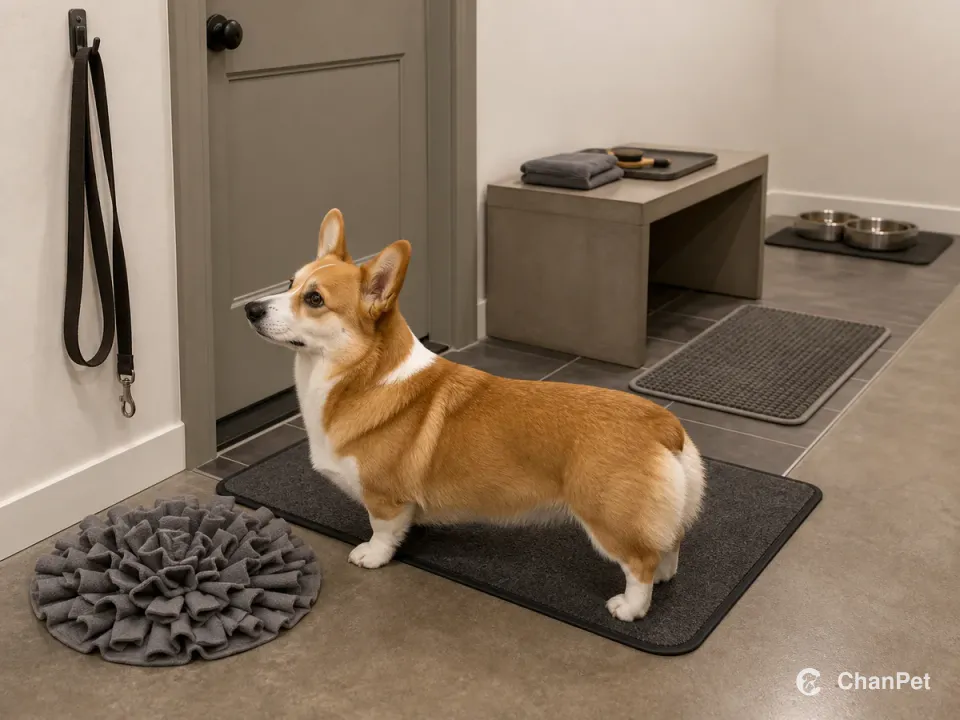
A waiting mat, leash, snuffle mat, grooming station and separate food and water place daily walks, thinking work and cleanup in one clear route.[1][2][3]
Easy grooming, active care
Choose for the ordinary weekday work
Want to compare the care tasks with your job, travel and cleaning routine? Start a smart match before you decide on a Corgi.[1][2]
Common questions
Does a Corgi's short coat make it low maintenance?
How should I handle Corgi training treats?
Count treats as part of the day's food and review meals, activity and body condition together. WSAVA's nutrition guidance gives a useful framework for that veterinary discussion.[3]
Sources
Sources used in this article
- [1]Pembroke Welsh Corgi Dog Breed InformationAmerican Kennel Club
- [2]Training Your Dog to Be Left AloneRSPCA
- [3]Global Nutrition GuidelinesWorld Small Animal Veterinary Association