Use a few minutes well
Look at the water bottle, food, cage door and the rats before moving on with the day. A stuck bottle, damp bedding or one rat that stays tucked away is easier to handle when you spot it early.[1]
Give the group a short supervised time to move and investigate. Merck includes exercise and socialization with people in healthy rat care, so a little daily contact works better than saving all interaction for a rare free evening.[1]
Watch the group as a group
RSPCA recommends stable same-sex rat groups and warns that sudden additions or removals can disrupt established relationships. Look at the group while you feed or clean, rather than learning about conflict only after someone is hurt.[2]
Notice who eats first, who is pushed aside and who stops joining the usual activity. This gives you a clearer picture of each rat without turning care into a long inspection.[2][1]
Keep a simple health baseline
Rat respiratory problems can begin with small changes in appetite, energy, body weight or red staining around the eyes and nose. Veterinary literature treats these signs as worth noticing even though they can have several causes.[3]
A quick weekly weight and a note about a lasting change can help at a veterinary visit. Contact an experienced small-mammal veterinarian when breathing, appetite or behaviour keeps looking different.[3][1]
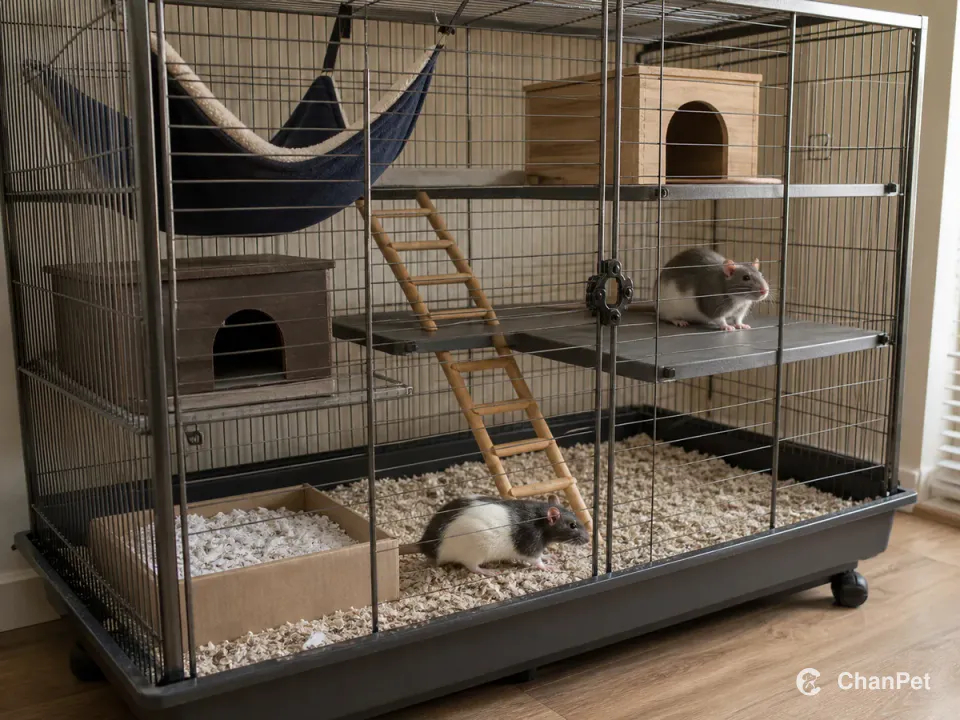
A refreshed lower area and clear routes to climb and hide give a pair of rats a useful part of every day.[1][2]
A fit for someone who keeps small promises
Make the care small, not absent
A brief check, a small clean and a little interaction keep a rat group on track. That steady contact is the real boundary of low-maintenance fancy-rat care.[1][2]
Common questions
Sources
Sources used in this article
- [1]Providing a Home for a RatMerck Veterinary Manual
- [2]Housing rats in groupsRSPCA
- [3]Respiratory diseases in ratsJournal of Small Animal Practice