Keep the giant-dog route clear every day
A Great Dane needs enough room to travel from bed to door, water, food, and yard without squeezing through household traffic. Reset shoes, bags, chairs, and bowls from that route as part of the evening routine.[1]
Put towels, wipes, and a washable mat at the door used after walks. Short-haired does not mean small cleanup when giant paws, drool, and outdoor moisture return together.[1]
Put quiet time after the meal on the calendar
Give meals and energetic outings a consistent order, then leave a low-key stretch after eating. The household needs to know which adult keeps the next part of the day calm.[1]
Use a settled place away from running children, rough play, and the front door during that time. A giant dog benefits when recovery becomes an expected part of the schedule.[1]
Keep food and activity in the same note
Keep the Great Dane’s food record next to its meal-and-rest timetable: include meal portions, treats, appetite, activity, and departures from the usual day. Use the notes to revisit the feeding plan as the dog’s needs and condition evolve.[2]
Bring the notes to routine appointments rather than reconstructing the week from memory. A clear timeline gives your veterinarian better context for questions about food or activity.[2]
Build alone time from short settled steps
Start a brief departure when the Great Dane has a familiar resting place and the home is quiet. Return calmly, then extend the interval from stages where the dog stays comfortable.[3]
If pacing, vocalizing, chewing, or door work appears, shorten the next interval and review the setup. Alone time needs a plan that respects the dog’s demonstrated ability to settle.[3]
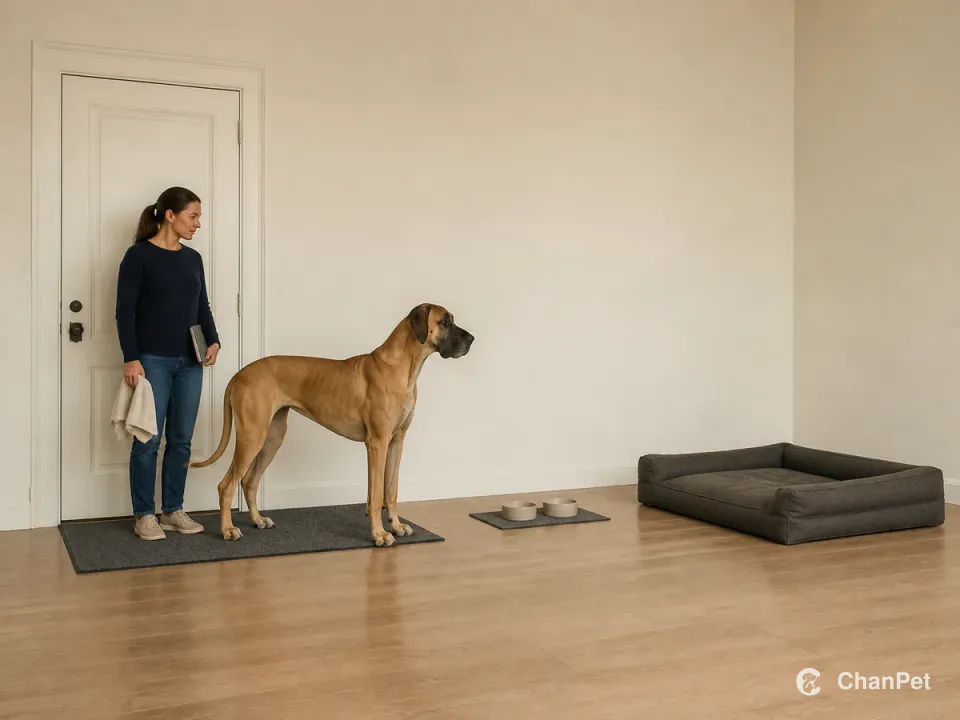
Fixed places for cleanup, food notes, and recovery turn giant-dog jobs into a routine that another caregiver can repeat.[1][2][3]
The manageable household makes giant-dog details routine
Write down a true maintenance week
Add route resets, meal downtime, cleanup, food notes, walks, and short departures to a weekday calendar. The finished week shows whether the giant-dog routine has enough support.[1][3]
Common questions
Does a Great Dane’s short coat mean low cleanup?
Short coat reduces one kind of grooming, while giant paws, drool, outdoor moisture, and the dog’s size still create regular cleanup work. A door-side setup keeps it contained.[1]
How should a Great Dane’s alone-time practice begin?
Begin with short departures from a familiar resting area and calm returns. Increase the interval only from successful steps and make the setup easier when the dog becomes unsettled.[3]
Sources
Sources used in this article
- [1]Great Dane Dog Breed InformationAmerican Kennel Club
- [2]WSAVA Global Nutrition GuidelinesWorld Small Animal Veterinary Association
- [3]How to Train Your Dog to Stay Home AloneRSPCA