Plan around the week that goes wrong
Put early classes, late labs, paid shifts, deadlines, and travel days on the same calendar. Then add the Frenchie's morning outing, meals, calm time, and evening care. The plan becomes real when it still works on the day your timetable slips by two hours.[1][2]
Name one backup person before term begins. Give them a key, the daily routine, and clear instructions for heat or breathing concerns. A vague promise that somebody will be around leaves too much to chance.[2][1]
Give roommates a one-page plan
Shared houses get easier when everyone knows the meal routine, the walk rules, and which treats count as food. Keep the language simple too. A Frenchie learns faster when the people at home reward the same calm choices at the door and around visitors.[3]
Write down who closes doors, who handles a late walk, and who contacts you if the dog seems unwell. This is kinder than trying to settle the rules after a missed meal or a stressed evening.[3][2]
Treat breaks and moves as care transitions
A term break changes more than your address. New rooms, unfamiliar stairs, a hotter car ride, and a different daily rhythm can all change how the dog copes. Pack the usual bed, bowls, harness, medical records, and a familiar toy so the first night feels less strange.[1][2]
Practice small useful skills during ordinary days. Waiting for the door, settling on a mat, and turning back when called fit around class life. Reward-based practice gives you something reliable to return to when the house becomes busy.[3]
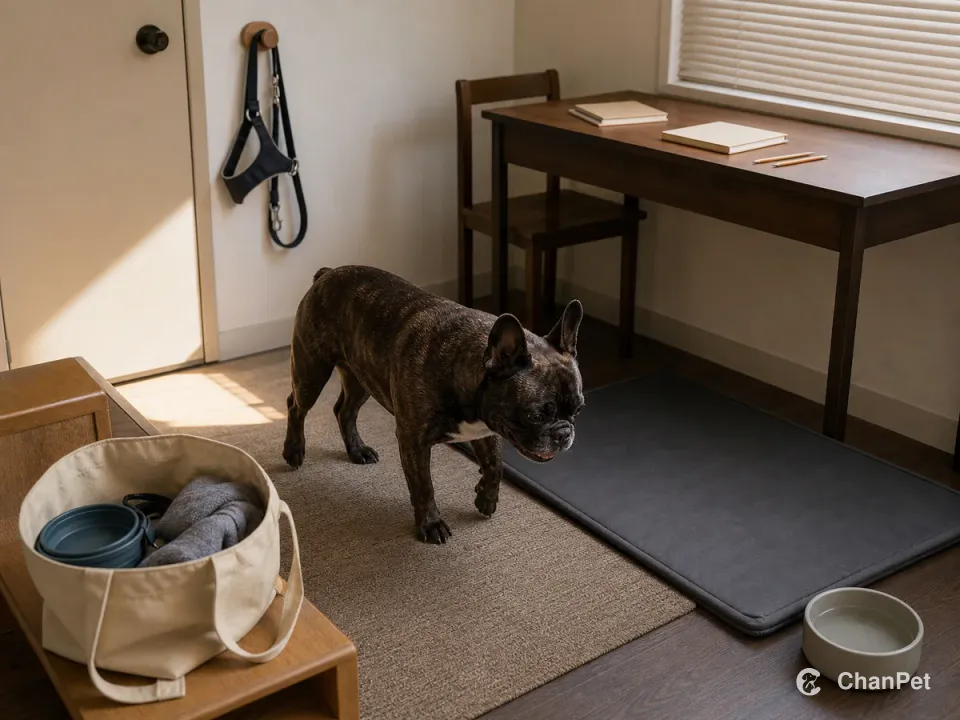
A short outing ends at the shaded recovery mat and water bowl, while the packed backup tote lets another carer continue the same observation and outing routine during the busiest week.[1][2]
A Frenchie needs a calendar that has backup built in
See whether your term-time plan has enough cover
Use the smart match to compare your class schedule, shared home, travel, and backup care with the routine a Frenchie needs.[1][2]
Common questions
What should happen during an exam week?
Sources
Sources used in this article
- [1]French BulldogThe Royal Kennel Club
- [3]Position Statement on Humane Dog TrainingAmerican Veterinary Society of Animal Behavior
- [2]Brachycephalic SyndromeAmerican College of Veterinary Surgeons