Plan around the hard week, not orientation week
Student schedules look roomy until labs run late, assignments stack up and someone needs to travel home. Put the hard week on paper. Where will the enclosure sit? When will you refresh water? Who checks it if you are away overnight?[1]
The routine does not need to be dramatic. A quick check before class and a calmer look in the evening can cover a lot. The point is to reserve that time before a deadline makes every small task feel impossible.[1]
Your break plan needs a person's name
“Someone will be around” is not a care plan. New Jersey's guidance for hermit-crab emergencies recommends a prepared temporary container, food, water and hiding materials. Those items also make a campus move or a holiday handoff much less chaotic.[2]
Choose one backup caregiver and show them the enclosure before you need them. Give them a key, a short checklist and a way to contact an exotic-animal veterinarian if they see an obvious problem. Clear handoffs beat last-minute group-chat guesses.[2][3]
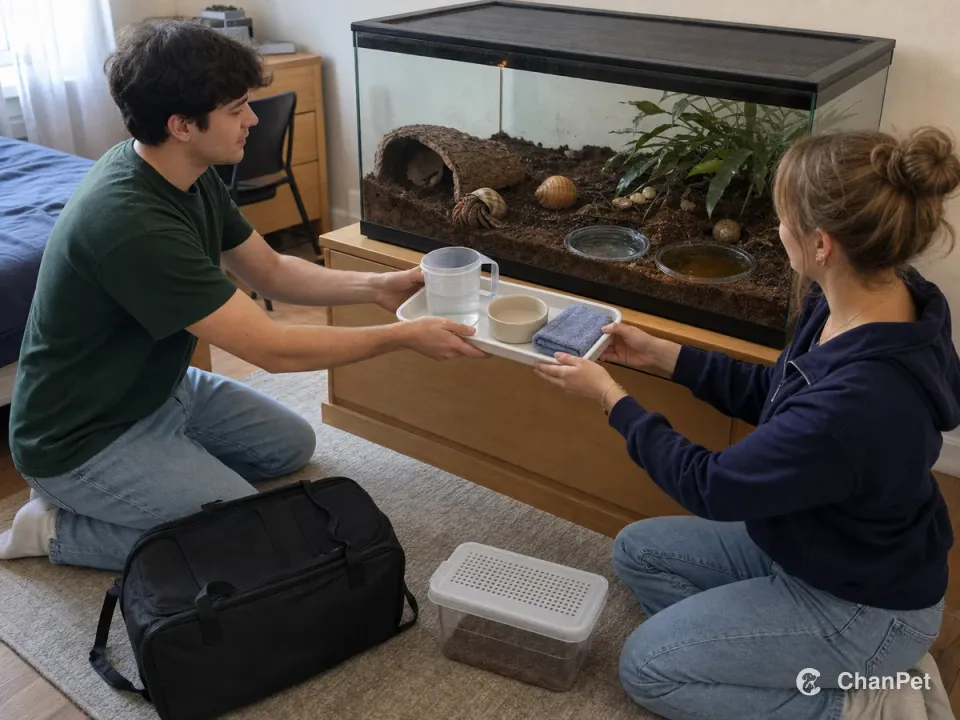
Break care is ready when a named person receives the water routine and the travel kit is prepared before housing changes.[2][3]
Start only when the handoff is real
A land hermit crab needs a place in the semester plan
The enclosure does not demand a long walk or a loud schedule. It does need a stable room, predictable care and a person who can step in when your calendar changes.[1][2]
Common questions
Sources
Sources used in this article
- [1]Land hermit crabSmithsonian's National Zoo and Conservation Biology Institute
- [2]Hermit Crabs: Animal Emergency PreparednessNew Jersey Department of Agriculture
- [4]Hygiene Practices Around AnimalsCenters for Disease Control and Prevention
- [3]Tarantula and Hermit Crab Emergency CarePubMed / Veterinary Clinics of North America: Exotic Animal Practice