A class timetable is not a care plan
Your schedule may look open during orientation week. It rarely stays that way. Labs run late, group projects appear, and a quick dinner can become an evening out. A Samoyed still needs company, activity, and care when your calendar starts moving.[1]
Plan around the worst week, not the easy one. Who walks the dog before an early class? Who covers a night shift or a long lab? Who has a key and already knows the dog's routine if you become ill?[1]
Do not save alone-time practice for exams
A dog does not learn to settle alone because your deadlines grew. RSPCA recommends building alone time in small steps and watching the dog's response before extending it. That takes attention during a calm part of the term.[2]
A simple camera can show pacing, vocalizing, or trouble settling while you are out. If your Samoyed struggles, shorten the absence and return to an easier step. Sort it early, before exam week makes every problem feel bigger.[2]
Keep training in the small gaps
Training works better when it stays part of everyday life. Ask for a pause before opening the door, reward a check-in on a walk, or practice a calm settle while pasta cooks. Those short moments still count on a busy day.[3]
Agree on the cues and rewards with roommates before the dog moves in. AVSAB supports reward-based methods, and clear household rules stop one person's casual shortcut from undoing another person's work.[3]
Breaks and moving day need their own plan
Write down where the Samoyed will live during each break, who pays for travel, and what happens if the next room or apartment falls through. A friendly, active dog needs a real home routine during every change, not a last-minute favor.[1]
Share the feeding, walking, grooming, and veterinary details with the backup carer in advance. A short handover is far easier when the person has already met the dog and practiced the usual route.[1][2]
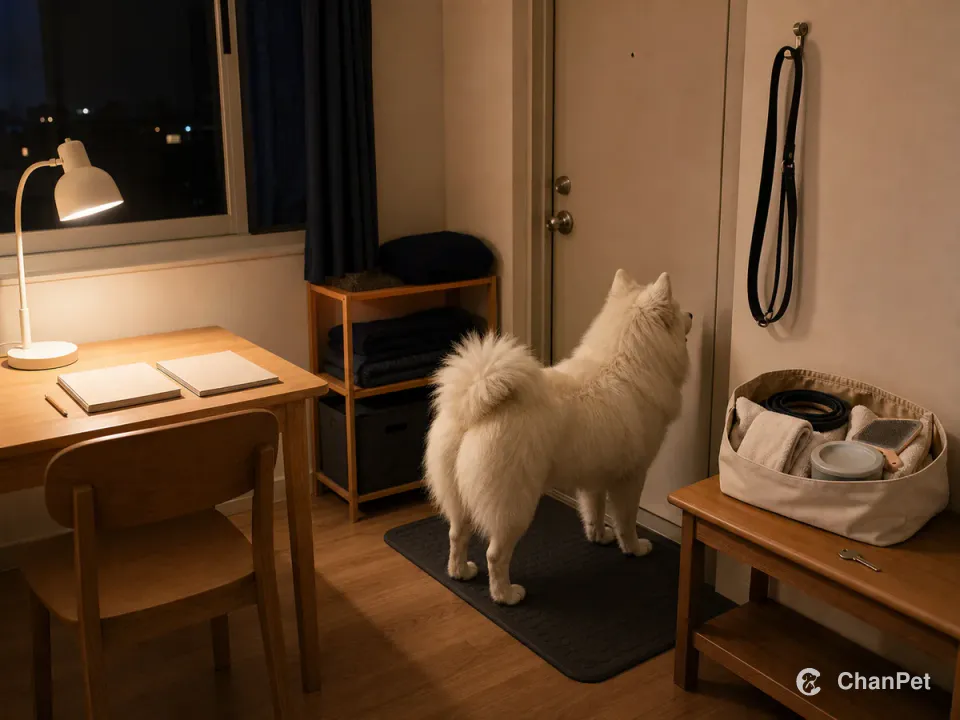
During the busiest week, the daily leash and waiting place stay fixed while a packed care tote lets the backup carer continue the same walking and grooming routine.[1][2]
A Samoyed needs a student plan that extends beyond the semester
Put the dog on the same calendar as your deadlines
Mark the early lectures, exams, trips home, and moving dates. Then add the person who covers each care gap. The plan is ready when every important day has a named answer.[1][2]
Common questions
Can a Samoyed stay alone while I am in class?
Build comfortable alone time gradually before relying on it for a full class day. Watch the dog's response, and keep the next practice short enough for the dog to settle.[2]
How can roommates help with Samoyed training?
Agree on a small set of cues and rewards, then use them the same way. Consistent reward-based practice helps the dog understand what each person expects.[3]
Sources
Sources used in this article
- [1]Samoyed Dog Breed InformationAmerican Kennel Club
- [2]How to Train Your Dog to Stay Home AloneRSPCA
- [3]Position Statement on Humane Dog TrainingAmerican Veterinary Society of Animal Behavior