Write the handover down
A roommate saying they can help is kind, but it is not a care record. For a Scottish Fold already in a student home, one person should know the usual litter, food, rest, and movement routine before a trip, move, or late week begins.[1][2]
Include the veterinarian's contact details and the movement changes you have noticed before. The folded-ear trait is linked to an inherited disorder, so a carer who sees a new limp or a sudden reluctance to jump needs clear context rather than guesswork.[3][1]
Build care around the busy week
Think about the week when labs run late, a paper is due, and a train home leaves early. Who sees the cat then? A simple daily check-in from the same person is more useful than assuming someone will notice a change in a crowded shared house.[1][2]
Keep basic hygiene part of the handover too. The CDC advises people to wash their hands after contact with cats, their food, waste, or supplies. That small habit matters most when several people share feeding and litter duties.[2]
Choose for the years ahead
A student may change buildings, roommates, work hours, and hometown plans several times. Those changes can be managed for many cats with steady care. They are a poor backdrop for deliberately choosing a trait that carries an inherited welfare concern.[1][3]
If you want a cat during college, look at a domestic shorthair, American Shorthair, or British Shorthair through a rescue or responsible source. Choose a cat only after you have a secure home plan, a budget, and a named backup carer.[2][1]
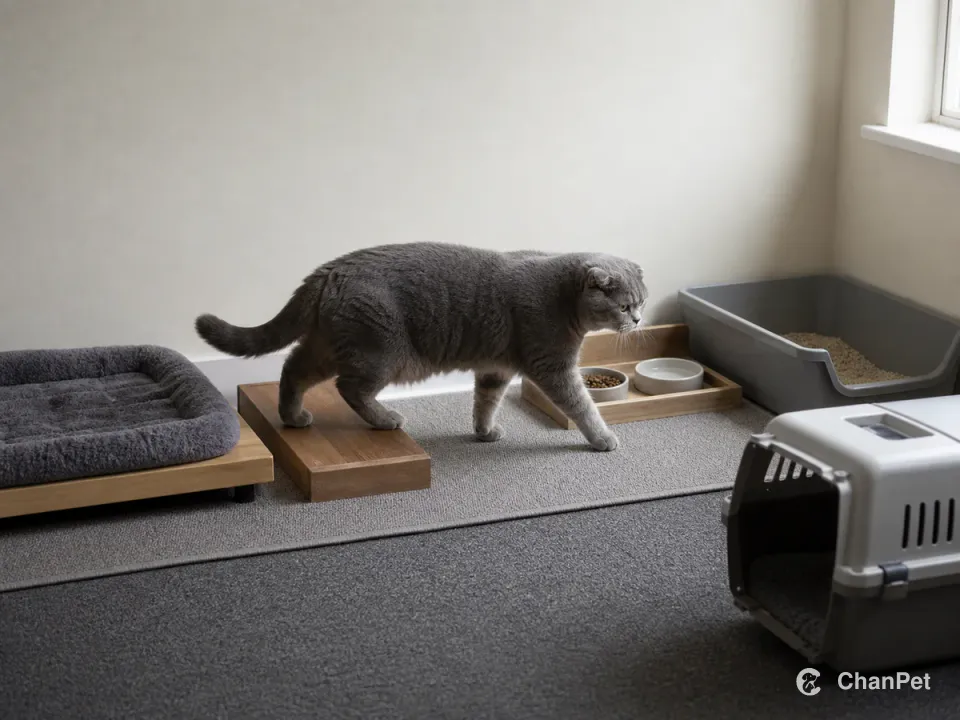
A low bed, short step, food and water, and a shallow-entry litter tray make an existing cat’s routine easier to hand over and observe. The nearby carrier keeps a move or holiday handover in view.[1][3]
A named carer beats a hopeful plan
Find a cat that fits the years ahead
Common questions
Can a roommate take over Scottish Fold care during exams?
Sources
Sources used in this article
- [1]Scottish Fold - OsteochondrodysplasiaUniversities Federation for Animal Welfare
- [3]A dominant TRPV4 variant underlies osteochondrodysplasia in Scottish fold catsOsteoarthritis and Cartilage
- [2]CatsCenters for Disease Control and Prevention