Put the cat on the real calendar
Choose the week that includes the early class, late shift, project deadline and long commute. Add breakfast, box cleaning, play and the evening meal to it. That crowded week tells you whether cat care has an actual home in your day.[1][2]
White spotting creates part of the tuxedo pattern. It cannot take over when a class runs late or an exam leaves you wiped out. The useful question is who will feed, clean and check on the cat on that specific day.[3][1]
Make the backup person practical
Choose a friend, roommate or relative who has a key, knows the food and litter routine and can find the carrier. Give them the clinic contact too. A person who has already handled one ordinary evening is much more useful than a vague promise of help.[1][2]
Leave a brief note near the supplies. Include the cat's usual resting places, meal pattern and favorite toy. That note helps someone distinguish an ordinary quiet day from a day when the cat is behaving differently.[1]
Make breaks part of the first decision
Decide before a break whether the cat will travel, stay with a familiar carer or remain at home with visits. If a move is ahead, prepare food, litter, a carrier and one quiet arrival room early. The plan is easier to carry out before final exams begin.[1][2]
The new room will have different sounds and smells. Bring familiar supplies and keep the first routine small. A tuxedo cat needs time to learn the place, even when the familiar coat looks right at home in every photo.[3][1]
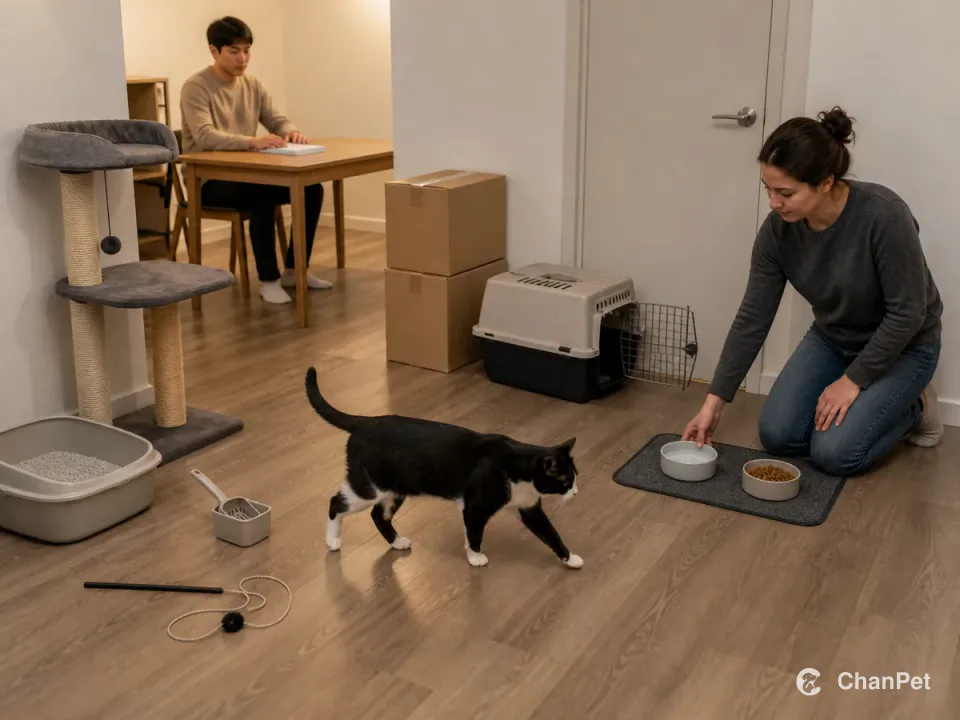
During the busiest week, a named caregiver keeps food, water, litter and play consistent while break and moving supplies remain ready.[3][2][1]
Student life works when the coverage is specific
The late day is the honest test
Write the crowded week down, rehearse backup care and settle the next break before it arrives. That preparation gives a tuxedo cat a stronger start than a free afternoon ever could.[2][1]
Common questions
Can a roommate care for a tuxedo cat during a short trip?
Sources
Sources used in this article
- [3]Endogenous retrovirus insertion in the KIT oncogene determines white and white spotting in domestic catsG3: Genes, Genomes, Genetics / PubMed
- [2]Feline Life Stages: Veterinary Checkups at All AgesFeline Veterinary Medical Association
- [1]Choosing and Caring for Your New CatCornell University College of Veterinary Medicine, Cornell Feline Health Center