The building route is part of the home
A dog in an apartment uses more than the living room. It uses the entryway, hallway, elevator, stairs, pavement, and the patch of ground outside. Walk that chain at a busy time. Notice whether this dog can pause, turn, and take a treat without becoming overwhelmed.[1]
If the dog is still growing, ask what is known about current size and likely adult build. Dog Aging Project research treats size as an important part of a dog's health picture. In a building, size also changes how you handle a wet leash, a full lift, and a narrow landing.[2][3]
Give the dog a place to land after the route
The first task after an outing is recovery, not more excitement. Put a mat or bed away from the door, keep water close by, and allow a few quiet minutes before answering messages or greeting visitors. A predictable return helps the dog learn what home feels like.[1]
Practice small building skills when the corridor is empty: wait at the door, turn away from a sound, or step onto a mat while you pick up keys. Reward the dog for choosing calm behavior. Those rehearsals are kinder than asking for instant composure during rush hour.[1]
Alone time belongs on the apartment calendar
A small home makes a dog's unsettled moments easier for neighbors to hear. Build departures in brief, manageable steps while you are still around to observe the result. A camera can show pacing, chewing, or repeated trips to the door that you would miss from outside.[1]
Mixed-breed is not a promise about noise, exercise, or independence. The useful apartment profile is the one you make yourself: when this dog walks, how it settles, how it uses the lead, and who can cover a late day.[3][1]
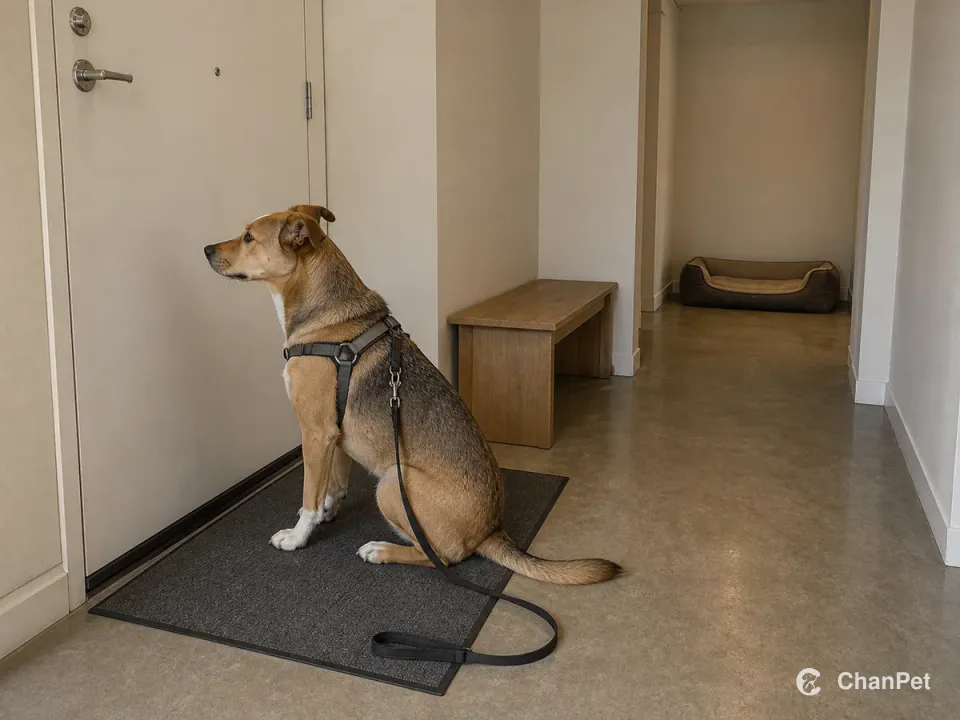
Test this dog's calm doorway wait and loose-leash exit, then keep a clear route back to its resting bed after activity.[2][1][3]
A good apartment fit has a workable route and a recovery plan
Walk the building with the dog in mind
Check the route, the outdoor breaks, and the plan for time alone. If those pieces work on an ordinary weekday, the apartment has a real chance of working too.[1][2]
Common questions
What should I test before choosing a mixed-breed dog for an apartment?
How can I help a dog settle after an apartment walk?
Use the same quiet landing place after each outing. Offer water, reduce activity for a few minutes, and rehearse easy skills before busy moments arrive. Reward calm choices rather than waiting for a difficult moment to correct.[1]
Sources
Sources used in this article
- [3]Are Mixed-Breed Dogs Healthier Than Purebred Dogs?American Kennel Club
- [2]Dog Size and Patterns of Disease History Across the Canine Age SpectrumDog Aging Project
- [1]Position Statement on Humane Dog TrainingAmerican Veterinary Society of Animal Behavior